
Zella-Mehlis
98544 Zella-Mehlis, Deutschland
Heinrichsbacher Hütte | Hiking & History
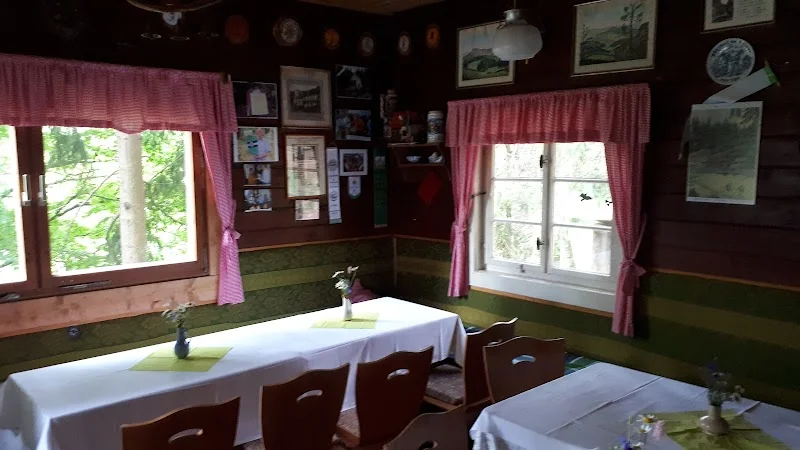
The Heinrichsbacher Hütte in Zella-Mehlis is not just any place in the woods, but a grown piece of local identity. Those who come here experience not only a rustic hut but also a traditional club area in the Upper Heinrichsbachtal, which is closely linked to the history of the dachshund tradition in Zella-Mehlis. The Teckelhütte Heinrichsbach Zella-Mehlis e.V. has been maintaining this place for many years and makes it accessible to guests and hikers at certain times. It is this mixture of nature, club life, and memory culture that makes the Heinrichsbacher Hütte so appealing. It serves as a meeting point, destination, and starting point at the same time: a place for short breaks, seasonal festivals, and hikes into one of the most scenic corners of the city. Official notices from the city describe the hut's operation as occurring periodically from April to October on weekends and holidays; thus, the hut deliberately remains a seasonally open, lively place with a special character. At the same time, it is embedded in an environment that includes the Heinrichsbacher Stein, the Ruppberg, and other rock and viewpoint destinations among the well-known natural attractions around Zella-Mehlis. ([zella-mehlis.de](https://zella-mehlis.de/blog/100-jahre-teckeltradition-ehrenamtler-ausgezeichnet))
Dachshund Tradition and Club History in the Upper Heinrichsbachtal
The history of the Heinrichsbacher Hütte cannot be separated from the history of the club that today maintains it. According to the official documents of the city of Zella-Mehlis, the organized dachshund tradition began on May 4, 1924, with the founding of the Thuringian Dachshund Club Ruppberg at the Waldhaus inn. From this development, the purchase of a plot of land in the Upper Heinrichsbacher Valley and the construction of the Teckelhütte with a training facility emerged in the following years. This historical core is crucial for the place: The hut was originally part of a dog breeding and training structure associated with dachshunds. The preserved documents concerning the club's history provide an authentic insight into this development and show that the maintenance of this traditional object still holds great significance today. The club itself also views the area as a historical object and opens it to the public on special occasions. The official contributions also mention that the club currently has 19 members. This also shows how much the place thrives on volunteer engagement: It is people from the region who ensure through work assignments, events, and much personal commitment that the hut does not become a mere museum but continues to exist as a vibrant club venue. The city's descriptions further emphasize that the hut is made accessible not only for club members but also for visitors during highlights, thus contributing to the enrichment of cultural life. Additionally, the historical training facility, which is preserved in remnants, is to be restored and made publicly accessible. This keeps history tangible rather than abstract. Therefore, anyone visiting the Heinrichsbacher Hütte encounters a place where dog breeding, club work, nature conservation, and regional memory come together. It is precisely this connection between tradition and the present that makes the hut more than just a simple stopover. It is a document of city history and an example of how strongly civic engagement can shape the landscape and leisure culture in Zella-Mehlis. ([zella-mehlis.de](https://zella-mehlis.de/media/pages/buergerservice/stadtanzeiger-amtsblatt/archiv/2792865bc0-1715846522/2024-10-stadtanzeiger.pdf?utm_source=openai))
Hiking to the Heinrichsbacher Hütte: Paths, Views, and Circular Tours
To experience the Heinrichsbacher Hütte, it is best reached as part of a hike. This is where its special charm lies: the path is part of the destination. The official city and tourism information repeatedly refers to hikes in the vicinity of the Heinrichsbacher Stein and the Ruppberg. A described route leads from the sports field Alte Straße over the Stachelsrain, the plant garden, the nature trail, and a branch at the rock path to the Heinrichsbacher Stein; from there, it continues over the Kaltenbrunner Stein, the Gebrannten Stein, the Veilchenbrunnen, and the Dammwiese back. This tour is indicated to be 9.3 kilometers long, with 352 meters of ascent and descent, and is rated as difficult. These data already show that the area is suitable not only for a short walk but for a full-fledged nature tour. For those who prefer a shorter route, the Sagenwanderweg to the Ruppberg can also be used. It starts at the Ruppberg hiking parking lot, is rated as medium, and leads directly to the summit in 1.3 kilometers. The landscape with its views also plays a significant role there. From the Heinrichsbacher Stein, wide views open up over Zella-Mehlis, the Thuringian Forest, the Ruppberg, and even as far as the Rhön, according to official descriptions. In winter, the area is also used: The trail around the Gebrannten Stein starts at the Ruppberg parking lot, leads over the Reifweg, the Hundsrück, and the Heinrichsbacher Stein further to the Kaltenbrunner Weg and the Veilchenbrunnen. The tourist information points out that one should unbuckle their skis at the Heinrichsbacher Stein to enjoy the view. This is a nice example of how closely movement and landscape experience are connected here. The Heinrichsbacher Hütte itself is also integrated into this system. It is described in the city information as the destination of an Easter walk that leads from Mehlis over the Alte Straße, the Stachelsrain, and the plant garden towards Waldhaus; the hut lies to the left along the way. Thus, the hike becomes a meaningful arrival: one does not just pass by accidentally but consciously heads there. Those visiting the hut and rock area around Heinrichsbach experience Zella-Mehlis as a hiking town with clearly marked paths, plenty of nature, and several options to adapt a tour to one's own fitness level. ([tourismus.zella-mehlis.de](https://tourismus.zella-mehlis.de/natur-erleben-zella-mehlis/aktiv-im-sommer/wandern-inlinern/178-touren))
Heinrichsbacher Stein: Climbing, Views, and Nature Experience
For many visitors, the Heinrichsbacher Stein is the most distinctive rock in the vicinity of the Heinrichsbacher Hütte. The tourist information describes it as a rock with a prominent overhang. This is not only a nice detail but also an indication of its special character in the terrain. The rock consists of porphyry, is up to 17 meters high, and on average about 15 meters high. Additionally, there are 26 routes recorded in difficulty levels 3 to 9. Thus, the Heinrichsbacher Stein is suitable for both ambitious climbers and those who want to get to know a place with sporting history and scenic appeal. The official site explicitly names it a good family destination because the climbing is varied and there is a nice camping area at the foot of the rock. Historically, the site is also noteworthy: According to the tourism information, brave climbers from Zella-Mehlis used the approximately 18-meter-high wall before World War II to prepare for mountain tours in the Alps. This combination of regional sports history and natural rock landscape makes the stone a special highlight. Looking from the hut towards the rock, one quickly senses why this area is so closely associated with movement. Here, hiking, climbing, winter tours, and views come together. The tourist descriptions also mention the view as one of the main arguments for a visit. From the Heinrichsbacher Stein, one looks over the basin of Zella-Mehlis, the Ruppberg, and the Dolmar; on several tours, this viewpoint is highlighted as a highlight. This is important for the region because the stone is not only a climbing rock but also a landscape landmark. Even those who do not climb can take a longer break here and enjoy the panorama. In conjunction with the Heinrichsbacher Hütte, a very typical Zella-Mehlis experience emerges: a mix of movement, regional history, and clear connections to nature. Unlike a classic tourist attraction, nothing here is artificially shaped. The appeal arises from the terrain, tradition, and the well-documented use by hikers and climbers. For this reason, it is worth seeing the Heinrichsbacher Stein not just as a rock but as part of a coherent experience landscape. ([tourismus.zella-mehlis.de](https://tourismus.zella-mehlis.de/natur-erleben-zella-mehlis/aktiv-im-sommer/klettern))
Opening Hours, Festivals, and Club Life at the Heinrichsbacher Hütte
The Heinrichsbacher Hütte is not a place with daily guest operations but a club venue that is open seasonally and on special occasions. This is precisely what defines its character. The city of Zella-Mehlis states that the opening period is from April to October and points out that the hut's operation occurs periodically on weekends and holidays. It is also clear from the official club and city contributions that the opening is closely linked to the volunteer engagement of the team. One example is the Easter festival: The hut club invites to an Easter walk in the Upper Heinrichsbacher Valley, with food and drinks and even a small heated festival tent in cooler weather. Similar notes regarding Ascension Day and Pentecost can be found in the city’s official publications: The Heinrichsbacher Hütte is then used with delicious grilled food, dishes, and drinks, as well as a rustic hut atmosphere. These events are typical for the place because they combine the club spirit, nature, and sociable gatherings. Therefore, those visiting the hut do not simply experience a stopover but often a small regional festival supported by people who know and care for their place. According to the city, the hut was opened for general visitor traffic after the founding of the hut club and thus contributes to cultural enrichment. The festive design from Easter to Christmas is also highlighted in the contributions. This shows that not only is it open, but it is also lovingly arranged. It is important for visitors to know that the offerings are seasonal and date-dependent. A spontaneous visit can be appealing, but those who want to stop by purposefully should refer to the current event notices from the city. This mixture of predictability and surprise is part of the charm. The hut is never opened arbitrarily but usually when the area is particularly lively due to an occasion. This makes the visit atmospherically rich and simultaneously authentic. ([zella-mehlis.de](https://zella-mehlis.de/blog/100-jahre-teckeltradition-ehrenamtler-ausgezeichnet))
Access, Parking, and Access to the Hut
The Heinrichsbacher Hütte does not have a classic city center location but is accessible via hiking trails and tourist starting points. This is precisely why the question of access and parking is so important. The official tours from the tourist information name the sports field Alte Straße as the starting point. There, one can park their vehicle in a public parking lot. The Ruppberg hiking parking lot is also mentioned in several tours as a free starting point, including for the Sagenwanderweg to the Ruppberg and for the trail around the Gebrannten Stein. These indications are practical because they show how to best reach the area: not driving directly to the hut but leaving the car at an official hiking starting point and walking the last part. Those coming from Mehlis should follow the Alte Straße, the Stachelsrain, and the plant garden towards Waldhaus; the hut lies to the left along the way. The wording makes it clear that the path itself is part of the experience and that the hut is embedded in the terrain. For hikers, this is an advantage, as the paths are well describable and integrated into the regional tour structure. In winter, it should also be noted that the area is used as a winter space. The tour around the Gebrannten Stein even points out at the Heinrichsbacher Stein to unbuckle skis if necessary to enjoy the view. This makes it clear: The journey depends on the season and one's own activity. In summer, footpaths and hiking parking lots dominate, while in winter, trails and snowshoe or ski tours are prevalent. For visitors with little local knowledge, it is advisable to plan the hut as a destination in a circular tour rather than as an isolated point. This way, the visit can be combined with viewpoints, rest areas, and other rocks. The combination of well-documented parking options, scenic intermediate destinations, and fixed tours makes orientation easy. For the Heinrichsbacher Hütte, this means: It is accessible but never just a transit point. Those arriving here have usually already walked a piece through the Thuringian Forest and experience the place particularly consciously. ([tourismus.zella-mehlis.de](https://tourismus.zella-mehlis.de/natur-erleben-zella-mehlis/aktiv-im-sommer/wandern-inlinern/178-touren))
Why the Heinrichsbacher Hütte is an Important Excursion Destination for Zella-Mehlis
The significance of the Heinrichsbacher Hütte lies in its multiple roles. It is a club object, a traditional site, a hiking destination, and a social meeting point at the same time. This complexity explains why the city repeatedly mentions it in its leisure and cultural notices. Zella-Mehlis describes itself in nature communication as a place with a pronounced hut culture; this includes not only other excursion destinations but explicitly the Heinrichsbacher Hütte and the Heinrichsbacher Stein. This is important because the hut does not appear as an isolated single attraction but as part of a whole landscape of paths, rocks, and club locations. For visitors, this means: Those who come to the hut understand Zella-Mehlis better. One sees how strongly sports tradition, forest use, and volunteer work are interconnected here. The hut also stands for a leisure culture that consciously does not rely on mass tourism. Instead of large gastronomy or loud event architecture, there is a rustic atmosphere, limited opening hours, and a program supported by local people. This makes the visit credible and sympathetic. The location in the Upper Heinrichsbachtal is also a plus. It is situated in an environment where the Heinrichsbacher Stein, the Kaltenbrunner Stein, and the Gebrannte Stein set several scenic accents. Those who take a longer round experience the diversity of the area with views, forest passages, and rest areas. Additionally, there is the historical dimension of the dachshund tradition, which goes far beyond a single club year. Started as a club in 1924 and now maintained as a well-kept memorial site, the hut shows how local history can remain visible in everyday life. For families, hiking groups, nature lovers, and those interested in regional culture, this is a real added value. Therefore, the Heinrichsbacher Hütte is interesting not only because of its location but also because of its history, its typical opening hours, and its integration into the scenic highlights around Zella-Mehlis. Those who come here are not looking for a quick consumption place but a coherent overall picture of movement, memory, and nature experience. This is precisely what the hut delivers. ([zella-mehlis.de](https://zella-mehlis.de/freizeit/aktiv-in-der-natur/in-wald-und-wiese?utm_source=openai))
Sources:
- City of Zella-Mehlis - 100 Years of Dachshund Tradition
- City Newspaper Zella-Mehlis - Teckelhütte Heinrichsbach 1924 to 2024
- Tourist Information Zella-Mehlis - Climbing at Heinrichsbacher Stein
- Tourist Information Zella-Mehlis - Sagenwanderweg to Ruppberg
- Tourist Information Zella-Mehlis - Hike to the Ruppberg
- Tourist Information Zella-Mehlis - Trail Around the Gebrannten Stein
Show moreShow less
Heinrichsbacher Hütte | Hiking & History
The Heinrichsbacher Hütte in Zella-Mehlis is not just any place in the woods, but a grown piece of local identity. Those who come here experience not only a rustic hut but also a traditional club area in the Upper Heinrichsbachtal, which is closely linked to the history of the dachshund tradition in Zella-Mehlis. The Teckelhütte Heinrichsbach Zella-Mehlis e.V. has been maintaining this place for many years and makes it accessible to guests and hikers at certain times. It is this mixture of nature, club life, and memory culture that makes the Heinrichsbacher Hütte so appealing. It serves as a meeting point, destination, and starting point at the same time: a place for short breaks, seasonal festivals, and hikes into one of the most scenic corners of the city. Official notices from the city describe the hut's operation as occurring periodically from April to October on weekends and holidays; thus, the hut deliberately remains a seasonally open, lively place with a special character. At the same time, it is embedded in an environment that includes the Heinrichsbacher Stein, the Ruppberg, and other rock and viewpoint destinations among the well-known natural attractions around Zella-Mehlis. ([zella-mehlis.de](https://zella-mehlis.de/blog/100-jahre-teckeltradition-ehrenamtler-ausgezeichnet))
Dachshund Tradition and Club History in the Upper Heinrichsbachtal
The history of the Heinrichsbacher Hütte cannot be separated from the history of the club that today maintains it. According to the official documents of the city of Zella-Mehlis, the organized dachshund tradition began on May 4, 1924, with the founding of the Thuringian Dachshund Club Ruppberg at the Waldhaus inn. From this development, the purchase of a plot of land in the Upper Heinrichsbacher Valley and the construction of the Teckelhütte with a training facility emerged in the following years. This historical core is crucial for the place: The hut was originally part of a dog breeding and training structure associated with dachshunds. The preserved documents concerning the club's history provide an authentic insight into this development and show that the maintenance of this traditional object still holds great significance today. The club itself also views the area as a historical object and opens it to the public on special occasions. The official contributions also mention that the club currently has 19 members. This also shows how much the place thrives on volunteer engagement: It is people from the region who ensure through work assignments, events, and much personal commitment that the hut does not become a mere museum but continues to exist as a vibrant club venue. The city's descriptions further emphasize that the hut is made accessible not only for club members but also for visitors during highlights, thus contributing to the enrichment of cultural life. Additionally, the historical training facility, which is preserved in remnants, is to be restored and made publicly accessible. This keeps history tangible rather than abstract. Therefore, anyone visiting the Heinrichsbacher Hütte encounters a place where dog breeding, club work, nature conservation, and regional memory come together. It is precisely this connection between tradition and the present that makes the hut more than just a simple stopover. It is a document of city history and an example of how strongly civic engagement can shape the landscape and leisure culture in Zella-Mehlis. ([zella-mehlis.de](https://zella-mehlis.de/media/pages/buergerservice/stadtanzeiger-amtsblatt/archiv/2792865bc0-1715846522/2024-10-stadtanzeiger.pdf?utm_source=openai))
Hiking to the Heinrichsbacher Hütte: Paths, Views, and Circular Tours
To experience the Heinrichsbacher Hütte, it is best reached as part of a hike. This is where its special charm lies: the path is part of the destination. The official city and tourism information repeatedly refers to hikes in the vicinity of the Heinrichsbacher Stein and the Ruppberg. A described route leads from the sports field Alte Straße over the Stachelsrain, the plant garden, the nature trail, and a branch at the rock path to the Heinrichsbacher Stein; from there, it continues over the Kaltenbrunner Stein, the Gebrannten Stein, the Veilchenbrunnen, and the Dammwiese back. This tour is indicated to be 9.3 kilometers long, with 352 meters of ascent and descent, and is rated as difficult. These data already show that the area is suitable not only for a short walk but for a full-fledged nature tour. For those who prefer a shorter route, the Sagenwanderweg to the Ruppberg can also be used. It starts at the Ruppberg hiking parking lot, is rated as medium, and leads directly to the summit in 1.3 kilometers. The landscape with its views also plays a significant role there. From the Heinrichsbacher Stein, wide views open up over Zella-Mehlis, the Thuringian Forest, the Ruppberg, and even as far as the Rhön, according to official descriptions. In winter, the area is also used: The trail around the Gebrannten Stein starts at the Ruppberg parking lot, leads over the Reifweg, the Hundsrück, and the Heinrichsbacher Stein further to the Kaltenbrunner Weg and the Veilchenbrunnen. The tourist information points out that one should unbuckle their skis at the Heinrichsbacher Stein to enjoy the view. This is a nice example of how closely movement and landscape experience are connected here. The Heinrichsbacher Hütte itself is also integrated into this system. It is described in the city information as the destination of an Easter walk that leads from Mehlis over the Alte Straße, the Stachelsrain, and the plant garden towards Waldhaus; the hut lies to the left along the way. Thus, the hike becomes a meaningful arrival: one does not just pass by accidentally but consciously heads there. Those visiting the hut and rock area around Heinrichsbach experience Zella-Mehlis as a hiking town with clearly marked paths, plenty of nature, and several options to adapt a tour to one's own fitness level. ([tourismus.zella-mehlis.de](https://tourismus.zella-mehlis.de/natur-erleben-zella-mehlis/aktiv-im-sommer/wandern-inlinern/178-touren))
Heinrichsbacher Stein: Climbing, Views, and Nature Experience
For many visitors, the Heinrichsbacher Stein is the most distinctive rock in the vicinity of the Heinrichsbacher Hütte. The tourist information describes it as a rock with a prominent overhang. This is not only a nice detail but also an indication of its special character in the terrain. The rock consists of porphyry, is up to 17 meters high, and on average about 15 meters high. Additionally, there are 26 routes recorded in difficulty levels 3 to 9. Thus, the Heinrichsbacher Stein is suitable for both ambitious climbers and those who want to get to know a place with sporting history and scenic appeal. The official site explicitly names it a good family destination because the climbing is varied and there is a nice camping area at the foot of the rock. Historically, the site is also noteworthy: According to the tourism information, brave climbers from Zella-Mehlis used the approximately 18-meter-high wall before World War II to prepare for mountain tours in the Alps. This combination of regional sports history and natural rock landscape makes the stone a special highlight. Looking from the hut towards the rock, one quickly senses why this area is so closely associated with movement. Here, hiking, climbing, winter tours, and views come together. The tourist descriptions also mention the view as one of the main arguments for a visit. From the Heinrichsbacher Stein, one looks over the basin of Zella-Mehlis, the Ruppberg, and the Dolmar; on several tours, this viewpoint is highlighted as a highlight. This is important for the region because the stone is not only a climbing rock but also a landscape landmark. Even those who do not climb can take a longer break here and enjoy the panorama. In conjunction with the Heinrichsbacher Hütte, a very typical Zella-Mehlis experience emerges: a mix of movement, regional history, and clear connections to nature. Unlike a classic tourist attraction, nothing here is artificially shaped. The appeal arises from the terrain, tradition, and the well-documented use by hikers and climbers. For this reason, it is worth seeing the Heinrichsbacher Stein not just as a rock but as part of a coherent experience landscape. ([tourismus.zella-mehlis.de](https://tourismus.zella-mehlis.de/natur-erleben-zella-mehlis/aktiv-im-sommer/klettern))
Opening Hours, Festivals, and Club Life at the Heinrichsbacher Hütte
The Heinrichsbacher Hütte is not a place with daily guest operations but a club venue that is open seasonally and on special occasions. This is precisely what defines its character. The city of Zella-Mehlis states that the opening period is from April to October and points out that the hut's operation occurs periodically on weekends and holidays. It is also clear from the official club and city contributions that the opening is closely linked to the volunteer engagement of the team. One example is the Easter festival: The hut club invites to an Easter walk in the Upper Heinrichsbacher Valley, with food and drinks and even a small heated festival tent in cooler weather. Similar notes regarding Ascension Day and Pentecost can be found in the city’s official publications: The Heinrichsbacher Hütte is then used with delicious grilled food, dishes, and drinks, as well as a rustic hut atmosphere. These events are typical for the place because they combine the club spirit, nature, and sociable gatherings. Therefore, those visiting the hut do not simply experience a stopover but often a small regional festival supported by people who know and care for their place. According to the city, the hut was opened for general visitor traffic after the founding of the hut club and thus contributes to cultural enrichment. The festive design from Easter to Christmas is also highlighted in the contributions. This shows that not only is it open, but it is also lovingly arranged. It is important for visitors to know that the offerings are seasonal and date-dependent. A spontaneous visit can be appealing, but those who want to stop by purposefully should refer to the current event notices from the city. This mixture of predictability and surprise is part of the charm. The hut is never opened arbitrarily but usually when the area is particularly lively due to an occasion. This makes the visit atmospherically rich and simultaneously authentic. ([zella-mehlis.de](https://zella-mehlis.de/blog/100-jahre-teckeltradition-ehrenamtler-ausgezeichnet))
Access, Parking, and Access to the Hut
The Heinrichsbacher Hütte does not have a classic city center location but is accessible via hiking trails and tourist starting points. This is precisely why the question of access and parking is so important. The official tours from the tourist information name the sports field Alte Straße as the starting point. There, one can park their vehicle in a public parking lot. The Ruppberg hiking parking lot is also mentioned in several tours as a free starting point, including for the Sagenwanderweg to the Ruppberg and for the trail around the Gebrannten Stein. These indications are practical because they show how to best reach the area: not driving directly to the hut but leaving the car at an official hiking starting point and walking the last part. Those coming from Mehlis should follow the Alte Straße, the Stachelsrain, and the plant garden towards Waldhaus; the hut lies to the left along the way. The wording makes it clear that the path itself is part of the experience and that the hut is embedded in the terrain. For hikers, this is an advantage, as the paths are well describable and integrated into the regional tour structure. In winter, it should also be noted that the area is used as a winter space. The tour around the Gebrannten Stein even points out at the Heinrichsbacher Stein to unbuckle skis if necessary to enjoy the view. This makes it clear: The journey depends on the season and one's own activity. In summer, footpaths and hiking parking lots dominate, while in winter, trails and snowshoe or ski tours are prevalent. For visitors with little local knowledge, it is advisable to plan the hut as a destination in a circular tour rather than as an isolated point. This way, the visit can be combined with viewpoints, rest areas, and other rocks. The combination of well-documented parking options, scenic intermediate destinations, and fixed tours makes orientation easy. For the Heinrichsbacher Hütte, this means: It is accessible but never just a transit point. Those arriving here have usually already walked a piece through the Thuringian Forest and experience the place particularly consciously. ([tourismus.zella-mehlis.de](https://tourismus.zella-mehlis.de/natur-erleben-zella-mehlis/aktiv-im-sommer/wandern-inlinern/178-touren))
Why the Heinrichsbacher Hütte is an Important Excursion Destination for Zella-Mehlis
The significance of the Heinrichsbacher Hütte lies in its multiple roles. It is a club object, a traditional site, a hiking destination, and a social meeting point at the same time. This complexity explains why the city repeatedly mentions it in its leisure and cultural notices. Zella-Mehlis describes itself in nature communication as a place with a pronounced hut culture; this includes not only other excursion destinations but explicitly the Heinrichsbacher Hütte and the Heinrichsbacher Stein. This is important because the hut does not appear as an isolated single attraction but as part of a whole landscape of paths, rocks, and club locations. For visitors, this means: Those who come to the hut understand Zella-Mehlis better. One sees how strongly sports tradition, forest use, and volunteer work are interconnected here. The hut also stands for a leisure culture that consciously does not rely on mass tourism. Instead of large gastronomy or loud event architecture, there is a rustic atmosphere, limited opening hours, and a program supported by local people. This makes the visit credible and sympathetic. The location in the Upper Heinrichsbachtal is also a plus. It is situated in an environment where the Heinrichsbacher Stein, the Kaltenbrunner Stein, and the Gebrannte Stein set several scenic accents. Those who take a longer round experience the diversity of the area with views, forest passages, and rest areas. Additionally, there is the historical dimension of the dachshund tradition, which goes far beyond a single club year. Started as a club in 1924 and now maintained as a well-kept memorial site, the hut shows how local history can remain visible in everyday life. For families, hiking groups, nature lovers, and those interested in regional culture, this is a real added value. Therefore, the Heinrichsbacher Hütte is interesting not only because of its location but also because of its history, its typical opening hours, and its integration into the scenic highlights around Zella-Mehlis. Those who come here are not looking for a quick consumption place but a coherent overall picture of movement, memory, and nature experience. This is precisely what the hut delivers. ([zella-mehlis.de](https://zella-mehlis.de/freizeit/aktiv-in-der-natur/in-wald-und-wiese?utm_source=openai))
Sources:
- City of Zella-Mehlis - 100 Years of Dachshund Tradition
- City Newspaper Zella-Mehlis - Teckelhütte Heinrichsbach 1924 to 2024
- Tourist Information Zella-Mehlis - Climbing at Heinrichsbacher Stein
- Tourist Information Zella-Mehlis - Sagenwanderweg to Ruppberg
- Tourist Information Zella-Mehlis - Hike to the Ruppberg
- Tourist Information Zella-Mehlis - Trail Around the Gebrannten Stein
Heinrichsbacher Hütte | Hiking & History
The Heinrichsbacher Hütte in Zella-Mehlis is not just any place in the woods, but a grown piece of local identity. Those who come here experience not only a rustic hut but also a traditional club area in the Upper Heinrichsbachtal, which is closely linked to the history of the dachshund tradition in Zella-Mehlis. The Teckelhütte Heinrichsbach Zella-Mehlis e.V. has been maintaining this place for many years and makes it accessible to guests and hikers at certain times. It is this mixture of nature, club life, and memory culture that makes the Heinrichsbacher Hütte so appealing. It serves as a meeting point, destination, and starting point at the same time: a place for short breaks, seasonal festivals, and hikes into one of the most scenic corners of the city. Official notices from the city describe the hut's operation as occurring periodically from April to October on weekends and holidays; thus, the hut deliberately remains a seasonally open, lively place with a special character. At the same time, it is embedded in an environment that includes the Heinrichsbacher Stein, the Ruppberg, and other rock and viewpoint destinations among the well-known natural attractions around Zella-Mehlis. ([zella-mehlis.de](https://zella-mehlis.de/blog/100-jahre-teckeltradition-ehrenamtler-ausgezeichnet))
Dachshund Tradition and Club History in the Upper Heinrichsbachtal
The history of the Heinrichsbacher Hütte cannot be separated from the history of the club that today maintains it. According to the official documents of the city of Zella-Mehlis, the organized dachshund tradition began on May 4, 1924, with the founding of the Thuringian Dachshund Club Ruppberg at the Waldhaus inn. From this development, the purchase of a plot of land in the Upper Heinrichsbacher Valley and the construction of the Teckelhütte with a training facility emerged in the following years. This historical core is crucial for the place: The hut was originally part of a dog breeding and training structure associated with dachshunds. The preserved documents concerning the club's history provide an authentic insight into this development and show that the maintenance of this traditional object still holds great significance today. The club itself also views the area as a historical object and opens it to the public on special occasions. The official contributions also mention that the club currently has 19 members. This also shows how much the place thrives on volunteer engagement: It is people from the region who ensure through work assignments, events, and much personal commitment that the hut does not become a mere museum but continues to exist as a vibrant club venue. The city's descriptions further emphasize that the hut is made accessible not only for club members but also for visitors during highlights, thus contributing to the enrichment of cultural life. Additionally, the historical training facility, which is preserved in remnants, is to be restored and made publicly accessible. This keeps history tangible rather than abstract. Therefore, anyone visiting the Heinrichsbacher Hütte encounters a place where dog breeding, club work, nature conservation, and regional memory come together. It is precisely this connection between tradition and the present that makes the hut more than just a simple stopover. It is a document of city history and an example of how strongly civic engagement can shape the landscape and leisure culture in Zella-Mehlis. ([zella-mehlis.de](https://zella-mehlis.de/media/pages/buergerservice/stadtanzeiger-amtsblatt/archiv/2792865bc0-1715846522/2024-10-stadtanzeiger.pdf?utm_source=openai))
Hiking to the Heinrichsbacher Hütte: Paths, Views, and Circular Tours
To experience the Heinrichsbacher Hütte, it is best reached as part of a hike. This is where its special charm lies: the path is part of the destination. The official city and tourism information repeatedly refers to hikes in the vicinity of the Heinrichsbacher Stein and the Ruppberg. A described route leads from the sports field Alte Straße over the Stachelsrain, the plant garden, the nature trail, and a branch at the rock path to the Heinrichsbacher Stein; from there, it continues over the Kaltenbrunner Stein, the Gebrannten Stein, the Veilchenbrunnen, and the Dammwiese back. This tour is indicated to be 9.3 kilometers long, with 352 meters of ascent and descent, and is rated as difficult. These data already show that the area is suitable not only for a short walk but for a full-fledged nature tour. For those who prefer a shorter route, the Sagenwanderweg to the Ruppberg can also be used. It starts at the Ruppberg hiking parking lot, is rated as medium, and leads directly to the summit in 1.3 kilometers. The landscape with its views also plays a significant role there. From the Heinrichsbacher Stein, wide views open up over Zella-Mehlis, the Thuringian Forest, the Ruppberg, and even as far as the Rhön, according to official descriptions. In winter, the area is also used: The trail around the Gebrannten Stein starts at the Ruppberg parking lot, leads over the Reifweg, the Hundsrück, and the Heinrichsbacher Stein further to the Kaltenbrunner Weg and the Veilchenbrunnen. The tourist information points out that one should unbuckle their skis at the Heinrichsbacher Stein to enjoy the view. This is a nice example of how closely movement and landscape experience are connected here. The Heinrichsbacher Hütte itself is also integrated into this system. It is described in the city information as the destination of an Easter walk that leads from Mehlis over the Alte Straße, the Stachelsrain, and the plant garden towards Waldhaus; the hut lies to the left along the way. Thus, the hike becomes a meaningful arrival: one does not just pass by accidentally but consciously heads there. Those visiting the hut and rock area around Heinrichsbach experience Zella-Mehlis as a hiking town with clearly marked paths, plenty of nature, and several options to adapt a tour to one's own fitness level. ([tourismus.zella-mehlis.de](https://tourismus.zella-mehlis.de/natur-erleben-zella-mehlis/aktiv-im-sommer/wandern-inlinern/178-touren))
Heinrichsbacher Stein: Climbing, Views, and Nature Experience
For many visitors, the Heinrichsbacher Stein is the most distinctive rock in the vicinity of the Heinrichsbacher Hütte. The tourist information describes it as a rock with a prominent overhang. This is not only a nice detail but also an indication of its special character in the terrain. The rock consists of porphyry, is up to 17 meters high, and on average about 15 meters high. Additionally, there are 26 routes recorded in difficulty levels 3 to 9. Thus, the Heinrichsbacher Stein is suitable for both ambitious climbers and those who want to get to know a place with sporting history and scenic appeal. The official site explicitly names it a good family destination because the climbing is varied and there is a nice camping area at the foot of the rock. Historically, the site is also noteworthy: According to the tourism information, brave climbers from Zella-Mehlis used the approximately 18-meter-high wall before World War II to prepare for mountain tours in the Alps. This combination of regional sports history and natural rock landscape makes the stone a special highlight. Looking from the hut towards the rock, one quickly senses why this area is so closely associated with movement. Here, hiking, climbing, winter tours, and views come together. The tourist descriptions also mention the view as one of the main arguments for a visit. From the Heinrichsbacher Stein, one looks over the basin of Zella-Mehlis, the Ruppberg, and the Dolmar; on several tours, this viewpoint is highlighted as a highlight. This is important for the region because the stone is not only a climbing rock but also a landscape landmark. Even those who do not climb can take a longer break here and enjoy the panorama. In conjunction with the Heinrichsbacher Hütte, a very typical Zella-Mehlis experience emerges: a mix of movement, regional history, and clear connections to nature. Unlike a classic tourist attraction, nothing here is artificially shaped. The appeal arises from the terrain, tradition, and the well-documented use by hikers and climbers. For this reason, it is worth seeing the Heinrichsbacher Stein not just as a rock but as part of a coherent experience landscape. ([tourismus.zella-mehlis.de](https://tourismus.zella-mehlis.de/natur-erleben-zella-mehlis/aktiv-im-sommer/klettern))
Opening Hours, Festivals, and Club Life at the Heinrichsbacher Hütte
The Heinrichsbacher Hütte is not a place with daily guest operations but a club venue that is open seasonally and on special occasions. This is precisely what defines its character. The city of Zella-Mehlis states that the opening period is from April to October and points out that the hut's operation occurs periodically on weekends and holidays. It is also clear from the official club and city contributions that the opening is closely linked to the volunteer engagement of the team. One example is the Easter festival: The hut club invites to an Easter walk in the Upper Heinrichsbacher Valley, with food and drinks and even a small heated festival tent in cooler weather. Similar notes regarding Ascension Day and Pentecost can be found in the city’s official publications: The Heinrichsbacher Hütte is then used with delicious grilled food, dishes, and drinks, as well as a rustic hut atmosphere. These events are typical for the place because they combine the club spirit, nature, and sociable gatherings. Therefore, those visiting the hut do not simply experience a stopover but often a small regional festival supported by people who know and care for their place. According to the city, the hut was opened for general visitor traffic after the founding of the hut club and thus contributes to cultural enrichment. The festive design from Easter to Christmas is also highlighted in the contributions. This shows that not only is it open, but it is also lovingly arranged. It is important for visitors to know that the offerings are seasonal and date-dependent. A spontaneous visit can be appealing, but those who want to stop by purposefully should refer to the current event notices from the city. This mixture of predictability and surprise is part of the charm. The hut is never opened arbitrarily but usually when the area is particularly lively due to an occasion. This makes the visit atmospherically rich and simultaneously authentic. ([zella-mehlis.de](https://zella-mehlis.de/blog/100-jahre-teckeltradition-ehrenamtler-ausgezeichnet))
Access, Parking, and Access to the Hut
The Heinrichsbacher Hütte does not have a classic city center location but is accessible via hiking trails and tourist starting points. This is precisely why the question of access and parking is so important. The official tours from the tourist information name the sports field Alte Straße as the starting point. There, one can park their vehicle in a public parking lot. The Ruppberg hiking parking lot is also mentioned in several tours as a free starting point, including for the Sagenwanderweg to the Ruppberg and for the trail around the Gebrannten Stein. These indications are practical because they show how to best reach the area: not driving directly to the hut but leaving the car at an official hiking starting point and walking the last part. Those coming from Mehlis should follow the Alte Straße, the Stachelsrain, and the plant garden towards Waldhaus; the hut lies to the left along the way. The wording makes it clear that the path itself is part of the experience and that the hut is embedded in the terrain. For hikers, this is an advantage, as the paths are well describable and integrated into the regional tour structure. In winter, it should also be noted that the area is used as a winter space. The tour around the Gebrannten Stein even points out at the Heinrichsbacher Stein to unbuckle skis if necessary to enjoy the view. This makes it clear: The journey depends on the season and one's own activity. In summer, footpaths and hiking parking lots dominate, while in winter, trails and snowshoe or ski tours are prevalent. For visitors with little local knowledge, it is advisable to plan the hut as a destination in a circular tour rather than as an isolated point. This way, the visit can be combined with viewpoints, rest areas, and other rocks. The combination of well-documented parking options, scenic intermediate destinations, and fixed tours makes orientation easy. For the Heinrichsbacher Hütte, this means: It is accessible but never just a transit point. Those arriving here have usually already walked a piece through the Thuringian Forest and experience the place particularly consciously. ([tourismus.zella-mehlis.de](https://tourismus.zella-mehlis.de/natur-erleben-zella-mehlis/aktiv-im-sommer/wandern-inlinern/178-touren))
Why the Heinrichsbacher Hütte is an Important Excursion Destination for Zella-Mehlis
The significance of the Heinrichsbacher Hütte lies in its multiple roles. It is a club object, a traditional site, a hiking destination, and a social meeting point at the same time. This complexity explains why the city repeatedly mentions it in its leisure and cultural notices. Zella-Mehlis describes itself in nature communication as a place with a pronounced hut culture; this includes not only other excursion destinations but explicitly the Heinrichsbacher Hütte and the Heinrichsbacher Stein. This is important because the hut does not appear as an isolated single attraction but as part of a whole landscape of paths, rocks, and club locations. For visitors, this means: Those who come to the hut understand Zella-Mehlis better. One sees how strongly sports tradition, forest use, and volunteer work are interconnected here. The hut also stands for a leisure culture that consciously does not rely on mass tourism. Instead of large gastronomy or loud event architecture, there is a rustic atmosphere, limited opening hours, and a program supported by local people. This makes the visit credible and sympathetic. The location in the Upper Heinrichsbachtal is also a plus. It is situated in an environment where the Heinrichsbacher Stein, the Kaltenbrunner Stein, and the Gebrannte Stein set several scenic accents. Those who take a longer round experience the diversity of the area with views, forest passages, and rest areas. Additionally, there is the historical dimension of the dachshund tradition, which goes far beyond a single club year. Started as a club in 1924 and now maintained as a well-kept memorial site, the hut shows how local history can remain visible in everyday life. For families, hiking groups, nature lovers, and those interested in regional culture, this is a real added value. Therefore, the Heinrichsbacher Hütte is interesting not only because of its location but also because of its history, its typical opening hours, and its integration into the scenic highlights around Zella-Mehlis. Those who come here are not looking for a quick consumption place but a coherent overall picture of movement, memory, and nature experience. This is precisely what the hut delivers. ([zella-mehlis.de](https://zella-mehlis.de/freizeit/aktiv-in-der-natur/in-wald-und-wiese?utm_source=openai))
Sources:
- City of Zella-Mehlis - 100 Years of Dachshund Tradition
- City Newspaper Zella-Mehlis - Teckelhütte Heinrichsbach 1924 to 2024
- Tourist Information Zella-Mehlis - Climbing at Heinrichsbacher Stein
- Tourist Information Zella-Mehlis - Sagenwanderweg to Ruppberg
- Tourist Information Zella-Mehlis - Hike to the Ruppberg
- Tourist Information Zella-Mehlis - Trail Around the Gebrannten Stein

Frequently Asked Questions
Reviews
No reviews found