
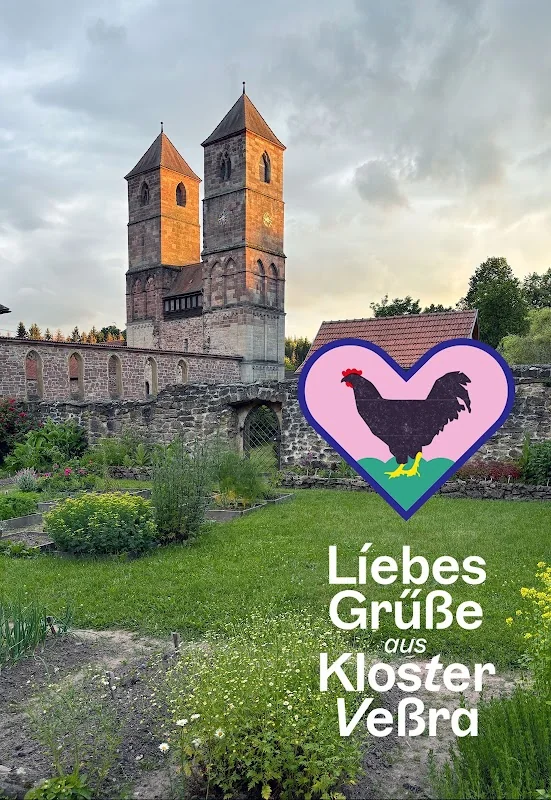
Kloster Veßra
Anger 35, 98660 Kloster Veßra, Deutschland
Hennebergisches Museum Kloster Veßra | Events & Tickets
The Hennebergisches Museum Kloster Veßra is much more than a classic excursion destination. On a 6-hectare site, the open-air museum combines monastic history, half-timbered architecture, everyday history, agricultural technology, and sustainability into an experience that is historically grounded and yet vibrant. Visitors stroll through the grounds of the former Premonstratensian abbey, discover translocated half-timbered houses, experience technical testimonies of agriculture, and find an unusually versatile ensemble with gardens, water technology, and family offerings. The house sees itself both as an event venue and a place of learning, which is why inquiries about upcoming events, Easter holiday programs, garden markets, or autumn festivals fit so well with the museum's orientation. Those who visit Kloster Veßra are not only looking for history but an atmosphere where culture, nature, and regional identity come together directly. ([museumklostervessra.de](https://museumklostervessra.de/museum/))
Upcoming Events in the Museum Calendar
The official event overview shows how broad the program of the Hennebergisches Museum Kloster Veßra is. In spring and summer 2026, the range extends from festive museum days to concert and festival formats: Museum Festival and Heima(rk)t on May 10, International Museum Day on May 17, German Mill Day on May 25, the Garden Market from June 4 to 7, Night at the Museum on July 3, Kloster Klang on July 25, and the BeYou Festival on August 1 and 2. This mix shows why many people perceive the museum not only as an exhibition site but as a lively cultural place. It is particularly important that the program does not appear monotonous but alternates between regional tradition, family offerings, music, and thematic events. ([museumklostervessra.de](https://museumklostervessra.de/events/))
For seekers, the dynamics are particularly attractive: Those who inquire about "upcoming events" expect current dates, and that is exactly what the calendar provides. Some formats are closely linked to the museum, such as the German Mill Day with a focus on historical buildings, workshops, and open spaces. Other events deliberately set additional accents, such as Kloster Klang with electronic music against a historical backdrop or the BeYou Festival as a healing festival in South Thuringia. This creates a calendar that expands classic museum expectations while simultaneously strengthening the special identity of the place. This makes Kloster Veßra a location that appeals to both culture enthusiasts and families and event visitors. ([museumklostervessra.de](https://museumklostervessra.de/events/))
Pre-Easter, Easter Holiday Program, and Family Moments
Inquiries about the Easter holiday program lead directly to family-friendly participation formats in Kloster Veßra. A good example is the pre-Easter festival "Ears Up" on March 29, 2026, which takes place from 10:00 AM to 5:00 PM. The museum announces craft and participation stations, creative crafting ideas, treats for small and large guests, and actions from museum education. The date is deliberately set one week before Easter and focuses on spring, craftsmanship, and family time. This mix explains why the museum is one of the most interesting excursion destinations in the Henneberg region for parents, grandparents, and children. ([museumklostervessra.de](https://museumklostervessra.de/event/hasenohren-aufgestellt-vorostern-im-museum/?utm_source=openai))
Additionally, there are offerings that make the stay particularly pleasant for children. On the grounds, there is a play barn with a slide and sandbox, a children's media hut, a tractor course, and an area protected by a wall that offers plenty of room for exploration. Furthermore, the museum is recognized in Thuringia as an extracurricular learning location, and the workshops range from writing workshops in the scriptorium to further educational offerings. For curious visitors, there is even a free hen rally at the cash register. Thus, the term Easter holiday program here does not seem like a marketing term but rather a very fitting description of a place where learning, playing, and wonder go hand in hand. ([museumklostervessra.de](https://museumklostervessra.de/museum/))
Garden Market, Museum Festival, and Summer Highlights
A second strong focus of inquiries is the garden market. In the current calendar, the garden market is scheduled for June 4 to 7, 2026, on the museum grounds. The format fits perfectly with the site, as the museum emphasizes its gardens, old fruit trees, flower meadows, and the sustainable use of the area. An earlier official announcement describes the garden market as a meeting point for inspirations, exquisite items, and extraordinary offerings for home and garden, as well as for fashion, accessories, and culinary delights. This makes it clear that the term garden market stands not only for a sales event but for a crafted experience between garden culture, enjoyment, and a regional audience. ([museumklostervessra.de](https://museumklostervessra.de/events/))
The museum festival and other summer formats also shape the profile of the location. The museum festival and Heima(rk)t on May 10, 2026, is announced as a cheerful day full of craftsmanship, regional specialties, and encounters. Shortly thereafter follows International Museum Day, then German Mill Day, and later Night at the Museum with free admission, film screenings in the gate church, flashlight tours, and crafting stations. Additionally, there is Kloster Klang with electronic music against a historical backdrop and the BeYou Festival as a large meeting format. It is precisely this variety that explains why inquiries about autumn festivals, garden markets, or upcoming events are so strongly associated with the museum: The grounds are not static but are continually re-staged throughout the year. ([museumklostervessra.de](https://museumklostervessra.de/events/))
Discover Monastic History, Half-Timbering, and Agricultural Technology
Historically, the history of the place begins long before the founding of the museum. The former Premonstratensian monastery was founded in 1131 and remains at the center of the museum ensemble to this day. The museum itself was founded in 1975 as the Agricultural Historical Museum of the Suhl district and has since developed into an open-air museum that connects the themes of monastic history, half-timbered architecture, everyday history, agricultural technology, and sustainability. Since 1978, half-timbered houses have been translocated to the museum, creating a small village with residential houses, a mill, and a blacksmith's shop. This is particularly attractive for visitors because they can experience not just individual objects but a historically grown whole. ([museumklostervessra.de](https://museumklostervessra.de/museum/))
The thematic depth of the museum is also reflected in the collection. Only a small part of the approximately 20,000 objects in the collection is on display, but the selection ranges from everyday culture and regional history to monastic culture and technical historical testimonies. The museum also claims to have the largest collection of GDR LPG agricultural machinery in Thuringia, and on the grounds, there is a historic hydroelectric power plant with a mill ditch as well as a well-maintained garden area with herb gardens, flower meadows, and old fruit trees. Those interested in monastic history, half-timbering, or agricultural technology will find here not only illustrations but a self-contained experiential world where regional history can be read directly. ([museumklostervessra.de](https://museumklostervessra.de/))
Opening Hours, Admission, and Getting to Kloster Veßra
For practical planning, the opening hours are clearly regulated. From March to October, the museum is open daily from 9 AM to 6 PM, and from November to February, it is open from Friday to Sunday from 10 AM to 5 PM. The last admission is one hour before closing. The monastery café opens in the season from Wednesday to Sunday from 11 AM to 5 PM and in winter from Friday to Sunday from 11 AM to 5 PM. The address is Anger 35, 98660 Kloster Veßra. So, those looking for directions, opening hours, or the exact location will find the official information bundled and can plan their visit very well. ([museumklostervessra.de](https://museumklostervessra.de/museum/))
The museum is also transparent regarding admission. Adults pay 9 euros, students, pupils, and people with disabilities pay 5 euros. The family ticket costs 20 euros, group prices start at 7 euros per person for 10 people and 5 euros per person for 20 people. Additionally, there are guest card and group regulations. This clear structure is equally important for excursion planning and SEO, as seekers can quickly assess whether the destination fits their journey or family budget. In conjunction with the central museum address and the varied events, this makes the visit particularly well calculable. ([museumklostervessra.de](https://museumklostervessra.de/preise/))
Guided Tours, Café, and Sustainability on the Museum Grounds
The museum offers several guided tour formats that cover different interests. The introduction lasts 45 minutes and costs 60 euros per group plus admission. Other tours cost 100 euros per group and focus on the ensemble of translocated half-timbered houses, the Premonstratensians, legends and myths, the development of agriculture up to the GDR, and sustainability around gardens, hydropower, and beekeeping. This is particularly helpful for groups, associations, school classes, or interested visitors, as the visit can be thematically deepened. So, those who want to not only look but understand will find a well-developed educational offering in Kloster Veßra. ([museumklostervessra.de](https://museumklostervessra.de/fuehrungen/))
The experience is rounded off by the café in the monastery garden and the strong sustainability concept of the house. The café serves seasonal cakes and pastries, light snacks, and offers a view of the play barn, sandbox, and tractor course from the terrace. At the same time, the museum generates electricity with its own hydroelectric power plant; the generator and turbine technology is partly almost 100 years old. In the monastery garden, herbs, vegetables, dye plants, and flax grow, which supply both the monastery café and museum education projects. This connection of enjoyment, education, and authentic technology makes Kloster Veßra a place that looks impressive in photos and is even more convincing on-site. ([museumklostervessra.de](https://museumklostervessra.de/cafe-am-klostergarten/?utm_source=openai))
Sources:
- Hennebergisches Museum Kloster Veßra - Official Website ([museumklostervessra.de](https://museumklostervessra.de/))
- Hennebergisches Museum Kloster Veßra - The Museum ([museumklostervessra.de](https://museumklostervessra.de/museum/))
- Hennebergisches Museum Kloster Veßra - Events ([museumklostervessra.de](https://museumklostervessra.de/events/))
- Hennebergisches Museum Kloster Veßra - Opening Hours and Prices ([museumklostervessra.de](https://museumklostervessra.de/preise/))
- Hennebergisches Museum Kloster Veßra - Guided Tours ([museumklostervessra.de](https://museumklostervessra.de/fuehrungen/))
- Hennebergisches Museum Kloster Veßra - Pre-Easter at the Museum ([museumklostervessra.de](https://museumklostervessra.de/event/hasenohren-aufgestellt-vorostern-im-museum/?utm_source=openai))
- Hennebergisches Museum Kloster Veßra - Kloster Klang ([museumklostervessra.de](https://museumklostervessra.de/event/kloster-klang/))
- Hennebergisches Museum Kloster Veßra - BeYou Festival 2026 ([museumklostervessra.de](https://museumklostervessra.de/event/beyou-festival/?utm_source=openai))
Show moreShow less
Hennebergisches Museum Kloster Veßra | Events & Tickets
The Hennebergisches Museum Kloster Veßra is much more than a classic excursion destination. On a 6-hectare site, the open-air museum combines monastic history, half-timbered architecture, everyday history, agricultural technology, and sustainability into an experience that is historically grounded and yet vibrant. Visitors stroll through the grounds of the former Premonstratensian abbey, discover translocated half-timbered houses, experience technical testimonies of agriculture, and find an unusually versatile ensemble with gardens, water technology, and family offerings. The house sees itself both as an event venue and a place of learning, which is why inquiries about upcoming events, Easter holiday programs, garden markets, or autumn festivals fit so well with the museum's orientation. Those who visit Kloster Veßra are not only looking for history but an atmosphere where culture, nature, and regional identity come together directly. ([museumklostervessra.de](https://museumklostervessra.de/museum/))
Upcoming Events in the Museum Calendar
The official event overview shows how broad the program of the Hennebergisches Museum Kloster Veßra is. In spring and summer 2026, the range extends from festive museum days to concert and festival formats: Museum Festival and Heima(rk)t on May 10, International Museum Day on May 17, German Mill Day on May 25, the Garden Market from June 4 to 7, Night at the Museum on July 3, Kloster Klang on July 25, and the BeYou Festival on August 1 and 2. This mix shows why many people perceive the museum not only as an exhibition site but as a lively cultural place. It is particularly important that the program does not appear monotonous but alternates between regional tradition, family offerings, music, and thematic events. ([museumklostervessra.de](https://museumklostervessra.de/events/))
For seekers, the dynamics are particularly attractive: Those who inquire about "upcoming events" expect current dates, and that is exactly what the calendar provides. Some formats are closely linked to the museum, such as the German Mill Day with a focus on historical buildings, workshops, and open spaces. Other events deliberately set additional accents, such as Kloster Klang with electronic music against a historical backdrop or the BeYou Festival as a healing festival in South Thuringia. This creates a calendar that expands classic museum expectations while simultaneously strengthening the special identity of the place. This makes Kloster Veßra a location that appeals to both culture enthusiasts and families and event visitors. ([museumklostervessra.de](https://museumklostervessra.de/events/))
Pre-Easter, Easter Holiday Program, and Family Moments
Inquiries about the Easter holiday program lead directly to family-friendly participation formats in Kloster Veßra. A good example is the pre-Easter festival "Ears Up" on March 29, 2026, which takes place from 10:00 AM to 5:00 PM. The museum announces craft and participation stations, creative crafting ideas, treats for small and large guests, and actions from museum education. The date is deliberately set one week before Easter and focuses on spring, craftsmanship, and family time. This mix explains why the museum is one of the most interesting excursion destinations in the Henneberg region for parents, grandparents, and children. ([museumklostervessra.de](https://museumklostervessra.de/event/hasenohren-aufgestellt-vorostern-im-museum/?utm_source=openai))
Additionally, there are offerings that make the stay particularly pleasant for children. On the grounds, there is a play barn with a slide and sandbox, a children's media hut, a tractor course, and an area protected by a wall that offers plenty of room for exploration. Furthermore, the museum is recognized in Thuringia as an extracurricular learning location, and the workshops range from writing workshops in the scriptorium to further educational offerings. For curious visitors, there is even a free hen rally at the cash register. Thus, the term Easter holiday program here does not seem like a marketing term but rather a very fitting description of a place where learning, playing, and wonder go hand in hand. ([museumklostervessra.de](https://museumklostervessra.de/museum/))
Garden Market, Museum Festival, and Summer Highlights
A second strong focus of inquiries is the garden market. In the current calendar, the garden market is scheduled for June 4 to 7, 2026, on the museum grounds. The format fits perfectly with the site, as the museum emphasizes its gardens, old fruit trees, flower meadows, and the sustainable use of the area. An earlier official announcement describes the garden market as a meeting point for inspirations, exquisite items, and extraordinary offerings for home and garden, as well as for fashion, accessories, and culinary delights. This makes it clear that the term garden market stands not only for a sales event but for a crafted experience between garden culture, enjoyment, and a regional audience. ([museumklostervessra.de](https://museumklostervessra.de/events/))
The museum festival and other summer formats also shape the profile of the location. The museum festival and Heima(rk)t on May 10, 2026, is announced as a cheerful day full of craftsmanship, regional specialties, and encounters. Shortly thereafter follows International Museum Day, then German Mill Day, and later Night at the Museum with free admission, film screenings in the gate church, flashlight tours, and crafting stations. Additionally, there is Kloster Klang with electronic music against a historical backdrop and the BeYou Festival as a large meeting format. It is precisely this variety that explains why inquiries about autumn festivals, garden markets, or upcoming events are so strongly associated with the museum: The grounds are not static but are continually re-staged throughout the year. ([museumklostervessra.de](https://museumklostervessra.de/events/))
Discover Monastic History, Half-Timbering, and Agricultural Technology
Historically, the history of the place begins long before the founding of the museum. The former Premonstratensian monastery was founded in 1131 and remains at the center of the museum ensemble to this day. The museum itself was founded in 1975 as the Agricultural Historical Museum of the Suhl district and has since developed into an open-air museum that connects the themes of monastic history, half-timbered architecture, everyday history, agricultural technology, and sustainability. Since 1978, half-timbered houses have been translocated to the museum, creating a small village with residential houses, a mill, and a blacksmith's shop. This is particularly attractive for visitors because they can experience not just individual objects but a historically grown whole. ([museumklostervessra.de](https://museumklostervessra.de/museum/))
The thematic depth of the museum is also reflected in the collection. Only a small part of the approximately 20,000 objects in the collection is on display, but the selection ranges from everyday culture and regional history to monastic culture and technical historical testimonies. The museum also claims to have the largest collection of GDR LPG agricultural machinery in Thuringia, and on the grounds, there is a historic hydroelectric power plant with a mill ditch as well as a well-maintained garden area with herb gardens, flower meadows, and old fruit trees. Those interested in monastic history, half-timbering, or agricultural technology will find here not only illustrations but a self-contained experiential world where regional history can be read directly. ([museumklostervessra.de](https://museumklostervessra.de/))
Opening Hours, Admission, and Getting to Kloster Veßra
For practical planning, the opening hours are clearly regulated. From March to October, the museum is open daily from 9 AM to 6 PM, and from November to February, it is open from Friday to Sunday from 10 AM to 5 PM. The last admission is one hour before closing. The monastery café opens in the season from Wednesday to Sunday from 11 AM to 5 PM and in winter from Friday to Sunday from 11 AM to 5 PM. The address is Anger 35, 98660 Kloster Veßra. So, those looking for directions, opening hours, or the exact location will find the official information bundled and can plan their visit very well. ([museumklostervessra.de](https://museumklostervessra.de/museum/))
The museum is also transparent regarding admission. Adults pay 9 euros, students, pupils, and people with disabilities pay 5 euros. The family ticket costs 20 euros, group prices start at 7 euros per person for 10 people and 5 euros per person for 20 people. Additionally, there are guest card and group regulations. This clear structure is equally important for excursion planning and SEO, as seekers can quickly assess whether the destination fits their journey or family budget. In conjunction with the central museum address and the varied events, this makes the visit particularly well calculable. ([museumklostervessra.de](https://museumklostervessra.de/preise/))
Guided Tours, Café, and Sustainability on the Museum Grounds
The museum offers several guided tour formats that cover different interests. The introduction lasts 45 minutes and costs 60 euros per group plus admission. Other tours cost 100 euros per group and focus on the ensemble of translocated half-timbered houses, the Premonstratensians, legends and myths, the development of agriculture up to the GDR, and sustainability around gardens, hydropower, and beekeeping. This is particularly helpful for groups, associations, school classes, or interested visitors, as the visit can be thematically deepened. So, those who want to not only look but understand will find a well-developed educational offering in Kloster Veßra. ([museumklostervessra.de](https://museumklostervessra.de/fuehrungen/))
The experience is rounded off by the café in the monastery garden and the strong sustainability concept of the house. The café serves seasonal cakes and pastries, light snacks, and offers a view of the play barn, sandbox, and tractor course from the terrace. At the same time, the museum generates electricity with its own hydroelectric power plant; the generator and turbine technology is partly almost 100 years old. In the monastery garden, herbs, vegetables, dye plants, and flax grow, which supply both the monastery café and museum education projects. This connection of enjoyment, education, and authentic technology makes Kloster Veßra a place that looks impressive in photos and is even more convincing on-site. ([museumklostervessra.de](https://museumklostervessra.de/cafe-am-klostergarten/?utm_source=openai))
Sources:
- Hennebergisches Museum Kloster Veßra - Official Website ([museumklostervessra.de](https://museumklostervessra.de/))
- Hennebergisches Museum Kloster Veßra - The Museum ([museumklostervessra.de](https://museumklostervessra.de/museum/))
- Hennebergisches Museum Kloster Veßra - Events ([museumklostervessra.de](https://museumklostervessra.de/events/))
- Hennebergisches Museum Kloster Veßra - Opening Hours and Prices ([museumklostervessra.de](https://museumklostervessra.de/preise/))
- Hennebergisches Museum Kloster Veßra - Guided Tours ([museumklostervessra.de](https://museumklostervessra.de/fuehrungen/))
- Hennebergisches Museum Kloster Veßra - Pre-Easter at the Museum ([museumklostervessra.de](https://museumklostervessra.de/event/hasenohren-aufgestellt-vorostern-im-museum/?utm_source=openai))
- Hennebergisches Museum Kloster Veßra - Kloster Klang ([museumklostervessra.de](https://museumklostervessra.de/event/kloster-klang/))
- Hennebergisches Museum Kloster Veßra - BeYou Festival 2026 ([museumklostervessra.de](https://museumklostervessra.de/event/beyou-festival/?utm_source=openai))
Hennebergisches Museum Kloster Veßra | Events & Tickets
The Hennebergisches Museum Kloster Veßra is much more than a classic excursion destination. On a 6-hectare site, the open-air museum combines monastic history, half-timbered architecture, everyday history, agricultural technology, and sustainability into an experience that is historically grounded and yet vibrant. Visitors stroll through the grounds of the former Premonstratensian abbey, discover translocated half-timbered houses, experience technical testimonies of agriculture, and find an unusually versatile ensemble with gardens, water technology, and family offerings. The house sees itself both as an event venue and a place of learning, which is why inquiries about upcoming events, Easter holiday programs, garden markets, or autumn festivals fit so well with the museum's orientation. Those who visit Kloster Veßra are not only looking for history but an atmosphere where culture, nature, and regional identity come together directly. ([museumklostervessra.de](https://museumklostervessra.de/museum/))
Upcoming Events in the Museum Calendar
The official event overview shows how broad the program of the Hennebergisches Museum Kloster Veßra is. In spring and summer 2026, the range extends from festive museum days to concert and festival formats: Museum Festival and Heima(rk)t on May 10, International Museum Day on May 17, German Mill Day on May 25, the Garden Market from June 4 to 7, Night at the Museum on July 3, Kloster Klang on July 25, and the BeYou Festival on August 1 and 2. This mix shows why many people perceive the museum not only as an exhibition site but as a lively cultural place. It is particularly important that the program does not appear monotonous but alternates between regional tradition, family offerings, music, and thematic events. ([museumklostervessra.de](https://museumklostervessra.de/events/))
For seekers, the dynamics are particularly attractive: Those who inquire about "upcoming events" expect current dates, and that is exactly what the calendar provides. Some formats are closely linked to the museum, such as the German Mill Day with a focus on historical buildings, workshops, and open spaces. Other events deliberately set additional accents, such as Kloster Klang with electronic music against a historical backdrop or the BeYou Festival as a healing festival in South Thuringia. This creates a calendar that expands classic museum expectations while simultaneously strengthening the special identity of the place. This makes Kloster Veßra a location that appeals to both culture enthusiasts and families and event visitors. ([museumklostervessra.de](https://museumklostervessra.de/events/))
Pre-Easter, Easter Holiday Program, and Family Moments
Inquiries about the Easter holiday program lead directly to family-friendly participation formats in Kloster Veßra. A good example is the pre-Easter festival "Ears Up" on March 29, 2026, which takes place from 10:00 AM to 5:00 PM. The museum announces craft and participation stations, creative crafting ideas, treats for small and large guests, and actions from museum education. The date is deliberately set one week before Easter and focuses on spring, craftsmanship, and family time. This mix explains why the museum is one of the most interesting excursion destinations in the Henneberg region for parents, grandparents, and children. ([museumklostervessra.de](https://museumklostervessra.de/event/hasenohren-aufgestellt-vorostern-im-museum/?utm_source=openai))
Additionally, there are offerings that make the stay particularly pleasant for children. On the grounds, there is a play barn with a slide and sandbox, a children's media hut, a tractor course, and an area protected by a wall that offers plenty of room for exploration. Furthermore, the museum is recognized in Thuringia as an extracurricular learning location, and the workshops range from writing workshops in the scriptorium to further educational offerings. For curious visitors, there is even a free hen rally at the cash register. Thus, the term Easter holiday program here does not seem like a marketing term but rather a very fitting description of a place where learning, playing, and wonder go hand in hand. ([museumklostervessra.de](https://museumklostervessra.de/museum/))
Garden Market, Museum Festival, and Summer Highlights
A second strong focus of inquiries is the garden market. In the current calendar, the garden market is scheduled for June 4 to 7, 2026, on the museum grounds. The format fits perfectly with the site, as the museum emphasizes its gardens, old fruit trees, flower meadows, and the sustainable use of the area. An earlier official announcement describes the garden market as a meeting point for inspirations, exquisite items, and extraordinary offerings for home and garden, as well as for fashion, accessories, and culinary delights. This makes it clear that the term garden market stands not only for a sales event but for a crafted experience between garden culture, enjoyment, and a regional audience. ([museumklostervessra.de](https://museumklostervessra.de/events/))
The museum festival and other summer formats also shape the profile of the location. The museum festival and Heima(rk)t on May 10, 2026, is announced as a cheerful day full of craftsmanship, regional specialties, and encounters. Shortly thereafter follows International Museum Day, then German Mill Day, and later Night at the Museum with free admission, film screenings in the gate church, flashlight tours, and crafting stations. Additionally, there is Kloster Klang with electronic music against a historical backdrop and the BeYou Festival as a large meeting format. It is precisely this variety that explains why inquiries about autumn festivals, garden markets, or upcoming events are so strongly associated with the museum: The grounds are not static but are continually re-staged throughout the year. ([museumklostervessra.de](https://museumklostervessra.de/events/))
Discover Monastic History, Half-Timbering, and Agricultural Technology
Historically, the history of the place begins long before the founding of the museum. The former Premonstratensian monastery was founded in 1131 and remains at the center of the museum ensemble to this day. The museum itself was founded in 1975 as the Agricultural Historical Museum of the Suhl district and has since developed into an open-air museum that connects the themes of monastic history, half-timbered architecture, everyday history, agricultural technology, and sustainability. Since 1978, half-timbered houses have been translocated to the museum, creating a small village with residential houses, a mill, and a blacksmith's shop. This is particularly attractive for visitors because they can experience not just individual objects but a historically grown whole. ([museumklostervessra.de](https://museumklostervessra.de/museum/))
The thematic depth of the museum is also reflected in the collection. Only a small part of the approximately 20,000 objects in the collection is on display, but the selection ranges from everyday culture and regional history to monastic culture and technical historical testimonies. The museum also claims to have the largest collection of GDR LPG agricultural machinery in Thuringia, and on the grounds, there is a historic hydroelectric power plant with a mill ditch as well as a well-maintained garden area with herb gardens, flower meadows, and old fruit trees. Those interested in monastic history, half-timbering, or agricultural technology will find here not only illustrations but a self-contained experiential world where regional history can be read directly. ([museumklostervessra.de](https://museumklostervessra.de/))
Opening Hours, Admission, and Getting to Kloster Veßra
For practical planning, the opening hours are clearly regulated. From March to October, the museum is open daily from 9 AM to 6 PM, and from November to February, it is open from Friday to Sunday from 10 AM to 5 PM. The last admission is one hour before closing. The monastery café opens in the season from Wednesday to Sunday from 11 AM to 5 PM and in winter from Friday to Sunday from 11 AM to 5 PM. The address is Anger 35, 98660 Kloster Veßra. So, those looking for directions, opening hours, or the exact location will find the official information bundled and can plan their visit very well. ([museumklostervessra.de](https://museumklostervessra.de/museum/))
The museum is also transparent regarding admission. Adults pay 9 euros, students, pupils, and people with disabilities pay 5 euros. The family ticket costs 20 euros, group prices start at 7 euros per person for 10 people and 5 euros per person for 20 people. Additionally, there are guest card and group regulations. This clear structure is equally important for excursion planning and SEO, as seekers can quickly assess whether the destination fits their journey or family budget. In conjunction with the central museum address and the varied events, this makes the visit particularly well calculable. ([museumklostervessra.de](https://museumklostervessra.de/preise/))
Guided Tours, Café, and Sustainability on the Museum Grounds
The museum offers several guided tour formats that cover different interests. The introduction lasts 45 minutes and costs 60 euros per group plus admission. Other tours cost 100 euros per group and focus on the ensemble of translocated half-timbered houses, the Premonstratensians, legends and myths, the development of agriculture up to the GDR, and sustainability around gardens, hydropower, and beekeeping. This is particularly helpful for groups, associations, school classes, or interested visitors, as the visit can be thematically deepened. So, those who want to not only look but understand will find a well-developed educational offering in Kloster Veßra. ([museumklostervessra.de](https://museumklostervessra.de/fuehrungen/))
The experience is rounded off by the café in the monastery garden and the strong sustainability concept of the house. The café serves seasonal cakes and pastries, light snacks, and offers a view of the play barn, sandbox, and tractor course from the terrace. At the same time, the museum generates electricity with its own hydroelectric power plant; the generator and turbine technology is partly almost 100 years old. In the monastery garden, herbs, vegetables, dye plants, and flax grow, which supply both the monastery café and museum education projects. This connection of enjoyment, education, and authentic technology makes Kloster Veßra a place that looks impressive in photos and is even more convincing on-site. ([museumklostervessra.de](https://museumklostervessra.de/cafe-am-klostergarten/?utm_source=openai))
Sources:
- Hennebergisches Museum Kloster Veßra - Official Website ([museumklostervessra.de](https://museumklostervessra.de/))
- Hennebergisches Museum Kloster Veßra - The Museum ([museumklostervessra.de](https://museumklostervessra.de/museum/))
- Hennebergisches Museum Kloster Veßra - Events ([museumklostervessra.de](https://museumklostervessra.de/events/))
- Hennebergisches Museum Kloster Veßra - Opening Hours and Prices ([museumklostervessra.de](https://museumklostervessra.de/preise/))
- Hennebergisches Museum Kloster Veßra - Guided Tours ([museumklostervessra.de](https://museumklostervessra.de/fuehrungen/))
- Hennebergisches Museum Kloster Veßra - Pre-Easter at the Museum ([museumklostervessra.de](https://museumklostervessra.de/event/hasenohren-aufgestellt-vorostern-im-museum/?utm_source=openai))
- Hennebergisches Museum Kloster Veßra - Kloster Klang ([museumklostervessra.de](https://museumklostervessra.de/event/kloster-klang/))
- Hennebergisches Museum Kloster Veßra - BeYou Festival 2026 ([museumklostervessra.de](https://museumklostervessra.de/event/beyou-festival/?utm_source=openai))
Upcoming Events
No events found
Frequently Asked Questions
Reviews
Frank Gajek
3. December 2023
Beautiful venue,
Mitch Griboff
23. March 2015
Awesome place to discover German original architecture and attend a brewery from the 18th century.
Chris Bergtholdt
27. March 2017
Super place to visit. Worth the trip!
Das Heimchen
2. July 2018
Top
Sven Hansen
21. July 2025
A gem that deserves much more attention. We were welcomed very warmly and also had the opportunity to bring our dogs onto the grounds, which is not common for every museum or open-air museum. Educationally, we really enjoyed it and refreshed our knowledge about the Peasants' War. The half-timbered houses are of course a highlight in this area, and it was great that almost all were open so we could see the bourgeois life. Entrance fees are moderate, with a discount available with proof of the spa tax. We can recommend this open-air museum and wish the team all the best and many satisfied visitors.