
Suhl
Kirchengemeinde Suhl, Steinweg 34, 98527 Suhl, Deutschland
Kreuzkirche Suhl | Events & Organ Music
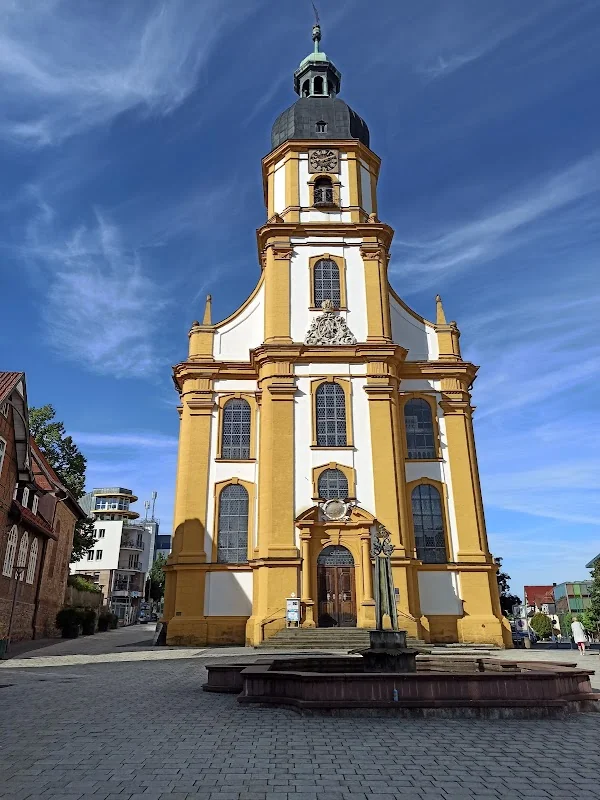
The Kreuzkirche in Suhl is a baroque city center church with a strong cultural profile. The building was constructed between 1731 and 1739 and was consecrated in 1739; today, the distinctive facade, the special interior, and the restored Eilert-Köhler organ shape its appearance. Therefore, those looking for Kreuzkirche Suhl find not only a sacred building but a monument that combines architecture, music, and city history in a compact space. ([kirchengemeinde-suhl.de](https://www.kirchengemeinde-suhl.de/wo-wir-sind/kreuzkirche/?utm_source=openai))
Its location in the center of Suhl makes the church particularly accessible. On the official pages, it is described as a church that shapes the cityscape with its magnificent tower and entrance, while the tourism site highlights the barrier-free side entrance and the use for concerts, tours, and quiet visits. This mix of historical dignity and practical accessibility ensures that the Kreuzkirche remains present in the everyday life of the city. ([kirchengemeinde-suhl.de](https://www.kirchengemeinde-suhl.de/wo-wir-sind/kreuzkirche/?utm_source=openai))
Events, Concerts, and Organ Point Twelve
Those interested in events at Kreuzkirche Suhl encounter a place that offers much more than mere sightseeing. The profile of the church community mentions special events such as concerts and exhibitions, as well as regular services, children's programs, an inductive hearing system, guided tours on request, and a printed church guide. Thus, the Kreuzkirche is not only a monument but also a vibrant meeting point for the community, music lovers, and guests seeking a quiet place in the city center. ([kirchengemeinde-suhl.de](https://www.kirchengemeinde-suhl.de/wo-wir-sind/kreuzkirche/?utm_source=openai))
A special attraction is the summer organ music. The church community points out that from May to the end of September, there is a quarter-hour of music on the Eilert-Köhler organ every Friday, announced under the title Organ Point Twelve. Together with the restored instrument, this creates an atmosphere that is attractive to both spontaneous visitors and concert guests traveling specifically for the event. Suhl Tourism also emphasizes that art, history, and music impressively connect here and that a visit is worthwhile at any time of the year. ([kirchengemeinde-suhl.de](https://www.kirchengemeinde-suhl.de/wo-wir-sind/kreuzkirche/?utm_source=openai))
Especially for people who, in their search for a church in Suhl, think not only of a place of worship but also of a cultural destination, this multifunctional use is important. The Kreuzkirche symbolizes a place where devotion and events do not contradict each other. Those attending a concert experience the same space where regular church use takes place; those coming for organ music also perceive the baroque spatial effect, the galleries, and the historical furnishings. This connection makes the church a very good address for anyone looking for an authentic place with real atmosphere when searching for concerts, organs, or programs at Kreuzkirche Suhl. ([kirchengemeinde-suhl.de](https://www.kirchengemeinde-suhl.de/wo-wir-sind/kreuzkirche/?utm_source=openai))
History of Kreuzkirche Suhl
The history of the Kreuzkirche is closely linked to the growth of the city of Suhl. After the Thirty Years' War, the population doubled within fifty years, and the older town church was no longer sufficient for the growing population. Therefore, a new parish was established in 1706 from the western part of the city as well as from Neundorf and Linsenhof. Thus, the later Kreuzkirche was not built by chance but was a direct response to a specific urban development and the desire for another Protestant place of worship in the center. ([kirchengemeinde-suhl.de](https://www.kirchengemeinde-suhl.de/wo-wir-sind/kreuzkirche/?utm_source=openai))
The actual construction began in 1731 and ended in 1739 with the consecration of the church. The Thüringen.info site names September 20, 1739, as the ceremonial inauguration day and adds that the construction was already decided in 1720. The architectural location also tells a story: The church closes off the Steinweg, which was on the outskirts of the city at the time of construction, between the then directions to Schleusingen and Meiningen. Therefore, the usual east-west orientation was omitted; the altar faces southwest. This peculiarity makes the building interesting from an urban planning perspective to this day and explains why the church is described in sources as a prominent conclusion to the western city area. ([kirchengemeinde-suhl.de](https://www.kirchengemeinde-suhl.de/wo-wir-sind/kreuzkirche/?utm_source=openai))
The builders and craftsmen also deserve attention. Thüringen.info mentions the master mason Michael Schmidt, the carpenter Johann Sebastian Gerbig, and the sculptor Johann Heinrich Reinhardt as influential names in the construction project. Additionally, there is a later care and restoration history: In recent decades, renovations of the tower, roof structure, and facade were necessary, and for the 275th anniversary in September 2014, the church reappeared in its original baroque colors. Thus, a historical church becomes a living monument that is repeatedly preserved, restored, and newly interpreted. ([thueringen.info](https://www.thueringen.info/kultur/kreuzkirche-suhl/?utm_source=openai))
Architecture, Pulpit Altar, and Baroque Interior
Architecturally, the Kreuzkirche Suhl is a typical yet special baroque building. The church community describes it as a proud citizen church from the baroque era with a magnificent tower and entrance. The KiBa emphasizes that the building closes off the city center architecturally, and therefore the tower stands on the east side of the nave. The facade is richly structured, including cornices, pilasters, and columns. These elements give the building a clear order and make it immediately recognizable as an important sacred building from a distance. ([kirchengemeinde-suhl.de](https://www.kirchengemeinde-suhl.de/wo-wir-sind/kreuzkirche/?utm_source=openai))
Inside, the same baroque clarity is evident. Thüringen.info describes the Kreuzkirche as a Protestant preaching church in hall form; the chancel with altar is located in the western part of the building. Particularly defining are the three stacked galleries on three sides of the room, which direct the visitors' gaze towards the pulpit, altar, and organ. The official description also emphasizes a baroque pulpit altar with allegorical figures: faith stands on the left, love on the right. This makes the church not only a gathering place but also a theological and artistic space in which every line of sight has been consciously designed. ([kirchengemeinde-suhl.de](https://www.kirchengemeinde-suhl.de/wo-wir-sind/kreuzkirche/?utm_source=openai))
Another detail is the ceiling. Thüringen.info refers to a flat stucco ceiling with shell ornaments and a clock in the center, which is meant to remind of the transience of life. Such elements give the Kreuzkirche its quiet, contemplative character. Suhl Tourism also describes the interior as a place with a unique atmosphere where art, history, and music come together. Therefore, upon entering the space, one experiences not only a church space but a baroque staging in which symbolism, proportion, and spiritual function intertwine closely. ([thueringen.info](https://www.thueringen.info/kultur/kreuzkirche-suhl/?utm_source=openai))
Eilert-Köhler Organ and Musical Highlights
The Eilert-Köhler organ is the musical heart of the Kreuzkirche Suhl. Suhl Tourism calls it a restored masterpiece and describes it as a special highlight for music lovers. The church community presents it as an extraordinary organ, whose construction combines North German organ building art with Thuringian tradition. It is also referred to as the only remaining instrument by Eilert Köhler. This combination of craftsmanship, historical rarity, and sound quality makes the organ one of the most important reasons to visit the church. ([suhl-tourismus.de](https://www.suhl-tourismus.de/kreuzkirche/))
The creation and restoration of this instrument are also remarkable. Thüringen.info states the construction period as 1738 to 1740 and reports that the restoration could begin in 1999 after long preparations and was completed with a re-consecration on June 3, 2007, after eight years of work. Since then, numerous organists from Germany and abroad have given concerts there. This explains why the Kreuzkirche is repeatedly mentioned in musical contexts: it is not only a historical space with an organ but also a well-maintained place of organ culture where historical substance and lively performance practice come together. ([thueringen.info](https://www.thueringen.info/kultur/kreuzkirche-suhl/?utm_source=openai))
The KiBa adds that in addition to the Eilert Köhler organ, there is also an instrument by Friedrich Ladegast. This makes it clear that the church occupies a very special position in the region's instrument inventory. For visitors, this means: those who enter the Kreuzkirche can trace the development of Central German organ art at one location. The sound, the height of the space, the galleries, and the baroque order of the interior together create an experience that goes far beyond a short tour. Therefore, the church is not only a strong attraction for believers but also for music enthusiasts, cultural travelers, and architecture lovers. ([stiftung-kiba.de](https://www.stiftung-kiba.de/kirchen/kreuzkirche-suhl))
Access, Address, and Barrier-Free Access
The address of the Kreuzkirche is easily traceable in the sources. Suhl Tourism names Kreuzkirchgasse 1, 98527 Suhl, while the KiBa indicates the location as Steinweg 1. Both pieces of information present the same picture: the church is located right in the city center and can thus be easily integrated into a city stroll, a sightseeing day, or a concert visit. For searching for the Kreuzkirche Suhl address or Kreuzkirche Suhl access, these location details are particularly helpful as they clearly position the building within the urban road network. ([suhl-tourismus.de](https://www.suhl-tourismus.de/kreuzkirche/))
An important practical detail is the barrier-free access. The tourism site explicitly mentions a ground-level side entrance that allows for easier access. This is particularly valuable for older visitors, families with strollers, or people with limited mobility. Additionally, the central location is an advantage as it allows for short distances within the city. Therefore, those wondering whether the Kreuzkirche Suhl is also practically accessible receive a clear positive answer from the official information: the access is not only historically significant but also adapted to today's visitor needs. ([suhl-tourismus.de](https://www.suhl-tourismus.de/kreuzkirche/))
Public transport also plays a role in getting there. In the timetable of the Suhl city line A1, there is a stop named Kreuzkirche; this stop is located between the train station and the marketplace. Thus, the church is also reachable without a long walk from the center. Those traveling by bus and train find a clear orientation aid, making the Kreuzkirche particularly pleasant as a destination for spontaneous visits or planned appointments. ([sngonline.de](https://www.sngonline.de/static/sngbf/sng-includes/fahrplan-pdf/A3.pdf?utm_source=openai))
Opening Hours, Services, and Tours
For the actual visit, the seasonal opening hours are important. Thüringen.info states that from May to September, the hours are Monday to Friday from 10:00 to 16:00 and Saturday from 10:00 to 12:00. Additionally, the site refers to short organ music on Fridays at 12 o'clock. Therefore, those wishing to combine a visit with music will find a particularly suitable time in the summer half-year. These opening hours are not the same throughout the year, so planning by season is advisable. Especially for travel or weekend visits, it is worth choosing the date so that both the building and the musical offerings can be experienced. ([thueringen.info](https://www.thueringen.info/kultur/kreuzkirche-suhl/?utm_source=openai))
The Kreuzkirche is also a regular church location. The profile of the church community mentions regular services and makes it clear that the church is not only open for tourist purposes. Additionally, there are guided tours on request, an inductive hearing system, a printed church guide, and programs for children. This combination shows that the Kreuzkirche is geared towards different visitor groups. For community members, it is a place of worship; for guests, a cultural destination; and for music lovers, a place of special acoustic experience. ([kirchengemeinde-suhl.de](https://www.kirchengemeinde-suhl.de/wo-wir-sind/kreuzkirche/?utm_source=openai))
Those interested in Kreuzkirche Suhl tours, Kreuzkirche Suhl services, or opening hours receive a clear usage logic: in the summer half-year, visits are best planned, in the ongoing community life, the worship offerings take center stage, and for special concerns, tours can be requested. Suhl Tourism adds that a visit is worthwhile at any time of the year because art, history, and music come together here. This versatility makes the Kreuzkirche a place that is not only on a list of attractions but truly functions for very different occasions. ([suhl-tourismus.de](https://www.suhl-tourismus.de/kreuzkirche/))
Sources:
- Evangelical Church Community Suhl – Kreuzkirche ([kirchengemeinde-suhl.de](https://www.kirchengemeinde-suhl.de/wo-wir-sind/kreuzkirche/?utm_source=openai))
- City of Suhl – Suhler Kreuzkirche ([suhl-tourismus.de](https://www.suhl-tourismus.de/kreuzkirche/?utm_source=openai))
- KiBa Foundation – Kreuzkirche Suhl ([stiftung-kiba.de](https://www.stiftung-kiba.de/kirchen/kreuzkirche-suhl))
- Thüringen.info – Kreuzkirche Suhl ([thueringen.info](https://www.thueringen.info/kultur/kreuzkirche-suhl/?utm_source=openai))
- SNG Suhl – Timetable A1 ([sngonline.de](https://www.sngonline.de/static/sngbf/sng-includes/fahrplan-pdf/A3.pdf?utm_source=openai))
Show moreShow less
Kreuzkirche Suhl | Events & Organ Music
The Kreuzkirche in Suhl is a baroque city center church with a strong cultural profile. The building was constructed between 1731 and 1739 and was consecrated in 1739; today, the distinctive facade, the special interior, and the restored Eilert-Köhler organ shape its appearance. Therefore, those looking for Kreuzkirche Suhl find not only a sacred building but a monument that combines architecture, music, and city history in a compact space. ([kirchengemeinde-suhl.de](https://www.kirchengemeinde-suhl.de/wo-wir-sind/kreuzkirche/?utm_source=openai))
Its location in the center of Suhl makes the church particularly accessible. On the official pages, it is described as a church that shapes the cityscape with its magnificent tower and entrance, while the tourism site highlights the barrier-free side entrance and the use for concerts, tours, and quiet visits. This mix of historical dignity and practical accessibility ensures that the Kreuzkirche remains present in the everyday life of the city. ([kirchengemeinde-suhl.de](https://www.kirchengemeinde-suhl.de/wo-wir-sind/kreuzkirche/?utm_source=openai))
Events, Concerts, and Organ Point Twelve
Those interested in events at Kreuzkirche Suhl encounter a place that offers much more than mere sightseeing. The profile of the church community mentions special events such as concerts and exhibitions, as well as regular services, children's programs, an inductive hearing system, guided tours on request, and a printed church guide. Thus, the Kreuzkirche is not only a monument but also a vibrant meeting point for the community, music lovers, and guests seeking a quiet place in the city center. ([kirchengemeinde-suhl.de](https://www.kirchengemeinde-suhl.de/wo-wir-sind/kreuzkirche/?utm_source=openai))
A special attraction is the summer organ music. The church community points out that from May to the end of September, there is a quarter-hour of music on the Eilert-Köhler organ every Friday, announced under the title Organ Point Twelve. Together with the restored instrument, this creates an atmosphere that is attractive to both spontaneous visitors and concert guests traveling specifically for the event. Suhl Tourism also emphasizes that art, history, and music impressively connect here and that a visit is worthwhile at any time of the year. ([kirchengemeinde-suhl.de](https://www.kirchengemeinde-suhl.de/wo-wir-sind/kreuzkirche/?utm_source=openai))
Especially for people who, in their search for a church in Suhl, think not only of a place of worship but also of a cultural destination, this multifunctional use is important. The Kreuzkirche symbolizes a place where devotion and events do not contradict each other. Those attending a concert experience the same space where regular church use takes place; those coming for organ music also perceive the baroque spatial effect, the galleries, and the historical furnishings. This connection makes the church a very good address for anyone looking for an authentic place with real atmosphere when searching for concerts, organs, or programs at Kreuzkirche Suhl. ([kirchengemeinde-suhl.de](https://www.kirchengemeinde-suhl.de/wo-wir-sind/kreuzkirche/?utm_source=openai))
History of Kreuzkirche Suhl
The history of the Kreuzkirche is closely linked to the growth of the city of Suhl. After the Thirty Years' War, the population doubled within fifty years, and the older town church was no longer sufficient for the growing population. Therefore, a new parish was established in 1706 from the western part of the city as well as from Neundorf and Linsenhof. Thus, the later Kreuzkirche was not built by chance but was a direct response to a specific urban development and the desire for another Protestant place of worship in the center. ([kirchengemeinde-suhl.de](https://www.kirchengemeinde-suhl.de/wo-wir-sind/kreuzkirche/?utm_source=openai))
The actual construction began in 1731 and ended in 1739 with the consecration of the church. The Thüringen.info site names September 20, 1739, as the ceremonial inauguration day and adds that the construction was already decided in 1720. The architectural location also tells a story: The church closes off the Steinweg, which was on the outskirts of the city at the time of construction, between the then directions to Schleusingen and Meiningen. Therefore, the usual east-west orientation was omitted; the altar faces southwest. This peculiarity makes the building interesting from an urban planning perspective to this day and explains why the church is described in sources as a prominent conclusion to the western city area. ([kirchengemeinde-suhl.de](https://www.kirchengemeinde-suhl.de/wo-wir-sind/kreuzkirche/?utm_source=openai))
The builders and craftsmen also deserve attention. Thüringen.info mentions the master mason Michael Schmidt, the carpenter Johann Sebastian Gerbig, and the sculptor Johann Heinrich Reinhardt as influential names in the construction project. Additionally, there is a later care and restoration history: In recent decades, renovations of the tower, roof structure, and facade were necessary, and for the 275th anniversary in September 2014, the church reappeared in its original baroque colors. Thus, a historical church becomes a living monument that is repeatedly preserved, restored, and newly interpreted. ([thueringen.info](https://www.thueringen.info/kultur/kreuzkirche-suhl/?utm_source=openai))
Architecture, Pulpit Altar, and Baroque Interior
Architecturally, the Kreuzkirche Suhl is a typical yet special baroque building. The church community describes it as a proud citizen church from the baroque era with a magnificent tower and entrance. The KiBa emphasizes that the building closes off the city center architecturally, and therefore the tower stands on the east side of the nave. The facade is richly structured, including cornices, pilasters, and columns. These elements give the building a clear order and make it immediately recognizable as an important sacred building from a distance. ([kirchengemeinde-suhl.de](https://www.kirchengemeinde-suhl.de/wo-wir-sind/kreuzkirche/?utm_source=openai))
Inside, the same baroque clarity is evident. Thüringen.info describes the Kreuzkirche as a Protestant preaching church in hall form; the chancel with altar is located in the western part of the building. Particularly defining are the three stacked galleries on three sides of the room, which direct the visitors' gaze towards the pulpit, altar, and organ. The official description also emphasizes a baroque pulpit altar with allegorical figures: faith stands on the left, love on the right. This makes the church not only a gathering place but also a theological and artistic space in which every line of sight has been consciously designed. ([kirchengemeinde-suhl.de](https://www.kirchengemeinde-suhl.de/wo-wir-sind/kreuzkirche/?utm_source=openai))
Another detail is the ceiling. Thüringen.info refers to a flat stucco ceiling with shell ornaments and a clock in the center, which is meant to remind of the transience of life. Such elements give the Kreuzkirche its quiet, contemplative character. Suhl Tourism also describes the interior as a place with a unique atmosphere where art, history, and music come together. Therefore, upon entering the space, one experiences not only a church space but a baroque staging in which symbolism, proportion, and spiritual function intertwine closely. ([thueringen.info](https://www.thueringen.info/kultur/kreuzkirche-suhl/?utm_source=openai))
Eilert-Köhler Organ and Musical Highlights
The Eilert-Köhler organ is the musical heart of the Kreuzkirche Suhl. Suhl Tourism calls it a restored masterpiece and describes it as a special highlight for music lovers. The church community presents it as an extraordinary organ, whose construction combines North German organ building art with Thuringian tradition. It is also referred to as the only remaining instrument by Eilert Köhler. This combination of craftsmanship, historical rarity, and sound quality makes the organ one of the most important reasons to visit the church. ([suhl-tourismus.de](https://www.suhl-tourismus.de/kreuzkirche/))
The creation and restoration of this instrument are also remarkable. Thüringen.info states the construction period as 1738 to 1740 and reports that the restoration could begin in 1999 after long preparations and was completed with a re-consecration on June 3, 2007, after eight years of work. Since then, numerous organists from Germany and abroad have given concerts there. This explains why the Kreuzkirche is repeatedly mentioned in musical contexts: it is not only a historical space with an organ but also a well-maintained place of organ culture where historical substance and lively performance practice come together. ([thueringen.info](https://www.thueringen.info/kultur/kreuzkirche-suhl/?utm_source=openai))
The KiBa adds that in addition to the Eilert Köhler organ, there is also an instrument by Friedrich Ladegast. This makes it clear that the church occupies a very special position in the region's instrument inventory. For visitors, this means: those who enter the Kreuzkirche can trace the development of Central German organ art at one location. The sound, the height of the space, the galleries, and the baroque order of the interior together create an experience that goes far beyond a short tour. Therefore, the church is not only a strong attraction for believers but also for music enthusiasts, cultural travelers, and architecture lovers. ([stiftung-kiba.de](https://www.stiftung-kiba.de/kirchen/kreuzkirche-suhl))
Access, Address, and Barrier-Free Access
The address of the Kreuzkirche is easily traceable in the sources. Suhl Tourism names Kreuzkirchgasse 1, 98527 Suhl, while the KiBa indicates the location as Steinweg 1. Both pieces of information present the same picture: the church is located right in the city center and can thus be easily integrated into a city stroll, a sightseeing day, or a concert visit. For searching for the Kreuzkirche Suhl address or Kreuzkirche Suhl access, these location details are particularly helpful as they clearly position the building within the urban road network. ([suhl-tourismus.de](https://www.suhl-tourismus.de/kreuzkirche/))
An important practical detail is the barrier-free access. The tourism site explicitly mentions a ground-level side entrance that allows for easier access. This is particularly valuable for older visitors, families with strollers, or people with limited mobility. Additionally, the central location is an advantage as it allows for short distances within the city. Therefore, those wondering whether the Kreuzkirche Suhl is also practically accessible receive a clear positive answer from the official information: the access is not only historically significant but also adapted to today's visitor needs. ([suhl-tourismus.de](https://www.suhl-tourismus.de/kreuzkirche/))
Public transport also plays a role in getting there. In the timetable of the Suhl city line A1, there is a stop named Kreuzkirche; this stop is located between the train station and the marketplace. Thus, the church is also reachable without a long walk from the center. Those traveling by bus and train find a clear orientation aid, making the Kreuzkirche particularly pleasant as a destination for spontaneous visits or planned appointments. ([sngonline.de](https://www.sngonline.de/static/sngbf/sng-includes/fahrplan-pdf/A3.pdf?utm_source=openai))
Opening Hours, Services, and Tours
For the actual visit, the seasonal opening hours are important. Thüringen.info states that from May to September, the hours are Monday to Friday from 10:00 to 16:00 and Saturday from 10:00 to 12:00. Additionally, the site refers to short organ music on Fridays at 12 o'clock. Therefore, those wishing to combine a visit with music will find a particularly suitable time in the summer half-year. These opening hours are not the same throughout the year, so planning by season is advisable. Especially for travel or weekend visits, it is worth choosing the date so that both the building and the musical offerings can be experienced. ([thueringen.info](https://www.thueringen.info/kultur/kreuzkirche-suhl/?utm_source=openai))
The Kreuzkirche is also a regular church location. The profile of the church community mentions regular services and makes it clear that the church is not only open for tourist purposes. Additionally, there are guided tours on request, an inductive hearing system, a printed church guide, and programs for children. This combination shows that the Kreuzkirche is geared towards different visitor groups. For community members, it is a place of worship; for guests, a cultural destination; and for music lovers, a place of special acoustic experience. ([kirchengemeinde-suhl.de](https://www.kirchengemeinde-suhl.de/wo-wir-sind/kreuzkirche/?utm_source=openai))
Those interested in Kreuzkirche Suhl tours, Kreuzkirche Suhl services, or opening hours receive a clear usage logic: in the summer half-year, visits are best planned, in the ongoing community life, the worship offerings take center stage, and for special concerns, tours can be requested. Suhl Tourism adds that a visit is worthwhile at any time of the year because art, history, and music come together here. This versatility makes the Kreuzkirche a place that is not only on a list of attractions but truly functions for very different occasions. ([suhl-tourismus.de](https://www.suhl-tourismus.de/kreuzkirche/))
Sources:
- Evangelical Church Community Suhl – Kreuzkirche ([kirchengemeinde-suhl.de](https://www.kirchengemeinde-suhl.de/wo-wir-sind/kreuzkirche/?utm_source=openai))
- City of Suhl – Suhler Kreuzkirche ([suhl-tourismus.de](https://www.suhl-tourismus.de/kreuzkirche/?utm_source=openai))
- KiBa Foundation – Kreuzkirche Suhl ([stiftung-kiba.de](https://www.stiftung-kiba.de/kirchen/kreuzkirche-suhl))
- Thüringen.info – Kreuzkirche Suhl ([thueringen.info](https://www.thueringen.info/kultur/kreuzkirche-suhl/?utm_source=openai))
- SNG Suhl – Timetable A1 ([sngonline.de](https://www.sngonline.de/static/sngbf/sng-includes/fahrplan-pdf/A3.pdf?utm_source=openai))
Kreuzkirche Suhl | Events & Organ Music
The Kreuzkirche in Suhl is a baroque city center church with a strong cultural profile. The building was constructed between 1731 and 1739 and was consecrated in 1739; today, the distinctive facade, the special interior, and the restored Eilert-Köhler organ shape its appearance. Therefore, those looking for Kreuzkirche Suhl find not only a sacred building but a monument that combines architecture, music, and city history in a compact space. ([kirchengemeinde-suhl.de](https://www.kirchengemeinde-suhl.de/wo-wir-sind/kreuzkirche/?utm_source=openai))
Its location in the center of Suhl makes the church particularly accessible. On the official pages, it is described as a church that shapes the cityscape with its magnificent tower and entrance, while the tourism site highlights the barrier-free side entrance and the use for concerts, tours, and quiet visits. This mix of historical dignity and practical accessibility ensures that the Kreuzkirche remains present in the everyday life of the city. ([kirchengemeinde-suhl.de](https://www.kirchengemeinde-suhl.de/wo-wir-sind/kreuzkirche/?utm_source=openai))
Events, Concerts, and Organ Point Twelve
Those interested in events at Kreuzkirche Suhl encounter a place that offers much more than mere sightseeing. The profile of the church community mentions special events such as concerts and exhibitions, as well as regular services, children's programs, an inductive hearing system, guided tours on request, and a printed church guide. Thus, the Kreuzkirche is not only a monument but also a vibrant meeting point for the community, music lovers, and guests seeking a quiet place in the city center. ([kirchengemeinde-suhl.de](https://www.kirchengemeinde-suhl.de/wo-wir-sind/kreuzkirche/?utm_source=openai))
A special attraction is the summer organ music. The church community points out that from May to the end of September, there is a quarter-hour of music on the Eilert-Köhler organ every Friday, announced under the title Organ Point Twelve. Together with the restored instrument, this creates an atmosphere that is attractive to both spontaneous visitors and concert guests traveling specifically for the event. Suhl Tourism also emphasizes that art, history, and music impressively connect here and that a visit is worthwhile at any time of the year. ([kirchengemeinde-suhl.de](https://www.kirchengemeinde-suhl.de/wo-wir-sind/kreuzkirche/?utm_source=openai))
Especially for people who, in their search for a church in Suhl, think not only of a place of worship but also of a cultural destination, this multifunctional use is important. The Kreuzkirche symbolizes a place where devotion and events do not contradict each other. Those attending a concert experience the same space where regular church use takes place; those coming for organ music also perceive the baroque spatial effect, the galleries, and the historical furnishings. This connection makes the church a very good address for anyone looking for an authentic place with real atmosphere when searching for concerts, organs, or programs at Kreuzkirche Suhl. ([kirchengemeinde-suhl.de](https://www.kirchengemeinde-suhl.de/wo-wir-sind/kreuzkirche/?utm_source=openai))
History of Kreuzkirche Suhl
The history of the Kreuzkirche is closely linked to the growth of the city of Suhl. After the Thirty Years' War, the population doubled within fifty years, and the older town church was no longer sufficient for the growing population. Therefore, a new parish was established in 1706 from the western part of the city as well as from Neundorf and Linsenhof. Thus, the later Kreuzkirche was not built by chance but was a direct response to a specific urban development and the desire for another Protestant place of worship in the center. ([kirchengemeinde-suhl.de](https://www.kirchengemeinde-suhl.de/wo-wir-sind/kreuzkirche/?utm_source=openai))
The actual construction began in 1731 and ended in 1739 with the consecration of the church. The Thüringen.info site names September 20, 1739, as the ceremonial inauguration day and adds that the construction was already decided in 1720. The architectural location also tells a story: The church closes off the Steinweg, which was on the outskirts of the city at the time of construction, between the then directions to Schleusingen and Meiningen. Therefore, the usual east-west orientation was omitted; the altar faces southwest. This peculiarity makes the building interesting from an urban planning perspective to this day and explains why the church is described in sources as a prominent conclusion to the western city area. ([kirchengemeinde-suhl.de](https://www.kirchengemeinde-suhl.de/wo-wir-sind/kreuzkirche/?utm_source=openai))
The builders and craftsmen also deserve attention. Thüringen.info mentions the master mason Michael Schmidt, the carpenter Johann Sebastian Gerbig, and the sculptor Johann Heinrich Reinhardt as influential names in the construction project. Additionally, there is a later care and restoration history: In recent decades, renovations of the tower, roof structure, and facade were necessary, and for the 275th anniversary in September 2014, the church reappeared in its original baroque colors. Thus, a historical church becomes a living monument that is repeatedly preserved, restored, and newly interpreted. ([thueringen.info](https://www.thueringen.info/kultur/kreuzkirche-suhl/?utm_source=openai))
Architecture, Pulpit Altar, and Baroque Interior
Architecturally, the Kreuzkirche Suhl is a typical yet special baroque building. The church community describes it as a proud citizen church from the baroque era with a magnificent tower and entrance. The KiBa emphasizes that the building closes off the city center architecturally, and therefore the tower stands on the east side of the nave. The facade is richly structured, including cornices, pilasters, and columns. These elements give the building a clear order and make it immediately recognizable as an important sacred building from a distance. ([kirchengemeinde-suhl.de](https://www.kirchengemeinde-suhl.de/wo-wir-sind/kreuzkirche/?utm_source=openai))
Inside, the same baroque clarity is evident. Thüringen.info describes the Kreuzkirche as a Protestant preaching church in hall form; the chancel with altar is located in the western part of the building. Particularly defining are the three stacked galleries on three sides of the room, which direct the visitors' gaze towards the pulpit, altar, and organ. The official description also emphasizes a baroque pulpit altar with allegorical figures: faith stands on the left, love on the right. This makes the church not only a gathering place but also a theological and artistic space in which every line of sight has been consciously designed. ([kirchengemeinde-suhl.de](https://www.kirchengemeinde-suhl.de/wo-wir-sind/kreuzkirche/?utm_source=openai))
Another detail is the ceiling. Thüringen.info refers to a flat stucco ceiling with shell ornaments and a clock in the center, which is meant to remind of the transience of life. Such elements give the Kreuzkirche its quiet, contemplative character. Suhl Tourism also describes the interior as a place with a unique atmosphere where art, history, and music come together. Therefore, upon entering the space, one experiences not only a church space but a baroque staging in which symbolism, proportion, and spiritual function intertwine closely. ([thueringen.info](https://www.thueringen.info/kultur/kreuzkirche-suhl/?utm_source=openai))
Eilert-Köhler Organ and Musical Highlights
The Eilert-Köhler organ is the musical heart of the Kreuzkirche Suhl. Suhl Tourism calls it a restored masterpiece and describes it as a special highlight for music lovers. The church community presents it as an extraordinary organ, whose construction combines North German organ building art with Thuringian tradition. It is also referred to as the only remaining instrument by Eilert Köhler. This combination of craftsmanship, historical rarity, and sound quality makes the organ one of the most important reasons to visit the church. ([suhl-tourismus.de](https://www.suhl-tourismus.de/kreuzkirche/))
The creation and restoration of this instrument are also remarkable. Thüringen.info states the construction period as 1738 to 1740 and reports that the restoration could begin in 1999 after long preparations and was completed with a re-consecration on June 3, 2007, after eight years of work. Since then, numerous organists from Germany and abroad have given concerts there. This explains why the Kreuzkirche is repeatedly mentioned in musical contexts: it is not only a historical space with an organ but also a well-maintained place of organ culture where historical substance and lively performance practice come together. ([thueringen.info](https://www.thueringen.info/kultur/kreuzkirche-suhl/?utm_source=openai))
The KiBa adds that in addition to the Eilert Köhler organ, there is also an instrument by Friedrich Ladegast. This makes it clear that the church occupies a very special position in the region's instrument inventory. For visitors, this means: those who enter the Kreuzkirche can trace the development of Central German organ art at one location. The sound, the height of the space, the galleries, and the baroque order of the interior together create an experience that goes far beyond a short tour. Therefore, the church is not only a strong attraction for believers but also for music enthusiasts, cultural travelers, and architecture lovers. ([stiftung-kiba.de](https://www.stiftung-kiba.de/kirchen/kreuzkirche-suhl))
Access, Address, and Barrier-Free Access
The address of the Kreuzkirche is easily traceable in the sources. Suhl Tourism names Kreuzkirchgasse 1, 98527 Suhl, while the KiBa indicates the location as Steinweg 1. Both pieces of information present the same picture: the church is located right in the city center and can thus be easily integrated into a city stroll, a sightseeing day, or a concert visit. For searching for the Kreuzkirche Suhl address or Kreuzkirche Suhl access, these location details are particularly helpful as they clearly position the building within the urban road network. ([suhl-tourismus.de](https://www.suhl-tourismus.de/kreuzkirche/))
An important practical detail is the barrier-free access. The tourism site explicitly mentions a ground-level side entrance that allows for easier access. This is particularly valuable for older visitors, families with strollers, or people with limited mobility. Additionally, the central location is an advantage as it allows for short distances within the city. Therefore, those wondering whether the Kreuzkirche Suhl is also practically accessible receive a clear positive answer from the official information: the access is not only historically significant but also adapted to today's visitor needs. ([suhl-tourismus.de](https://www.suhl-tourismus.de/kreuzkirche/))
Public transport also plays a role in getting there. In the timetable of the Suhl city line A1, there is a stop named Kreuzkirche; this stop is located between the train station and the marketplace. Thus, the church is also reachable without a long walk from the center. Those traveling by bus and train find a clear orientation aid, making the Kreuzkirche particularly pleasant as a destination for spontaneous visits or planned appointments. ([sngonline.de](https://www.sngonline.de/static/sngbf/sng-includes/fahrplan-pdf/A3.pdf?utm_source=openai))
Opening Hours, Services, and Tours
For the actual visit, the seasonal opening hours are important. Thüringen.info states that from May to September, the hours are Monday to Friday from 10:00 to 16:00 and Saturday from 10:00 to 12:00. Additionally, the site refers to short organ music on Fridays at 12 o'clock. Therefore, those wishing to combine a visit with music will find a particularly suitable time in the summer half-year. These opening hours are not the same throughout the year, so planning by season is advisable. Especially for travel or weekend visits, it is worth choosing the date so that both the building and the musical offerings can be experienced. ([thueringen.info](https://www.thueringen.info/kultur/kreuzkirche-suhl/?utm_source=openai))
The Kreuzkirche is also a regular church location. The profile of the church community mentions regular services and makes it clear that the church is not only open for tourist purposes. Additionally, there are guided tours on request, an inductive hearing system, a printed church guide, and programs for children. This combination shows that the Kreuzkirche is geared towards different visitor groups. For community members, it is a place of worship; for guests, a cultural destination; and for music lovers, a place of special acoustic experience. ([kirchengemeinde-suhl.de](https://www.kirchengemeinde-suhl.de/wo-wir-sind/kreuzkirche/?utm_source=openai))
Those interested in Kreuzkirche Suhl tours, Kreuzkirche Suhl services, or opening hours receive a clear usage logic: in the summer half-year, visits are best planned, in the ongoing community life, the worship offerings take center stage, and for special concerns, tours can be requested. Suhl Tourism adds that a visit is worthwhile at any time of the year because art, history, and music come together here. This versatility makes the Kreuzkirche a place that is not only on a list of attractions but truly functions for very different occasions. ([suhl-tourismus.de](https://www.suhl-tourismus.de/kreuzkirche/))
Sources:
- Evangelical Church Community Suhl – Kreuzkirche ([kirchengemeinde-suhl.de](https://www.kirchengemeinde-suhl.de/wo-wir-sind/kreuzkirche/?utm_source=openai))
- City of Suhl – Suhler Kreuzkirche ([suhl-tourismus.de](https://www.suhl-tourismus.de/kreuzkirche/?utm_source=openai))
- KiBa Foundation – Kreuzkirche Suhl ([stiftung-kiba.de](https://www.stiftung-kiba.de/kirchen/kreuzkirche-suhl))
- Thüringen.info – Kreuzkirche Suhl ([thueringen.info](https://www.thueringen.info/kultur/kreuzkirche-suhl/?utm_source=openai))
- SNG Suhl – Timetable A1 ([sngonline.de](https://www.sngonline.de/static/sngbf/sng-includes/fahrplan-pdf/A3.pdf?utm_source=openai))
Upcoming Events
No events found
Frequently Asked Questions
Reviews
Naturliebhaber
26. September 2023
Very beautiful church and a must-see.
Fabian Böckmann
9. August 2023
Beautiful church, but unfortunately the gallery is closed.
JS14
24. September 2019
Worth seeing. Also worth taking a look inside.
Jessica Gerlach
9. April 2022
Beautiful church in the heart of the city of Suhl.
anma
15. December 2019
Very beautiful church, especially during Christmas time.