
Zella-Mehlis
Zellaer Markt, 98544 Zella-Mehlis, Deutschland
Marketplace Zella | Weekly Market & Mehlis Market
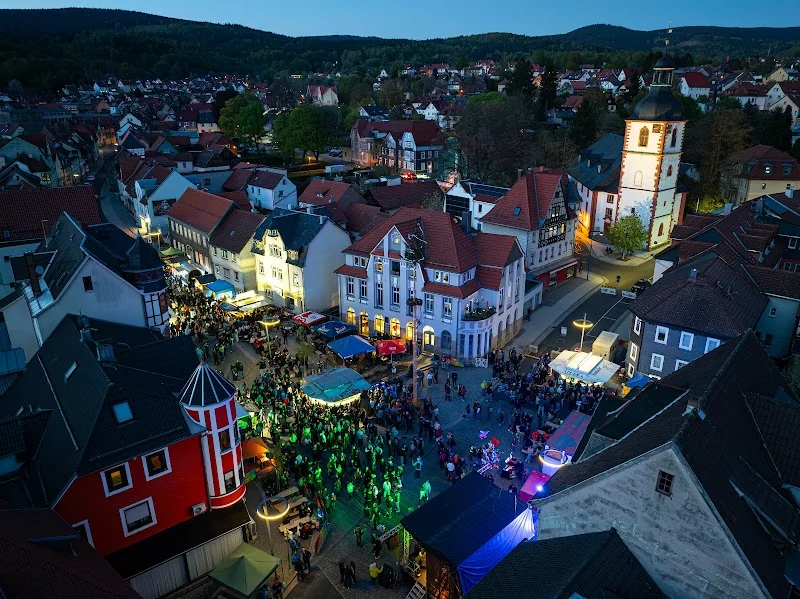
The Marketplace Zella in Zella-Mehlis is much more than a name on the map. Those who arrive here experience a place where city history, everyday life, and local identity are closely intertwined. The square is also known in the cityscape as Mehlis Market and serves as a central point of orientation for visitors and locals alike. This very mix is what makes it appealing: a lively weekly market in the morning, a well-utilized meeting point in the city center during the day, and repeatedly a starting point for walks through the historic town center. The Tourist Information is centrally located at Mehlis Market, emphasizing the importance of the square as the heart of the place. At the same time, the square, with its design, surrounding buildings, and everyday functions, tells a lot about the development of Zella-Mehlis as a grown city in the Thuringian Forest. ([tourismus.zella-mehlis.de](https://tourismus.zella-mehlis.de/service-touristinfo-zm/tourist-information))
For search intents related to marketplace zella, mehlis market, weekly market zella mehlis, and marketplace zella photos, this place is particularly relevant because it functions both practically and atmospherically. Those looking for images will find here not only a classic marketplace but an ensemble of seating areas, historically grown surroundings, and modern elements. Those seeking information about the weekly market will find fixed times and a wide range of products. Those interested in city history will discover the connection between the two old town centers of Zella and Mehlis. And those simply looking for an appealing place for a short visit will find a square that is intentionally designed as an urban living room. This is precisely what creates the special character of this place: central, visible, easily accessible, and at the same time with a true local soul. ([zella-mehlis.de](https://zella-mehlis.de/buergerservice/leben-und-wohnen/wochenmarkt))
Weekly Market at Marketplace Zella
The most important search impulse around Marketplace Zella is the weekly market. The city of Zella-Mehlis operates the market as a public institution, and the weekly market at Marketplace Zella takes place year-round on Fridays from 8 AM to 1 PM. In addition, there is a market on Wednesdays on Louis-Anschütz-Straße, also from 8 AM to 1 PM. These fixed times make the square a reliable part of the weekly routine for many people. This is particularly practical for visitors, as a detour to the marketplace can be well planned, and the square can be experienced not just as a backdrop but as a functioning supply location. ([zella-mehlis.de](https://zella-mehlis.de/buergerservice/leben-und-wohnen/wochenmarkt))
The offerings are also typical of a vibrant city market. According to the city, fresh fruits and vegetables, meat and sausage products, textiles, and household goods are part of the core assortment. Seasonal stalls with flowers and garden plants are present from spring to autumn, along with cosmetics and handmade sewing and crocheting works several times a year. Directly at the market, one can enjoy Thuringian grilled sausages and Rostbrätel, among other things. This mix of shopping, enjoyment, and encounters is a large part of the marketplace's attractiveness. It is thus not only a place for quick supplies but a social meeting point with a regional character, where one can connect short distances, local products, and the special flair of a Thuringian city market. ([zella-mehlis.de](https://zella-mehlis.de/buergerservice/leben-und-wohnen/wochenmarkt))
Guardian and Photo Spot at Mehlis Market
A second strong theme around Marketplace Zella is the guardian at Mehlis Market. The city describes the guardian as a figure that embodies three historical personalities: the shepherd tradition, Johann-Peter Haseney, and the technician and inventor Heinrich Ehrhardt. Thus, the statue is not only a work of art but a symbol of local history, inventiveness, and local storytelling tradition. For many visitors, this is particularly interesting because it gives the square an identity-forming level that goes beyond mere square design. The guardian is also an ideal motif for photos, as it stands out prominently in the public space and is directly connected to the history of the place. ([tourismus.zella-mehlis.de](https://tourismus.zella-mehlis.de/service-touristinfo-zm/tourist-information/196-aktuelles?utm_source=openai))
Additionally, there is the modern redevelopment of the square. Mehlis Market was redesigned in two construction phases and opened in 2020. The city describes it as a piece of the urban living room, where water features and seating areas invite people to linger. There are also steps down to the stream, the guardian, and the anglers designed by sculptor Ulrich Barnickel. Modern lights further enhance the area. The combination of water, art, light, and seating options makes the square a clear photo spot and a place where one does not just pass by but stays. This is precisely why search queries like marketplace zella photos or guardian mehlis market work so well: the place provides visual recognition and at the same time a real substantive connection to the city's history. ([zella-mehlis.de](https://zella-mehlis.de/media/pages/buergerservice/stadtanzeiger-amtsblatt/archiv/5ff5bbad9c-1730278237/2024-22-stadtanzeiger.pdf))
History of Mehlis Market and City Center
The history of the marketplace can only be understood when considering Zella-Mehlis as a city as a whole. According to the official city brochure, Zella-Mehlis was formed in 1919 from the merger of Zella St. Blasii and Mehlis. The current city center around the town hall has developed since the mid-1920s. Urbanistically important are still the two original town centers with church and market. This structure explains why the marketplace is not just an area but a historical connection point between two grown settlement cores. For visitors, it becomes visible how a common center has developed from two places. ([tourismus.zella-mehlis.de](https://tourismus.zella-mehlis.de/images/pdf/Alte%20Ecken%20neu%20entdecken%20%285.598%20KB%29.pdf))
The deeper historical roots are also fascinating. The older Mehlis, presumably since the 9th century, was elevated to a town in 1894. Zella St. Blasii received market rights in 1645 and was rebuilt in its current old town form after a major fire in 1762. The brochure also emphasizes that the coat of arms features the patron saints of both places as well as a crossbow and miner's hammer, representing the original trades of weapon manufacturing and mining. This historical depth is important for the search terms city center zella mehlis and town hall zella mehlis, as the market is closely linked to the development of the administrative and commercial center. Thus, when visiting the square, one is not standing in an arbitrary center but in a place where city development, trade, craftsmanship, and identity have condensed over many generations. ([tourismus.zella-mehlis.de](https://tourismus.zella-mehlis.de/images/pdf/Alte%20Ecken%20neu%20entdecken%20%285.598%20KB%29.pdf))
Access, Parking, and Accessibility
For practical planning, Marketplace Zella plays a significant role, especially due to its central location. The Tourist Information is located directly at Mehlis Market and describes its rooms as central and barrier-free. This is an important note for anyone wanting to orient themselves on-site, seeking information, or planning their stay spontaneously. The Tourist Information provides accommodations, guided tours, and individual tips for the stay. Thus, it is not only a point of contact but a practical service point right in the square. For many visitors, this is a real plus, as the marketplace thus functions as a starting point for a city visit without long distances. ([tourismus.zella-mehlis.de](https://tourismus.zella-mehlis.de/service-touristinfo-zm/tourist-information))
There are also useful parking tips from an official source. The Tourist Information states that almost all parking spaces in Zella-Mehlis are free of charge; however, the marked parking disc regulation should be noted. Additionally, E-bike charging stations can be found in the municipal A-Z directory at Mehlis Market, and the directory lists barrier-free public toilets, including at the Tourist Information and the OT Mehlis parking lot. It is also important for arrival that Zella-Mehlis is well connected to rail and road traffic. The Tourist Information refers to Deutsche Bahn, Südthüringenbahn, long-distance buses, as well as city and regional transport. For visitors to the marketplace, this means: the square is embedded in a well-developed urban system that is easily accessible by car, public transport, and on foot. ([tourismus.zella-mehlis.de](https://tourismus.zella-mehlis.de/service-touristinfo-zm/a-z))
Events around Mehlis Market
Mehlis Market is not only a weekly market but also a place for events that continually recharge the square. Particularly important is the Mart-Gezwärwel, which, according to the Tourist Information, takes place every year on April 30. The festival was first celebrated in 2019 and has since been described as a cheerful start to the warm season. A traditional maypole raising by the fair society is part of the event. The Tourist Information also emphasizes that admission is free. For searching events mehlis market and mart-gezwärwel, this is the central anchor, as the square on this day is not only a backdrop but a stage for the community. ([tourismus.zella-mehlis.de](https://tourismus.zella-mehlis.de/150-highlights/769-mart-gezwaerwel))
The city also reports that the Mart-Gezwärwel in 2026 was celebrated with a decorated maypole, live music, and a fire show. Mehlis Market is described as the symbolic center of the spring festival. Around the square, a very local experience is created that brings families, clubs, and guests together. Those looking for more seasonal offerings will also find the traditional Easter egg market in Zella-Mehlis, which takes place in and around the community center but serves the same social radius as part of the city's event calendar. It attracts more than 1,000 visitors annually and represents the early spring season with crafts, decorations, and family flair. Together, these formats show that Marketplace Zella cannot be thought of in isolation but as part of a vibrant event cycle in the heart of the city. ([zella-mehlis.de](https://zella-mehlis.de/blog/mart-gezwaerwel-2026-gelungener-start-in-die-open-air-saison))
Practical Tips for Photos, Visits, and Orientation
Those visiting Marketplace Zella for the first time should not only view the place as a point on the city map but as an entry into a short city walk. The official city brochure describes that the current city center around the town hall has developed since the mid-1920s and that the two old town centers with church and market are urbanistically significant. This results in a very simple orientation: the market is a central building block in the city center and is excellent for discovering the surroundings on foot. This is precisely why the square is also interesting for people searching for terms like city center zella mehlis or marketplace zella photos. The surroundings provide motifs, paths, and contrasts that can be captured on short routes. ([tourismus.zella-mehlis.de](https://tourismus.zella-mehlis.de/images/pdf/Alte%20Ecken%20neu%20entdecken%20%285.598%20KB%29.pdf))
For photos and a peaceful visit, the modernly designed areas of Mehlis Market are particularly exciting. The water features, seating areas, steps to the stream, the guardian, and the lighting create a clear spatial structure both during the day and in the evening. At the same time, the weekly market and the tourist infrastructure provide movement and life. Those who want to experience the square in peace can strategically use the market times or consciously come outside of market operating hours to better perceive the square's design and surroundings. The Tourist Information directly at the square offers additional orientation and helps with planning accommodations, tours, and other destinations in Zella-Mehlis. Thus, a short stop quickly becomes a meaningful entry point into the city that connects history, present, and everyday life. ([zella-mehlis.de](https://zella-mehlis.de/media/pages/buergerservice/stadtanzeiger-amtsblatt/archiv/5ff5bbad9c-1730278237/2024-22-stadtanzeiger.pdf))
Sources:
Show moreShow less
Marketplace Zella | Weekly Market & Mehlis Market
The Marketplace Zella in Zella-Mehlis is much more than a name on the map. Those who arrive here experience a place where city history, everyday life, and local identity are closely intertwined. The square is also known in the cityscape as Mehlis Market and serves as a central point of orientation for visitors and locals alike. This very mix is what makes it appealing: a lively weekly market in the morning, a well-utilized meeting point in the city center during the day, and repeatedly a starting point for walks through the historic town center. The Tourist Information is centrally located at Mehlis Market, emphasizing the importance of the square as the heart of the place. At the same time, the square, with its design, surrounding buildings, and everyday functions, tells a lot about the development of Zella-Mehlis as a grown city in the Thuringian Forest. ([tourismus.zella-mehlis.de](https://tourismus.zella-mehlis.de/service-touristinfo-zm/tourist-information))
For search intents related to marketplace zella, mehlis market, weekly market zella mehlis, and marketplace zella photos, this place is particularly relevant because it functions both practically and atmospherically. Those looking for images will find here not only a classic marketplace but an ensemble of seating areas, historically grown surroundings, and modern elements. Those seeking information about the weekly market will find fixed times and a wide range of products. Those interested in city history will discover the connection between the two old town centers of Zella and Mehlis. And those simply looking for an appealing place for a short visit will find a square that is intentionally designed as an urban living room. This is precisely what creates the special character of this place: central, visible, easily accessible, and at the same time with a true local soul. ([zella-mehlis.de](https://zella-mehlis.de/buergerservice/leben-und-wohnen/wochenmarkt))
Weekly Market at Marketplace Zella
The most important search impulse around Marketplace Zella is the weekly market. The city of Zella-Mehlis operates the market as a public institution, and the weekly market at Marketplace Zella takes place year-round on Fridays from 8 AM to 1 PM. In addition, there is a market on Wednesdays on Louis-Anschütz-Straße, also from 8 AM to 1 PM. These fixed times make the square a reliable part of the weekly routine for many people. This is particularly practical for visitors, as a detour to the marketplace can be well planned, and the square can be experienced not just as a backdrop but as a functioning supply location. ([zella-mehlis.de](https://zella-mehlis.de/buergerservice/leben-und-wohnen/wochenmarkt))
The offerings are also typical of a vibrant city market. According to the city, fresh fruits and vegetables, meat and sausage products, textiles, and household goods are part of the core assortment. Seasonal stalls with flowers and garden plants are present from spring to autumn, along with cosmetics and handmade sewing and crocheting works several times a year. Directly at the market, one can enjoy Thuringian grilled sausages and Rostbrätel, among other things. This mix of shopping, enjoyment, and encounters is a large part of the marketplace's attractiveness. It is thus not only a place for quick supplies but a social meeting point with a regional character, where one can connect short distances, local products, and the special flair of a Thuringian city market. ([zella-mehlis.de](https://zella-mehlis.de/buergerservice/leben-und-wohnen/wochenmarkt))
Guardian and Photo Spot at Mehlis Market
A second strong theme around Marketplace Zella is the guardian at Mehlis Market. The city describes the guardian as a figure that embodies three historical personalities: the shepherd tradition, Johann-Peter Haseney, and the technician and inventor Heinrich Ehrhardt. Thus, the statue is not only a work of art but a symbol of local history, inventiveness, and local storytelling tradition. For many visitors, this is particularly interesting because it gives the square an identity-forming level that goes beyond mere square design. The guardian is also an ideal motif for photos, as it stands out prominently in the public space and is directly connected to the history of the place. ([tourismus.zella-mehlis.de](https://tourismus.zella-mehlis.de/service-touristinfo-zm/tourist-information/196-aktuelles?utm_source=openai))
Additionally, there is the modern redevelopment of the square. Mehlis Market was redesigned in two construction phases and opened in 2020. The city describes it as a piece of the urban living room, where water features and seating areas invite people to linger. There are also steps down to the stream, the guardian, and the anglers designed by sculptor Ulrich Barnickel. Modern lights further enhance the area. The combination of water, art, light, and seating options makes the square a clear photo spot and a place where one does not just pass by but stays. This is precisely why search queries like marketplace zella photos or guardian mehlis market work so well: the place provides visual recognition and at the same time a real substantive connection to the city's history. ([zella-mehlis.de](https://zella-mehlis.de/media/pages/buergerservice/stadtanzeiger-amtsblatt/archiv/5ff5bbad9c-1730278237/2024-22-stadtanzeiger.pdf))
History of Mehlis Market and City Center
The history of the marketplace can only be understood when considering Zella-Mehlis as a city as a whole. According to the official city brochure, Zella-Mehlis was formed in 1919 from the merger of Zella St. Blasii and Mehlis. The current city center around the town hall has developed since the mid-1920s. Urbanistically important are still the two original town centers with church and market. This structure explains why the marketplace is not just an area but a historical connection point between two grown settlement cores. For visitors, it becomes visible how a common center has developed from two places. ([tourismus.zella-mehlis.de](https://tourismus.zella-mehlis.de/images/pdf/Alte%20Ecken%20neu%20entdecken%20%285.598%20KB%29.pdf))
The deeper historical roots are also fascinating. The older Mehlis, presumably since the 9th century, was elevated to a town in 1894. Zella St. Blasii received market rights in 1645 and was rebuilt in its current old town form after a major fire in 1762. The brochure also emphasizes that the coat of arms features the patron saints of both places as well as a crossbow and miner's hammer, representing the original trades of weapon manufacturing and mining. This historical depth is important for the search terms city center zella mehlis and town hall zella mehlis, as the market is closely linked to the development of the administrative and commercial center. Thus, when visiting the square, one is not standing in an arbitrary center but in a place where city development, trade, craftsmanship, and identity have condensed over many generations. ([tourismus.zella-mehlis.de](https://tourismus.zella-mehlis.de/images/pdf/Alte%20Ecken%20neu%20entdecken%20%285.598%20KB%29.pdf))
Access, Parking, and Accessibility
For practical planning, Marketplace Zella plays a significant role, especially due to its central location. The Tourist Information is located directly at Mehlis Market and describes its rooms as central and barrier-free. This is an important note for anyone wanting to orient themselves on-site, seeking information, or planning their stay spontaneously. The Tourist Information provides accommodations, guided tours, and individual tips for the stay. Thus, it is not only a point of contact but a practical service point right in the square. For many visitors, this is a real plus, as the marketplace thus functions as a starting point for a city visit without long distances. ([tourismus.zella-mehlis.de](https://tourismus.zella-mehlis.de/service-touristinfo-zm/tourist-information))
There are also useful parking tips from an official source. The Tourist Information states that almost all parking spaces in Zella-Mehlis are free of charge; however, the marked parking disc regulation should be noted. Additionally, E-bike charging stations can be found in the municipal A-Z directory at Mehlis Market, and the directory lists barrier-free public toilets, including at the Tourist Information and the OT Mehlis parking lot. It is also important for arrival that Zella-Mehlis is well connected to rail and road traffic. The Tourist Information refers to Deutsche Bahn, Südthüringenbahn, long-distance buses, as well as city and regional transport. For visitors to the marketplace, this means: the square is embedded in a well-developed urban system that is easily accessible by car, public transport, and on foot. ([tourismus.zella-mehlis.de](https://tourismus.zella-mehlis.de/service-touristinfo-zm/a-z))
Events around Mehlis Market
Mehlis Market is not only a weekly market but also a place for events that continually recharge the square. Particularly important is the Mart-Gezwärwel, which, according to the Tourist Information, takes place every year on April 30. The festival was first celebrated in 2019 and has since been described as a cheerful start to the warm season. A traditional maypole raising by the fair society is part of the event. The Tourist Information also emphasizes that admission is free. For searching events mehlis market and mart-gezwärwel, this is the central anchor, as the square on this day is not only a backdrop but a stage for the community. ([tourismus.zella-mehlis.de](https://tourismus.zella-mehlis.de/150-highlights/769-mart-gezwaerwel))
The city also reports that the Mart-Gezwärwel in 2026 was celebrated with a decorated maypole, live music, and a fire show. Mehlis Market is described as the symbolic center of the spring festival. Around the square, a very local experience is created that brings families, clubs, and guests together. Those looking for more seasonal offerings will also find the traditional Easter egg market in Zella-Mehlis, which takes place in and around the community center but serves the same social radius as part of the city's event calendar. It attracts more than 1,000 visitors annually and represents the early spring season with crafts, decorations, and family flair. Together, these formats show that Marketplace Zella cannot be thought of in isolation but as part of a vibrant event cycle in the heart of the city. ([zella-mehlis.de](https://zella-mehlis.de/blog/mart-gezwaerwel-2026-gelungener-start-in-die-open-air-saison))
Practical Tips for Photos, Visits, and Orientation
Those visiting Marketplace Zella for the first time should not only view the place as a point on the city map but as an entry into a short city walk. The official city brochure describes that the current city center around the town hall has developed since the mid-1920s and that the two old town centers with church and market are urbanistically significant. This results in a very simple orientation: the market is a central building block in the city center and is excellent for discovering the surroundings on foot. This is precisely why the square is also interesting for people searching for terms like city center zella mehlis or marketplace zella photos. The surroundings provide motifs, paths, and contrasts that can be captured on short routes. ([tourismus.zella-mehlis.de](https://tourismus.zella-mehlis.de/images/pdf/Alte%20Ecken%20neu%20entdecken%20%285.598%20KB%29.pdf))
For photos and a peaceful visit, the modernly designed areas of Mehlis Market are particularly exciting. The water features, seating areas, steps to the stream, the guardian, and the lighting create a clear spatial structure both during the day and in the evening. At the same time, the weekly market and the tourist infrastructure provide movement and life. Those who want to experience the square in peace can strategically use the market times or consciously come outside of market operating hours to better perceive the square's design and surroundings. The Tourist Information directly at the square offers additional orientation and helps with planning accommodations, tours, and other destinations in Zella-Mehlis. Thus, a short stop quickly becomes a meaningful entry point into the city that connects history, present, and everyday life. ([zella-mehlis.de](https://zella-mehlis.de/media/pages/buergerservice/stadtanzeiger-amtsblatt/archiv/5ff5bbad9c-1730278237/2024-22-stadtanzeiger.pdf))
Sources:
Marketplace Zella | Weekly Market & Mehlis Market
The Marketplace Zella in Zella-Mehlis is much more than a name on the map. Those who arrive here experience a place where city history, everyday life, and local identity are closely intertwined. The square is also known in the cityscape as Mehlis Market and serves as a central point of orientation for visitors and locals alike. This very mix is what makes it appealing: a lively weekly market in the morning, a well-utilized meeting point in the city center during the day, and repeatedly a starting point for walks through the historic town center. The Tourist Information is centrally located at Mehlis Market, emphasizing the importance of the square as the heart of the place. At the same time, the square, with its design, surrounding buildings, and everyday functions, tells a lot about the development of Zella-Mehlis as a grown city in the Thuringian Forest. ([tourismus.zella-mehlis.de](https://tourismus.zella-mehlis.de/service-touristinfo-zm/tourist-information))
For search intents related to marketplace zella, mehlis market, weekly market zella mehlis, and marketplace zella photos, this place is particularly relevant because it functions both practically and atmospherically. Those looking for images will find here not only a classic marketplace but an ensemble of seating areas, historically grown surroundings, and modern elements. Those seeking information about the weekly market will find fixed times and a wide range of products. Those interested in city history will discover the connection between the two old town centers of Zella and Mehlis. And those simply looking for an appealing place for a short visit will find a square that is intentionally designed as an urban living room. This is precisely what creates the special character of this place: central, visible, easily accessible, and at the same time with a true local soul. ([zella-mehlis.de](https://zella-mehlis.de/buergerservice/leben-und-wohnen/wochenmarkt))
Weekly Market at Marketplace Zella
The most important search impulse around Marketplace Zella is the weekly market. The city of Zella-Mehlis operates the market as a public institution, and the weekly market at Marketplace Zella takes place year-round on Fridays from 8 AM to 1 PM. In addition, there is a market on Wednesdays on Louis-Anschütz-Straße, also from 8 AM to 1 PM. These fixed times make the square a reliable part of the weekly routine for many people. This is particularly practical for visitors, as a detour to the marketplace can be well planned, and the square can be experienced not just as a backdrop but as a functioning supply location. ([zella-mehlis.de](https://zella-mehlis.de/buergerservice/leben-und-wohnen/wochenmarkt))
The offerings are also typical of a vibrant city market. According to the city, fresh fruits and vegetables, meat and sausage products, textiles, and household goods are part of the core assortment. Seasonal stalls with flowers and garden plants are present from spring to autumn, along with cosmetics and handmade sewing and crocheting works several times a year. Directly at the market, one can enjoy Thuringian grilled sausages and Rostbrätel, among other things. This mix of shopping, enjoyment, and encounters is a large part of the marketplace's attractiveness. It is thus not only a place for quick supplies but a social meeting point with a regional character, where one can connect short distances, local products, and the special flair of a Thuringian city market. ([zella-mehlis.de](https://zella-mehlis.de/buergerservice/leben-und-wohnen/wochenmarkt))
Guardian and Photo Spot at Mehlis Market
A second strong theme around Marketplace Zella is the guardian at Mehlis Market. The city describes the guardian as a figure that embodies three historical personalities: the shepherd tradition, Johann-Peter Haseney, and the technician and inventor Heinrich Ehrhardt. Thus, the statue is not only a work of art but a symbol of local history, inventiveness, and local storytelling tradition. For many visitors, this is particularly interesting because it gives the square an identity-forming level that goes beyond mere square design. The guardian is also an ideal motif for photos, as it stands out prominently in the public space and is directly connected to the history of the place. ([tourismus.zella-mehlis.de](https://tourismus.zella-mehlis.de/service-touristinfo-zm/tourist-information/196-aktuelles?utm_source=openai))
Additionally, there is the modern redevelopment of the square. Mehlis Market was redesigned in two construction phases and opened in 2020. The city describes it as a piece of the urban living room, where water features and seating areas invite people to linger. There are also steps down to the stream, the guardian, and the anglers designed by sculptor Ulrich Barnickel. Modern lights further enhance the area. The combination of water, art, light, and seating options makes the square a clear photo spot and a place where one does not just pass by but stays. This is precisely why search queries like marketplace zella photos or guardian mehlis market work so well: the place provides visual recognition and at the same time a real substantive connection to the city's history. ([zella-mehlis.de](https://zella-mehlis.de/media/pages/buergerservice/stadtanzeiger-amtsblatt/archiv/5ff5bbad9c-1730278237/2024-22-stadtanzeiger.pdf))
History of Mehlis Market and City Center
The history of the marketplace can only be understood when considering Zella-Mehlis as a city as a whole. According to the official city brochure, Zella-Mehlis was formed in 1919 from the merger of Zella St. Blasii and Mehlis. The current city center around the town hall has developed since the mid-1920s. Urbanistically important are still the two original town centers with church and market. This structure explains why the marketplace is not just an area but a historical connection point between two grown settlement cores. For visitors, it becomes visible how a common center has developed from two places. ([tourismus.zella-mehlis.de](https://tourismus.zella-mehlis.de/images/pdf/Alte%20Ecken%20neu%20entdecken%20%285.598%20KB%29.pdf))
The deeper historical roots are also fascinating. The older Mehlis, presumably since the 9th century, was elevated to a town in 1894. Zella St. Blasii received market rights in 1645 and was rebuilt in its current old town form after a major fire in 1762. The brochure also emphasizes that the coat of arms features the patron saints of both places as well as a crossbow and miner's hammer, representing the original trades of weapon manufacturing and mining. This historical depth is important for the search terms city center zella mehlis and town hall zella mehlis, as the market is closely linked to the development of the administrative and commercial center. Thus, when visiting the square, one is not standing in an arbitrary center but in a place where city development, trade, craftsmanship, and identity have condensed over many generations. ([tourismus.zella-mehlis.de](https://tourismus.zella-mehlis.de/images/pdf/Alte%20Ecken%20neu%20entdecken%20%285.598%20KB%29.pdf))
Access, Parking, and Accessibility
For practical planning, Marketplace Zella plays a significant role, especially due to its central location. The Tourist Information is located directly at Mehlis Market and describes its rooms as central and barrier-free. This is an important note for anyone wanting to orient themselves on-site, seeking information, or planning their stay spontaneously. The Tourist Information provides accommodations, guided tours, and individual tips for the stay. Thus, it is not only a point of contact but a practical service point right in the square. For many visitors, this is a real plus, as the marketplace thus functions as a starting point for a city visit without long distances. ([tourismus.zella-mehlis.de](https://tourismus.zella-mehlis.de/service-touristinfo-zm/tourist-information))
There are also useful parking tips from an official source. The Tourist Information states that almost all parking spaces in Zella-Mehlis are free of charge; however, the marked parking disc regulation should be noted. Additionally, E-bike charging stations can be found in the municipal A-Z directory at Mehlis Market, and the directory lists barrier-free public toilets, including at the Tourist Information and the OT Mehlis parking lot. It is also important for arrival that Zella-Mehlis is well connected to rail and road traffic. The Tourist Information refers to Deutsche Bahn, Südthüringenbahn, long-distance buses, as well as city and regional transport. For visitors to the marketplace, this means: the square is embedded in a well-developed urban system that is easily accessible by car, public transport, and on foot. ([tourismus.zella-mehlis.de](https://tourismus.zella-mehlis.de/service-touristinfo-zm/a-z))
Events around Mehlis Market
Mehlis Market is not only a weekly market but also a place for events that continually recharge the square. Particularly important is the Mart-Gezwärwel, which, according to the Tourist Information, takes place every year on April 30. The festival was first celebrated in 2019 and has since been described as a cheerful start to the warm season. A traditional maypole raising by the fair society is part of the event. The Tourist Information also emphasizes that admission is free. For searching events mehlis market and mart-gezwärwel, this is the central anchor, as the square on this day is not only a backdrop but a stage for the community. ([tourismus.zella-mehlis.de](https://tourismus.zella-mehlis.de/150-highlights/769-mart-gezwaerwel))
The city also reports that the Mart-Gezwärwel in 2026 was celebrated with a decorated maypole, live music, and a fire show. Mehlis Market is described as the symbolic center of the spring festival. Around the square, a very local experience is created that brings families, clubs, and guests together. Those looking for more seasonal offerings will also find the traditional Easter egg market in Zella-Mehlis, which takes place in and around the community center but serves the same social radius as part of the city's event calendar. It attracts more than 1,000 visitors annually and represents the early spring season with crafts, decorations, and family flair. Together, these formats show that Marketplace Zella cannot be thought of in isolation but as part of a vibrant event cycle in the heart of the city. ([zella-mehlis.de](https://zella-mehlis.de/blog/mart-gezwaerwel-2026-gelungener-start-in-die-open-air-saison))
Practical Tips for Photos, Visits, and Orientation
Those visiting Marketplace Zella for the first time should not only view the place as a point on the city map but as an entry into a short city walk. The official city brochure describes that the current city center around the town hall has developed since the mid-1920s and that the two old town centers with church and market are urbanistically significant. This results in a very simple orientation: the market is a central building block in the city center and is excellent for discovering the surroundings on foot. This is precisely why the square is also interesting for people searching for terms like city center zella mehlis or marketplace zella photos. The surroundings provide motifs, paths, and contrasts that can be captured on short routes. ([tourismus.zella-mehlis.de](https://tourismus.zella-mehlis.de/images/pdf/Alte%20Ecken%20neu%20entdecken%20%285.598%20KB%29.pdf))
For photos and a peaceful visit, the modernly designed areas of Mehlis Market are particularly exciting. The water features, seating areas, steps to the stream, the guardian, and the lighting create a clear spatial structure both during the day and in the evening. At the same time, the weekly market and the tourist infrastructure provide movement and life. Those who want to experience the square in peace can strategically use the market times or consciously come outside of market operating hours to better perceive the square's design and surroundings. The Tourist Information directly at the square offers additional orientation and helps with planning accommodations, tours, and other destinations in Zella-Mehlis. Thus, a short stop quickly becomes a meaningful entry point into the city that connects history, present, and everyday life. ([zella-mehlis.de](https://zella-mehlis.de/media/pages/buergerservice/stadtanzeiger-amtsblatt/archiv/5ff5bbad9c-1730278237/2024-22-stadtanzeiger.pdf))
Sources:

Frequently Asked Questions
Reviews
No reviews found