
Blues
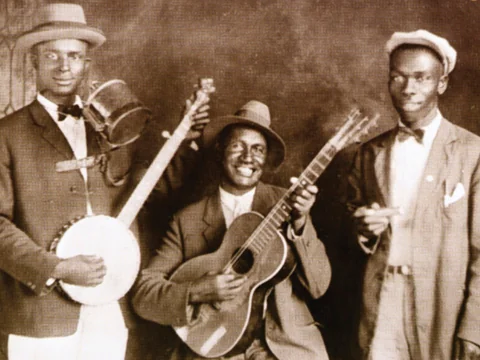
Image from Wikipedia
Image from Wikipedia
Blues: The Deep Well of Modern Music
An African American Sound Language That Shaped World Pop Music
The blues is not a single career but one of the most influential forms of modern music. Originating at the turn of the 20th century within the African American community in the USA, it combines vocal expressiveness, instrumental improvisation, and a distinctive emotional immediacy. From this musical form evolved central elements of jazz, rock, rock 'n' roll, and soul; even in hip-hop, blues-influenced attitudes, themes, and timbres are still audible today. ([loc.gov](https://www.loc.gov/collections/songs-of-america/articles-and-essays/musical-styles/popular-songs-of-the-day/blues/?utm_source=openai))
Those who understand the blues recognize it as more than just a genre: it is a cultural narrative, an archive of experience, pain, resistance, and community. In its early forms, it reflects the lived reality of African Americans in the United States, shaped by racial discrimination, hard work, and social exclusion. At the same time, the blues is a highly stylized art form with clear formal rules that have solidified yet continuously evolved over decades. ([loc.gov](https://www.loc.gov/collections/songs-of-america/articles-and-essays/musical-styles/popular-songs-of-the-day/blues/?utm_source=openai))
Biographical Roots: From Field Call to Urban Song Form
The history of the blues begins in the oral traditions of the American South. Work songs, field hollers, spirituals, and other African American expressive forms provided the raw material for a music that initially thrived primarily in informal, regional contexts. The early blues was closely linked with storytelling and everyday speech; its lyrics employed imagery of hardship, mobility, heartbreak, and perseverance. ([loc.gov](https://www.loc.gov/collections/songs-of-america/articles-and-essays/musical-styles/popular-songs-of-the-day/blues/?utm_source=openai))
With the commercialization of the music industry in the early 20th century, the blues gained national visibility. W. C. Handy is often referred to as the "Father of the Blues" because his compositions and arrangements standardized the form for a wider audience. Mamie Smith's recording of "Crazy Blues" in 1920 marked a pivotal moment as it established the blues as a commercially viable music form and paved the way for numerous further recordings by African American artists. ([folkways.si.edu](https://folkways.si.edu/lesson/building-the-blues?utm_source=openai))
Musical Development: 12 Bars, Blue Notes, and the Art of Condensation
A central feature of the blues is the 12-bar form, which emerged early on as the dominant song structure and remains influential to this day. The AAB lyrical pattern is typical: a line is repeated before a third line provides a response or resolution. This structure combines musical clarity with poetic economy, creating space for improvisation, variation, and personal signature. ([loc.gov](https://www.loc.gov/collections/songs-of-america/articles-and-essays/musical-styles/popular-songs-of-the-day/blues/?utm_source=openai))
Equally characteristic are the so-called blue notes, especially the lowered or bent third, fifth, and seventh degrees of the scale. These tonal tensions give the blues its vocal pull, its friction, and its distinctive emotional coloring. Instrumentally, this expression is often replicated by guitar, harmonica, fiddle, or later by amplified electric guitars, allowing the blues to maintain a vocal quality even in purely instrumental forms. ([loc.gov](https://www.loc.gov/collections/songs-of-america/articles-and-essays/musical-styles/popular-songs-of-the-day/blues/?utm_source=openai))
From Country Blues to Electric City Sound
Among the earliest forms of the blues is the country blues, whose reduced instrumentation focuses on voice, phrasing, and rhythmic flexibility. With the Great Migration of African American populations to Northern cities, new, more urban forms of blues emerged, particularly in Chicago. There, after World War II, an electrified sound developed, wherein the guitar became the dominant voice, and the music gained assertiveness, volume, and urban grit. ([encyclopedia.com](https://www.encyclopedia.com/literature-and-arts/performing-arts/music-popular-and-jazz/blues?utm_source=openai))
This evolution showcases the artistic adaptability of the blues. It never fixed itself to a single aesthetic but absorbed regional, technical, and social changes. Consequently, a cosmos of substyles emerged, ranging from rural acoustic forms to amplified band arrangements. It is precisely this range that makes the blues one of the most enduring forms in the history of African American music. ([loc.gov](https://www.loc.gov/collections/songs-of-america/articles-and-essays/musical-styles/popular-songs-of-the-day/blues/?utm_source=openai))
Discography of the Genre: Key Recordings Instead of a Classic Album Career
As a genre, the blues does not have a discography in the sense of a single artist, yet its history can be clearly traced through key recordings. Pivotal milestones include W. C. Handy's "Memphis Blues," the first commercial blues recording "Crazy Blues," and the numerous early recordings by pioneers such as Ma Rainey, Bessie Smith, Robert Johnson, Huddie Ledbetter, and Muddy Waters. These titles and names form a canon that has stabilized the genre across generations. ([folkways.si.edu](https://folkways.si.edu/lesson/building-the-blues?utm_source=openai))
The later development of the blues was further propelled by significant recording cultures, from the Delta and Chicago traditions to modern blues-rock interpretations. Reception in music press and history repeatedly highlights that the blues is not only a source but also a touchstone of popular music. This is where its authority lies: those who master the blues often also master the foundations of songwriting, groove, phrasing, and emotional intensity. ([loc.gov](https://www.loc.gov/collections/songs-of-america/articles-and-essays/musical-styles/popular-songs-of-the-day/blues/?utm_source=openai))
Critical Reception and Cultural Influence
The cultural influence of the blues extends far beyond the African American community and the USA. In the 1950s and 1960s, the music reached an international audience and was recognized worldwide as an independent art form. At the same time, its elements migrated into other genres: jazz, rock, rock 'n' roll, and soul did not emerge in isolation but in close dialogue with the blues. ([loc.gov](https://www.loc.gov/collections/songs-of-america/articles-and-essays/musical-styles/popular-songs-of-the-day/blues/?utm_source=openai))
The subsequent history of pop and rock is also scarcely imaginable without the blues. Guitarists and singers adopted its scales, forms, and expressions, often without fully acknowledging the origin. This explains why the blues is frequently described in music journalism and cultural history as the root of modern popular music. Its impact is not only stylistic but also aesthetic: it teaches reduction, tension, and the power of unvarnished expression. ([loc.gov](https://www.loc.gov/collections/songs-of-america/articles-and-essays/musical-styles/popular-songs-of-the-day/blues/?utm_source=openai))
The Blues as a Living Stage: Tradition, Improvisation, and the Present
A common cliché depicts the blues as a solitary singer with a guitar. The historical reality is broader: joint performances were as common as solo forms, and the blues has always thrived on interaction, call-and-response, and collective musicianship. This social dimension anchors it deeply in performance practice and continues to give it stage presence today. ([loc.gov](https://www.loc.gov/collections/songs-of-america/articles-and-essays/musical-styles/popular-songs-of-the-day/blues/?utm_source=openai))
In the present, the blues remains a powerful, highly respected musical form. It is not merely tradition but an open system that translates into new contexts. Whether in authentic club sets, festival performances, or in modernized border areas with rock and soul, the blues retains its tension because it connects musical structure with immediate human experience. ([loc.gov](https://www.loc.gov/collections/songs-of-america/articles-and-essays/musical-styles/popular-songs-of-the-day/blues/?utm_source=openai))
Conclusion: Why the Blues Continues to Electrify
The blues is exciting because it derives immense expressive power from minimal means. Its form is clear, its history profound, and its impact global. Those who immerse themselves in the blues encounter not just a genre but one of the fundamental narratives of popular music. That is precisely why it remains indispensable for musicians and listeners alike. ([loc.gov](https://www.loc.gov/collections/songs-of-america/articles-and-essays/musical-styles/popular-songs-of-the-day/blues/?utm_source=openai))
Those who experience the blues live feel its true greatness: the breath between the lines, the tension of the blue notes, the raw presence of voice and instrument. This music thrives on closeness, timing, and authenticity. A good blues evening is not a nostalgia program but an intense coming-to-life of music history. ([loc.gov](https://www.loc.gov/collections/songs-of-america/articles-and-essays/musical-styles/popular-songs-of-the-day/blues/?utm_source=openai))
Official Channels of Blues:
- Instagram: no official profile found
- Facebook: no official profile found
- YouTube: no official profile found
- Spotify: no official profile found
- TikTok: no official profile found
Sources:
Upcoming Events
Fire Department Festival Oberhof 2026
Musical Saturday with Alex Az!z & BluesAnova - Hofstatt
STARNBERG BLUESROCK at KultCafe in Gilching
RED – a red carpet for art
Breakfast Blues at Villa Geyerswörth
Sparda-Bank Blues & Jazz Festival
Cultural Beer Garden - The Fantastic Blues Brothers Band
Sparda-Bank Blues- & Jazzfestival: Tscheky & The Blues Kings
Breakfast Blues at Villa Geyerswörth