
Erich Maria Remarque
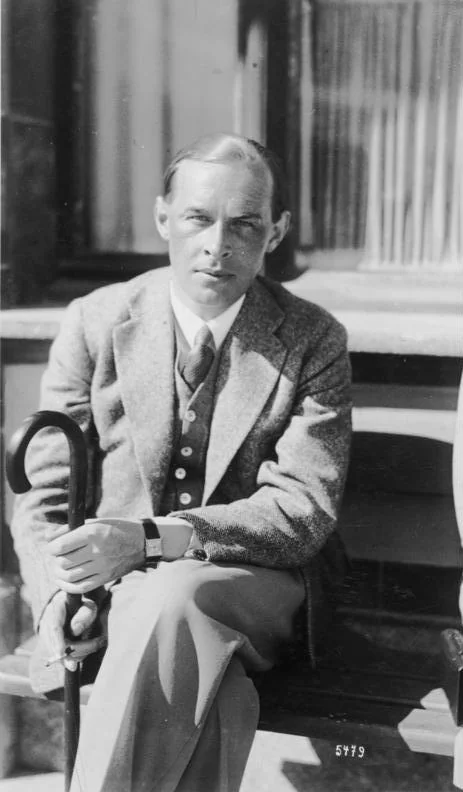
Image from Wikipedia
Image from Wikipedia
Erich Maria Remarque: The World-Famous Chronicler of War and the Lost Generation
An Author Who Changed World Literature with a Single Novel
Erich Maria Remarque is one of the great literary voices of the 20th century. Born on June 22, 1898, in Osnabrück as Erich Paul Remark and passing away on September 25, 1970, in Locarno, he became one of the most renowned German-language authors of modern times with All Quiet on the Western Front. His work combines personal war experience, precise observation, and a clear, sober language into literature of lasting impact. ([dhm.de](https://www.dhm.de/lemo/biografie/erich-maria-remarque.html))
Biography: Childhood, War, and Early Insights into Reality
Remarque grew up in Osnabrück and received his education at the city's Catholic teacher training college. In 1916, he was drafted into the army and deployed to the Western Front in 1917, where an injury from shrapnel brought him to a hospital until October 1918. This experience of industrial killing shaped his later writing and made him an author who did not glorify war, but made its everyday brutality visible. ([dhm.de](https://www.dhm.de/lemo/biografie/erich-maria-remarque.html))
After the war, Remarque worked in various jobs, including as a traveling salesman, organist, elementary school teacher, and as a theater and concert critic. At the same time, he published poems and short prose, gaining both journalistic and literary experience before establishing himself as a novelist. These early positions explain the keen social observation and practical proximity to the world present in his later prose. ([dhm.de](https://www.dhm.de/lemo/biografie/erich-maria-remarque.html))
The Breakthrough with All Quiet on the Western Front
Remarque achieved decisive success in 1929 with All Quiet on the Western Front, which was heavily controversial in Germany and became an international bestseller. The novel broke with the myth of the heroic death and portrayed the front as a place of dehumanization, fear, and survival. As early as 1930, the book was adapted into a film in Hollywood, reaching an even wider audience. ([dhm.de](https://www.dhm.de/lemo/biografie/erich-maria-remarque.html))
The impact of the novel also lay in its stylistic consistency: Britannica's characterization highlights the concise, laconic language that documents the daily horrors of war without pathos. It was precisely this cool precision that made the book one of the most representative World War novels. Remarque did not write from a distance, but from an experience that transformed itself into compelling literary expression. ([britannica.com](https://www.britannica.com/biography/Erich-Maria-Remarque))
Exile, Bans, and Political Persecution under the Nazi Regime
With the rise of the Nazis, Remarque's situation dramatically worsened. His works were banned as "harmful and undesirable literature" and publicly burned in 1933; in 1938, he was stripped of his German citizenship. By 1932, he had settled in Switzerland and emigrated to the USA in 1939, where he continued to succeed as a writer. ([dhm.de](https://www.dhm.de/lemo/biografie/erich-maria-remarque.html))
Exile became for Remarque not only a political necessity but also a literary space of resonance. In American exile, he continued to write about flight, uprooting, and the losses of a torn era. His life between Europe, the USA, and later Switzerland reflects the biography of an author whose work remained closely tied to the breaks of the 20th century. ([dhm.de](https://www.dhm.de/lemo/biografie/erich-maria-remarque.html))
Key Works and Artistic Development
After the success of All Quiet on the Western Front, Remarque continued to confront war and post-war society in additional novels. Central titles include The Road Back (1931), Three Comrades (1937), Arch of Triumph (1946), The Spark of Life (1952), Time to Live and Time to Die (1954), The Black Obelisk (1956), and The Night in Lisbon (1963). His last novel, Shadows in Paradise, was published posthumously in 1971. ([dhm.de](https://www.dhm.de/lemo/biografie/erich-maria-remarque.html))
This sequence of works shows a clear artistic development: from immediate war experience to exile experience, and then to reflection on alienation, persecution, and moral orientation in uncertain times. While the debut dissects the front, the later novels focus more on the fate of refugees, those displaced, and survivors. In this way, Remarque wrote a European literature of wounding, where private love and historical catastrophe intertwine inseparably. ([dhm.de](https://www.dhm.de/lemo/biografie/erich-maria-remarque.html))
Style, Impact, and Critical Reception
Contemporary and later reception particularly highlights Remarque's craftsmanship. Marcel Reich-Ranicki described his prose as not characterized by artistic originality, but by technical skill that hits the pulse of the time; Wilhelm von Sternburg called him a precise observer of his era and a radical interpreter of politics. These judgments refer to an author who worked with clear narrative technique and emotional discipline. ([de.wikipedia.org](https://de.wikipedia.org/wiki/Erich_Maria_Remarque))
Even criticism of Remarque did nothing to diminish his worldwide impact. Britannica emphasizes that several of his books were popular and adapted into films, but none reached the critical stature of his debut. Yet therein lies part of his greatness: Remarque wrote not for the ivory tower, but for a broad audience, without losing the moral sharpness of his themes. ([britannica.com](https://www.britannica.com/biography/Erich-Maria-Remarque))
Cultural Influence, Culture of Remembrance, and Current Presence
Remarque's significance goes far beyond literature. In Osnabrück, the Erich Maria Remarque Society has existed since 1986, the Erich Maria Remarque Peace Prize since 1991, and the Erich Maria Remarque Peace Center with an archive and permanent exhibition since 1996. These institutions not only keep his work alive but also anchor it in an active culture of peace and remembrance. ([de.wikipedia.org](https://de.wikipedia.org/wiki/Erich_Maria_Remarque))
The Peace Center shows how present Remarque has remained in the cultural memory: with exhibitions, lectures, videos, and academic mediation. Even today, his work is continually read anew, for instance, in the context of war experience, exile, civil courage, and historical responsibility. That his books continue to assert themselves in exhibitions, media formats, and educational offerings attests to the enduring power of his perspective. ([remarque.de](https://www.remarque.de/de/online-angebote/videos/?utm_source=openai))
Conclusion: Why Erich Maria Remarque Continues to Fascinate Today
Erich Maria Remarque remains an author of extraordinary radiance because he described the horrors of war with literary clarity, human empathy, and stylistic control. His name stands for anti-war literature, the experience of exile, and the ability to transform great historical conflicts into compelling narratives. Those who read Remarque encounter not only a classic but a disturbingly relevant voice of world literature to this day. ([dhm.de](https://www.dhm.de/lemo/biografie/erich-maria-remarque.html))
Those discovering his works anew experience an author who has found a unique form between vulnerability and resistance. This is precisely why it is worthwhile to read Remarque repeatedly, to discuss him, and to experience his texts live in exhibitions or events, where their historical and emotional impact becomes particularly clear. ([remarque.de](https://www.remarque.de/de/online-angebote/videos/?utm_source=openai))
Official Channels of Erich Maria Remarque:
- Instagram: no official profile found
- Facebook: no official profile found
- YouTube: no official profile found
- Spotify: no official profile found
- TikTok: no official profile found