
Suhl
Platz der Deutschen Einheit 3, 98527 Suhl, Deutschland
Cultural Center Suhl | History & Events
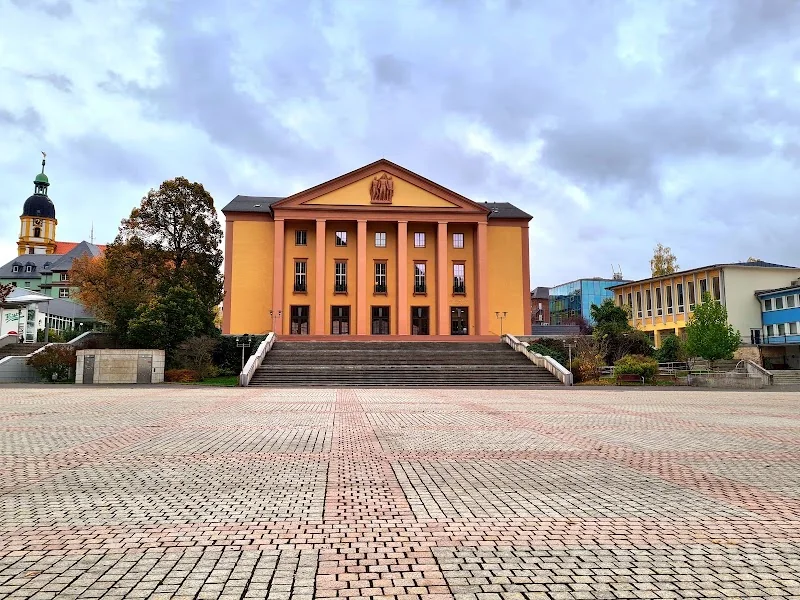
The Cultural Center Suhl at Platz der Deutschen Einheit 3 is primarily known today as the House of History and the seat of the city archive. The place connects the memory of the former cultural center with modern archive usage, a central location in the Suhl city center, and a small but well-utilized event space. Therefore, those looking for Cultural Center Suhl will not find a classic concert hall, but rather a historical urban space that makes city history visible and is simultaneously used for events, citizen participation, and archival work. This transformation makes the location exciting for visitors, local actors, and culture enthusiasts, as it brings together the urban development of Suhl in a single place. ([tharchiv.thueringen.de](https://tharchiv.thueringen.de/en/archiv/view/id/95))
What is the Cultural Center Suhl today?
The current character of the building is clearly described in official sources: The Suhl City Archive is located at Platz der Deutschen Einheit 3, and the building is referred to as the House of History. Thus, the location is not only a place for documents and research but also a site where administration, memory culture, and public use meet. The city's cultural page also refers to the House of History Suhl as the former cultural center and places it within the current cultural landscape of the city. For queries such as Cultural Center Suhl, House of History Suhl, or City Archive Suhl, this transition is particularly important as it explains why the term cultural center is still used, even though the building's function today looks significantly different than in the past. ([tharchiv.thueringen.de](https://tharchiv.thueringen.de/en/archiv/view/id/95))
Practically, this means: Visitors encounter a modern city archive with a service area, reading room, and the possibility to use historical documents. At the same time, the location has a public presence due to its position in the middle of Suhl, which is typically associated with town halls, museums, or cultural centers. This mix of archive, House of History, and event venue is a special advantage for the city, as it enhances the visibility of local history and creates a place where history does not remain abstract but becomes spatially tangible. This is an important difference from many purely administrative archive locations because the site in Suhl consciously focuses on visibility and accessibility. ([tharchiv.thueringen.de](https://tharchiv.thueringen.de/en/archiv/view/id/95))
The location is also interesting for urban marketing because several terms overlap here: cultural center, House of History, city archive, and place for public appointments. These terms do not mean the same thing but describe the same place from different perspectives. This is helpful for users looking for events, history, opening hours, or parking. Therefore, those wanting to orient themselves on site should not only keep the former name in mind but consciously think of the current functional mix. The building is not a nostalgic shell without purpose but a building used in everyday life with a concrete urban function. This combination explains why it continues to receive attention in Suhl to this day. ([suhl.eu](https://www.suhl.eu/kultur-tourismus-sport?lang=en&utm_source=openai))
History of the former Cultural Center in Suhl
The history of the building dates back to the mid-1950s. In the construction history of Suhl, the building is described as the former cultural center, which was built from 1955 to 1958. The complex long characterized the city center and was one of the prominent buildings of the post-war period in Suhl. The current use as the House of History only emerged after a long renovation process. Particularly important for the cityscape: In 2012, the former structure for the later House of Economy was demolished, while the portal building was preserved. This portal building with its representative entrance was later reused as the House of History. Thus, the current site is an example of how a historical structure can be partially preserved and transferred to a new function. ([suhl-tourismus.de](https://www.suhl-tourismus.de/wp-content/uploads/2024/12/Erlebnis-Baugeschichte-Suhl.pdf))
The designation of the building has also changed over the decades. In the archive documents, it is referred to as the former Cultural Center 7. Oktober, later as House Philharmonie, before the new building at Platz der Deutschen Einheit was created. This sequence shows that the building has gone through several life phases, both architecturally and institutionally. For the city of Suhl, this is more than just an architectural detail: It tells the story of repurposing, urban redevelopment, and the conscious decision to preserve a piece of city memory. The official city history also points out that Suhl has undergone significant renovations over the decades, and cultural-historical sites thus play a special role. Therefore, those searching for Cultural Center Suhl today are also looking for a piece of urban development history that has remained visible in the city center. ([tharchiv.thueringen.de](https://tharchiv.thueringen.de/en/archiv/view/id/95))
It is particularly interesting that the location has not simply disappeared but continues to live on in a changed form. The former cultural center was not preserved as a memorial ruin but transformed into a functional building for archives, public use, and events. This makes the history of the building tangible for visitors. The continuity lies not in the old purpose but in the place itself: In the center of Suhl, a building ensemble remains present that has taken on various roles from the Cultural Center to the House Philharmonie to the House of History. This transformation is typical for many central urban locations in the Thuringia region but is particularly well understood in Suhl because the city publicly documents the construction and usage history. ([suhl-tourismus.de](https://www.suhl-tourismus.de/wp-content/uploads/2024/12/Erlebnis-Baugeschichte-Suhl.pdf))
The historical context of the location also fits with the development of the entire city center. The official construction history describes how the city center of Suhl was reshaped multiple times in the 20th century and how individual buildings, squares, and functions shifted. The former cultural center is thus not isolated but part of a larger narrative about renewal, loss, and new beginnings. This is important for visitors because the place is not just a single building but a chapter in the city's history. Those who know the address Platz der Deutschen Einheit 3 are therefore at a point where post-war architecture, urban redevelopment, and new cultural and archival usage converge. ([suhl-tourismus.de](https://www.suhl-tourismus.de/wp-content/uploads/2024/12/Erlebnis-Baugeschichte-Suhl.pdf))
City Archive Suhl and House of History
The City Archive Suhl is now located at Platz der Deutschen Einheit 3 and holds 2,500 running meters of archival material according to the archive portal. This includes, among other things, 30,000 photos, 2,300 volumes of newspapers, official and legal gazettes, sound recordings, more than 250 collections and donations, and about 800 volumes of civil status registers of the city. For users, there is a modern reading room equipped with a free-access library, book scanner, and digitization device. These figures make it clear that the House of History is not merely an administrative site but a serious research and knowledge place with broad historical depth. ([tharchiv.thueringen.de](https://tharchiv.thueringen.de/en/archiv/view/id/95))
The working conditions have also been emphasized in the official archive portal. It mentions air conditioning, mobile shelving systems with a capacity of 1,800 running meters, and a service area that consolidates supervision, registration, advice, and the lending and return of media and archival materials. Particularly relevant for public use: The entrance area features a spacious foyer with 80 seats that can be used for various events. This gives the location an additional function that goes beyond classic archival work. It becomes a place where lectures, presentations, or smaller formats can take place in a representative yet manageable setting. ([tharchiv.thueringen.de](https://tharchiv.thueringen.de/en/archiv/view/id/95))
The opening hours of the city archive are also officially published: Mondays from 1 PM to 4 PM, Tuesdays from 9 AM to 12 PM and 1 PM to 4 PM, closed on Wednesdays, Thursdays from 9 AM to 12 PM and 1 PM to 5 PM, and Fridays from 9 AM to 11 AM. For anyone searching for opening hours of City Archive Suhl, this is the most important practical information. It also shows that the location is designed for targeted use and does not have continuous public access like a museum. Instead, it functions as a professionally supervised access to city history, family research, documentation, and municipal memory. This is precisely where the special value of the House of History in Suhl lies. ([tharchiv.thueringen.de](https://tharchiv.thueringen.de/en/archiv/view/id/95))
The history of the archive itself further underscores this role. Official archive texts describe how often the archive had to move over the decades and how important the return to the city center was. The new location was described as a modern solution that provides security for historical archival materials, better working conditions, and new presentation opportunities. For queries like City Archive Suhl, House of History Suhl, or Cultural Center Suhl, this is crucial because the place today is not only historically interesting but also provides a current public infrastructure for research, education, and remembrance. ([tharchiv.thueringen.de](https://tharchiv.thueringen.de/en/archiv/view/id/95))
Additionally, the urban planning and symbolic significance is noteworthy: The City Archive is not located in a peripheral building but has returned to the city center. This gives the House of History a public character that fits well with Suhl. The archive is thus not only a storage place but a visible urban institution. For visitors, this means that the place does not only function on request but can be experienced as part of the city center. Those searching for historical documents, city stories, or family records will find not only files here but also a modern working environment with clear visitor pathways and a professional infrastructure. ([tharchiv.thueringen.de](https://tharchiv.thueringen.de/en/archiv/view/id/95))
Events, Seating, and Everyday Use
Although the building is primarily an archive and place of remembrance today, it continues to be used for public and municipal events. The city of Suhl mentions the House of History in several current communications as a venue, including for meetings of the Committee for Culture, Tourism, and Sports as well as for citizen participation. The opening of the 91st German Archive Day in Suhl was also highlighted with reference to the good conference conditions in the House of History. This shows that the building does not work quietly in the background but remains present in public city communication. This is an important signal for users looking for events in Suhl or Cultural Center Suhl: The place is actively integrated into city life. ([suhl.eu](https://www.suhl.eu/aktuelles/page/2?utm_source=openai))
The capacity of the foyer with 80 seats is particularly relevant in this context because it realistically describes the framework for use. The building is therefore not a large hall for thousands of visitors but a focused place for smaller events, workshops, presentations, and official appointments. This is precisely what gives it charm: The historical place remains manageable and personal without losing significance. For organizers, this means a space with a clear identity, for visitors a place with atmosphere, and for the city a functional building block in the center. When asking what is happening at Cultural Center Suhl today, the honest answer is: It is not only preserved but actually used. ([tharchiv.thueringen.de](https://tharchiv.thueringen.de/en/archiv/view/id/95))
The official city administration also uses the location for participation formats. In November 2024, for example, citizen workshops were held there regarding the design of Bahnhofstraße and Herrenteich. This makes the House of History a place where future topics of the city are discussed in a historical setting. This connection between past and present is central to the perception of the building. Therefore, those searching for programs, events, or seating will find here no regular concert arena, but rather a credible place for public debates, lectures, and city appointments. This is important for the search intent behind the term Cultural Center Suhl because the building today is more of a multifunctional house with cultural and citizen-oriented use than a classic show location. ([suhl.eu](https://www.suhl.eu/post/buergerbeteiligung-herrenteich-park?utm_source=openai))
The urban classification as a former cultural center on Suhl's cultural page also confirms that the place continues to be perceived as a cultural and historical address in public communication. In combination with the archive portal and current announcements, a clear picture emerges: The Cultural Center Suhl is now primarily a strong identity space in the city center with archive function, public use, and occasional events. This mixture is particularly interesting for urban marketing because it combines historical substance, urban administration, and cultural accessibility in one place. ([suhl.eu](https://www.suhl.eu/kultur-tourismus-sport?lang=en&utm_source=openai))
For visitors, it is important to understand that the place stands for quality rather than quantity. The events are usually smaller, the paths are short, and the atmosphere is focused. This fits well with the historical character of the building, whose former role as a cultural center is still perceptible. In everyday life, this means: Here, people find not only files or meetings but encounter a place that vividly illustrates city history while remaining open to current needs. This mixture of identity and function makes the location in the center of Suhl so relevant. ([tharchiv.thueringen.de](https://tharchiv.thueringen.de/en/archiv/view/id/95))
Directions and Parking in Suhl City Center
The address of the location is Platz der Deutschen Einheit 3, 98527 Suhl. This places the building very centrally in the city center and in the immediate vicinity of other municipal facilities. Therefore, it is particularly important for access to enter the urban destination correctly and not to orient oneself based on a former usage name. Those wanting to go to the city archive, the House of History, or the Cultural Center Suhl are thus heading into the heart of the city center. The central location is one of the greatest practical advantages of the site as it keeps paths short and makes the place easily accessible for visitors without local knowledge. ([tharchiv.thueringen.de](https://tharchiv.thueringen.de/en/archiv/view/id/95))
When it comes to parking, the official tourism page of Suhl refers to several parking garages in the city center. Among others, the parking garage at the Congress Centrum Suhl, the shopping center Am Steinweg, the Lauterbogencenter, the parking garage Am Rathaus, the sports hall Wolfsgrube, and the Cineplex are mentioned. Additionally, accessible parking spaces in the city center are noted, including in the area of Platz der Deutschen Einheit. For visitors to the Cultural Center Suhl, this means: The destination is located in an area with several urban parking options, and not in an isolated peripheral location. This is particularly practical for archive visits, appointments, and smaller events where good accessibility is often more important than the immediate density of parking spaces directly in front of the building. ([suhl-tourismus.de](https://www.suhl-tourismus.de/wichtige-adressen/?utm_source=openai))
In the Suhl city center, the combination of a central location and available parking garages is a relevant location advantage. The official tourism overview shows that Suhl consciously relies on parking garage-supported urban mobility. Therefore, those searching for directions to Cultural Center Suhl or parking at Cultural Center Suhl should expect a short walk from one of the downtown parking garages rather than a large open parking area directly at the building. This fits with the urban structure around the marketplace, Platz der Deutschen Einheit, and the surrounding administrative and cultural sites. For many visitors, this is more pleasant as the stay is clearly embedded in the city center visit and can easily be combined with other errands or a walk. ([suhl-tourismus.de](https://www.suhl-tourismus.de/wichtige-adressen/?utm_source=openai))
The accessible parking spaces are also an important note as they show that the location is designed not only for drivers but also for guests with mobility impairments. In conjunction with the central access and short urban paths, a relatively comfortable visitor experience emerges. This is particularly helpful for archive use or appointment visits, as documents often need to be transported, time windows adhered to, or short paths planned. Therefore, for orientation on site, it is advisable to focus on the downtown parking garages and the exact address. Those who keep this in mind can reach the House of History in Suhl without unnecessary detours and can combine the visit with other destinations in the city center. ([suhl-tourismus.de](https://www.suhl-tourismus.de/wichtige-adressen/?utm_source=openai))
Why the place is so important for Suhl today
The Cultural Center Suhl is more than a historical building. It is an example of how a city can deal with its architectural heritage without relegating it to pure past. The location at Platz der Deutschen Einheit 3 connects memories of the old cultural center with a functional present as the House of History. This makes the place important for Suhl: It makes the transformation of the city center visible while providing real utility for archives, administration, research, and public events. The city thus gains not only a location with history but also a place with a future. ([tharchiv.thueringen.de](https://tharchiv.thueringen.de/en/archiv/view/id/95))
For the external perception of the city, this connection is particularly strong. Visitors searching for Cultural Center Suhl quickly encounter the history of the former cultural center, the current city archive, events in the House of History, and the central location in the city center. This creates a multifaceted image that presents Suhl as a city with its own history, its own cultural sites, and a clear public identity. The fact that the house is open for meetings, workshops, and archive-related use does not make it a museum piece but a vibrant part of the city. This is precisely where its relevance lies in 2026: It is simultaneously a place of remembrance, a workplace, and an event venue. ([suhl.eu](https://www.suhl.eu/post/suhl-begr%C3%BC%C3%9Ft-die-teilnehmerinnen-und-teilnehmer-des-91-deutschen-archivtages?utm_source=openai))
The sustainable use of the building is also an important point. The historical substance has not been completely replaced but transferred into a new urban context. This way, something of the old cultural center remains in the urban space without the city having to forgo modern requirements. This type of repurposing is exemplary for many city centers as it shows that cultural heritage does not have to be merely decorative. It can be useful, accessible, and functional. In Suhl, this is particularly evident as the House of History does not stand on the periphery but remains visible and actively used in the center. ([suhl-tourismus.de](https://www.suhl-tourismus.de/wp-content/uploads/2024/12/Erlebnis-Baugeschichte-Suhl.pdf))
When visiting Suhl, one does not only see a single building at this location but a condensed narrative about urban development, memory, and public use. This is interesting for travelers, family researchers, culture enthusiasts, and local visitors alike. Search terms like History Cultural Center Suhl, City Archive Suhl, or Events Suhl therefore lead to a place where concrete information and city identity come together. This is what makes the location strong: It is small enough to feel personal and significant enough to tell the story of the city in a compact space. ([tharchiv.thueringen.de](https://tharchiv.thueringen.de/en/archiv/view/id/95))
Sources:
Mehr anzeigenWeniger anzeigen
Cultural Center Suhl | History & Events
The Cultural Center Suhl at Platz der Deutschen Einheit 3 is primarily known today as the House of History and the seat of the city archive. The place connects the memory of the former cultural center with modern archive usage, a central location in the Suhl city center, and a small but well-utilized event space. Therefore, those looking for Cultural Center Suhl will not find a classic concert hall, but rather a historical urban space that makes city history visible and is simultaneously used for events, citizen participation, and archival work. This transformation makes the location exciting for visitors, local actors, and culture enthusiasts, as it brings together the urban development of Suhl in a single place. ([tharchiv.thueringen.de](https://tharchiv.thueringen.de/en/archiv/view/id/95))
What is the Cultural Center Suhl today?
The current character of the building is clearly described in official sources: The Suhl City Archive is located at Platz der Deutschen Einheit 3, and the building is referred to as the House of History. Thus, the location is not only a place for documents and research but also a site where administration, memory culture, and public use meet. The city's cultural page also refers to the House of History Suhl as the former cultural center and places it within the current cultural landscape of the city. For queries such as Cultural Center Suhl, House of History Suhl, or City Archive Suhl, this transition is particularly important as it explains why the term cultural center is still used, even though the building's function today looks significantly different than in the past. ([tharchiv.thueringen.de](https://tharchiv.thueringen.de/en/archiv/view/id/95))
Practically, this means: Visitors encounter a modern city archive with a service area, reading room, and the possibility to use historical documents. At the same time, the location has a public presence due to its position in the middle of Suhl, which is typically associated with town halls, museums, or cultural centers. This mix of archive, House of History, and event venue is a special advantage for the city, as it enhances the visibility of local history and creates a place where history does not remain abstract but becomes spatially tangible. This is an important difference from many purely administrative archive locations because the site in Suhl consciously focuses on visibility and accessibility. ([tharchiv.thueringen.de](https://tharchiv.thueringen.de/en/archiv/view/id/95))
The location is also interesting for urban marketing because several terms overlap here: cultural center, House of History, city archive, and place for public appointments. These terms do not mean the same thing but describe the same place from different perspectives. This is helpful for users looking for events, history, opening hours, or parking. Therefore, those wanting to orient themselves on site should not only keep the former name in mind but consciously think of the current functional mix. The building is not a nostalgic shell without purpose but a building used in everyday life with a concrete urban function. This combination explains why it continues to receive attention in Suhl to this day. ([suhl.eu](https://www.suhl.eu/kultur-tourismus-sport?lang=en&utm_source=openai))
History of the former Cultural Center in Suhl
The history of the building dates back to the mid-1950s. In the construction history of Suhl, the building is described as the former cultural center, which was built from 1955 to 1958. The complex long characterized the city center and was one of the prominent buildings of the post-war period in Suhl. The current use as the House of History only emerged after a long renovation process. Particularly important for the cityscape: In 2012, the former structure for the later House of Economy was demolished, while the portal building was preserved. This portal building with its representative entrance was later reused as the House of History. Thus, the current site is an example of how a historical structure can be partially preserved and transferred to a new function. ([suhl-tourismus.de](https://www.suhl-tourismus.de/wp-content/uploads/2024/12/Erlebnis-Baugeschichte-Suhl.pdf))
The designation of the building has also changed over the decades. In the archive documents, it is referred to as the former Cultural Center 7. Oktober, later as House Philharmonie, before the new building at Platz der Deutschen Einheit was created. This sequence shows that the building has gone through several life phases, both architecturally and institutionally. For the city of Suhl, this is more than just an architectural detail: It tells the story of repurposing, urban redevelopment, and the conscious decision to preserve a piece of city memory. The official city history also points out that Suhl has undergone significant renovations over the decades, and cultural-historical sites thus play a special role. Therefore, those searching for Cultural Center Suhl today are also looking for a piece of urban development history that has remained visible in the city center. ([tharchiv.thueringen.de](https://tharchiv.thueringen.de/en/archiv/view/id/95))
It is particularly interesting that the location has not simply disappeared but continues to live on in a changed form. The former cultural center was not preserved as a memorial ruin but transformed into a functional building for archives, public use, and events. This makes the history of the building tangible for visitors. The continuity lies not in the old purpose but in the place itself: In the center of Suhl, a building ensemble remains present that has taken on various roles from the Cultural Center to the House Philharmonie to the House of History. This transformation is typical for many central urban locations in the Thuringia region but is particularly well understood in Suhl because the city publicly documents the construction and usage history. ([suhl-tourismus.de](https://www.suhl-tourismus.de/wp-content/uploads/2024/12/Erlebnis-Baugeschichte-Suhl.pdf))
The historical context of the location also fits with the development of the entire city center. The official construction history describes how the city center of Suhl was reshaped multiple times in the 20th century and how individual buildings, squares, and functions shifted. The former cultural center is thus not isolated but part of a larger narrative about renewal, loss, and new beginnings. This is important for visitors because the place is not just a single building but a chapter in the city's history. Those who know the address Platz der Deutschen Einheit 3 are therefore at a point where post-war architecture, urban redevelopment, and new cultural and archival usage converge. ([suhl-tourismus.de](https://www.suhl-tourismus.de/wp-content/uploads/2024/12/Erlebnis-Baugeschichte-Suhl.pdf))
City Archive Suhl and House of History
The City Archive Suhl is now located at Platz der Deutschen Einheit 3 and holds 2,500 running meters of archival material according to the archive portal. This includes, among other things, 30,000 photos, 2,300 volumes of newspapers, official and legal gazettes, sound recordings, more than 250 collections and donations, and about 800 volumes of civil status registers of the city. For users, there is a modern reading room equipped with a free-access library, book scanner, and digitization device. These figures make it clear that the House of History is not merely an administrative site but a serious research and knowledge place with broad historical depth. ([tharchiv.thueringen.de](https://tharchiv.thueringen.de/en/archiv/view/id/95))
The working conditions have also been emphasized in the official archive portal. It mentions air conditioning, mobile shelving systems with a capacity of 1,800 running meters, and a service area that consolidates supervision, registration, advice, and the lending and return of media and archival materials. Particularly relevant for public use: The entrance area features a spacious foyer with 80 seats that can be used for various events. This gives the location an additional function that goes beyond classic archival work. It becomes a place where lectures, presentations, or smaller formats can take place in a representative yet manageable setting. ([tharchiv.thueringen.de](https://tharchiv.thueringen.de/en/archiv/view/id/95))
The opening hours of the city archive are also officially published: Mondays from 1 PM to 4 PM, Tuesdays from 9 AM to 12 PM and 1 PM to 4 PM, closed on Wednesdays, Thursdays from 9 AM to 12 PM and 1 PM to 5 PM, and Fridays from 9 AM to 11 AM. For anyone searching for opening hours of City Archive Suhl, this is the most important practical information. It also shows that the location is designed for targeted use and does not have continuous public access like a museum. Instead, it functions as a professionally supervised access to city history, family research, documentation, and municipal memory. This is precisely where the special value of the House of History in Suhl lies. ([tharchiv.thueringen.de](https://tharchiv.thueringen.de/en/archiv/view/id/95))
The history of the archive itself further underscores this role. Official archive texts describe how often the archive had to move over the decades and how important the return to the city center was. The new location was described as a modern solution that provides security for historical archival materials, better working conditions, and new presentation opportunities. For queries like City Archive Suhl, House of History Suhl, or Cultural Center Suhl, this is crucial because the place today is not only historically interesting but also provides a current public infrastructure for research, education, and remembrance. ([tharchiv.thueringen.de](https://tharchiv.thueringen.de/en/archiv/view/id/95))
Additionally, the urban planning and symbolic significance is noteworthy: The City Archive is not located in a peripheral building but has returned to the city center. This gives the House of History a public character that fits well with Suhl. The archive is thus not only a storage place but a visible urban institution. For visitors, this means that the place does not only function on request but can be experienced as part of the city center. Those searching for historical documents, city stories, or family records will find not only files here but also a modern working environment with clear visitor pathways and a professional infrastructure. ([tharchiv.thueringen.de](https://tharchiv.thueringen.de/en/archiv/view/id/95))
Events, Seating, and Everyday Use
Although the building is primarily an archive and place of remembrance today, it continues to be used for public and municipal events. The city of Suhl mentions the House of History in several current communications as a venue, including for meetings of the Committee for Culture, Tourism, and Sports as well as for citizen participation. The opening of the 91st German Archive Day in Suhl was also highlighted with reference to the good conference conditions in the House of History. This shows that the building does not work quietly in the background but remains present in public city communication. This is an important signal for users looking for events in Suhl or Cultural Center Suhl: The place is actively integrated into city life. ([suhl.eu](https://www.suhl.eu/aktuelles/page/2?utm_source=openai))
The capacity of the foyer with 80 seats is particularly relevant in this context because it realistically describes the framework for use. The building is therefore not a large hall for thousands of visitors but a focused place for smaller events, workshops, presentations, and official appointments. This is precisely what gives it charm: The historical place remains manageable and personal without losing significance. For organizers, this means a space with a clear identity, for visitors a place with atmosphere, and for the city a functional building block in the center. When asking what is happening at Cultural Center Suhl today, the honest answer is: It is not only preserved but actually used. ([tharchiv.thueringen.de](https://tharchiv.thueringen.de/en/archiv/view/id/95))
The official city administration also uses the location for participation formats. In November 2024, for example, citizen workshops were held there regarding the design of Bahnhofstraße and Herrenteich. This makes the House of History a place where future topics of the city are discussed in a historical setting. This connection between past and present is central to the perception of the building. Therefore, those searching for programs, events, or seating will find here no regular concert arena, but rather a credible place for public debates, lectures, and city appointments. This is important for the search intent behind the term Cultural Center Suhl because the building today is more of a multifunctional house with cultural and citizen-oriented use than a classic show location. ([suhl.eu](https://www.suhl.eu/post/buergerbeteiligung-herrenteich-park?utm_source=openai))
The urban classification as a former cultural center on Suhl's cultural page also confirms that the place continues to be perceived as a cultural and historical address in public communication. In combination with the archive portal and current announcements, a clear picture emerges: The Cultural Center Suhl is now primarily a strong identity space in the city center with archive function, public use, and occasional events. This mixture is particularly interesting for urban marketing because it combines historical substance, urban administration, and cultural accessibility in one place. ([suhl.eu](https://www.suhl.eu/kultur-tourismus-sport?lang=en&utm_source=openai))
For visitors, it is important to understand that the place stands for quality rather than quantity. The events are usually smaller, the paths are short, and the atmosphere is focused. This fits well with the historical character of the building, whose former role as a cultural center is still perceptible. In everyday life, this means: Here, people find not only files or meetings but encounter a place that vividly illustrates city history while remaining open to current needs. This mixture of identity and function makes the location in the center of Suhl so relevant. ([tharchiv.thueringen.de](https://tharchiv.thueringen.de/en/archiv/view/id/95))
Directions and Parking in Suhl City Center
The address of the location is Platz der Deutschen Einheit 3, 98527 Suhl. This places the building very centrally in the city center and in the immediate vicinity of other municipal facilities. Therefore, it is particularly important for access to enter the urban destination correctly and not to orient oneself based on a former usage name. Those wanting to go to the city archive, the House of History, or the Cultural Center Suhl are thus heading into the heart of the city center. The central location is one of the greatest practical advantages of the site as it keeps paths short and makes the place easily accessible for visitors without local knowledge. ([tharchiv.thueringen.de](https://tharchiv.thueringen.de/en/archiv/view/id/95))
When it comes to parking, the official tourism page of Suhl refers to several parking garages in the city center. Among others, the parking garage at the Congress Centrum Suhl, the shopping center Am Steinweg, the Lauterbogencenter, the parking garage Am Rathaus, the sports hall Wolfsgrube, and the Cineplex are mentioned. Additionally, accessible parking spaces in the city center are noted, including in the area of Platz der Deutschen Einheit. For visitors to the Cultural Center Suhl, this means: The destination is located in an area with several urban parking options, and not in an isolated peripheral location. This is particularly practical for archive visits, appointments, and smaller events where good accessibility is often more important than the immediate density of parking spaces directly in front of the building. ([suhl-tourismus.de](https://www.suhl-tourismus.de/wichtige-adressen/?utm_source=openai))
In the Suhl city center, the combination of a central location and available parking garages is a relevant location advantage. The official tourism overview shows that Suhl consciously relies on parking garage-supported urban mobility. Therefore, those searching for directions to Cultural Center Suhl or parking at Cultural Center Suhl should expect a short walk from one of the downtown parking garages rather than a large open parking area directly at the building. This fits with the urban structure around the marketplace, Platz der Deutschen Einheit, and the surrounding administrative and cultural sites. For many visitors, this is more pleasant as the stay is clearly embedded in the city center visit and can easily be combined with other errands or a walk. ([suhl-tourismus.de](https://www.suhl-tourismus.de/wichtige-adressen/?utm_source=openai))
The accessible parking spaces are also an important note as they show that the location is designed not only for drivers but also for guests with mobility impairments. In conjunction with the central access and short urban paths, a relatively comfortable visitor experience emerges. This is particularly helpful for archive use or appointment visits, as documents often need to be transported, time windows adhered to, or short paths planned. Therefore, for orientation on site, it is advisable to focus on the downtown parking garages and the exact address. Those who keep this in mind can reach the House of History in Suhl without unnecessary detours and can combine the visit with other destinations in the city center. ([suhl-tourismus.de](https://www.suhl-tourismus.de/wichtige-adressen/?utm_source=openai))
Why the place is so important for Suhl today
The Cultural Center Suhl is more than a historical building. It is an example of how a city can deal with its architectural heritage without relegating it to pure past. The location at Platz der Deutschen Einheit 3 connects memories of the old cultural center with a functional present as the House of History. This makes the place important for Suhl: It makes the transformation of the city center visible while providing real utility for archives, administration, research, and public events. The city thus gains not only a location with history but also a place with a future. ([tharchiv.thueringen.de](https://tharchiv.thueringen.de/en/archiv/view/id/95))
For the external perception of the city, this connection is particularly strong. Visitors searching for Cultural Center Suhl quickly encounter the history of the former cultural center, the current city archive, events in the House of History, and the central location in the city center. This creates a multifaceted image that presents Suhl as a city with its own history, its own cultural sites, and a clear public identity. The fact that the house is open for meetings, workshops, and archive-related use does not make it a museum piece but a vibrant part of the city. This is precisely where its relevance lies in 2026: It is simultaneously a place of remembrance, a workplace, and an event venue. ([suhl.eu](https://www.suhl.eu/post/suhl-begr%C3%BC%C3%9Ft-die-teilnehmerinnen-und-teilnehmer-des-91-deutschen-archivtages?utm_source=openai))
The sustainable use of the building is also an important point. The historical substance has not been completely replaced but transferred into a new urban context. This way, something of the old cultural center remains in the urban space without the city having to forgo modern requirements. This type of repurposing is exemplary for many city centers as it shows that cultural heritage does not have to be merely decorative. It can be useful, accessible, and functional. In Suhl, this is particularly evident as the House of History does not stand on the periphery but remains visible and actively used in the center. ([suhl-tourismus.de](https://www.suhl-tourismus.de/wp-content/uploads/2024/12/Erlebnis-Baugeschichte-Suhl.pdf))
When visiting Suhl, one does not only see a single building at this location but a condensed narrative about urban development, memory, and public use. This is interesting for travelers, family researchers, culture enthusiasts, and local visitors alike. Search terms like History Cultural Center Suhl, City Archive Suhl, or Events Suhl therefore lead to a place where concrete information and city identity come together. This is what makes the location strong: It is small enough to feel personal and significant enough to tell the story of the city in a compact space. ([tharchiv.thueringen.de](https://tharchiv.thueringen.de/en/archiv/view/id/95))
Sources:
Cultural Center Suhl | History & Events
The Cultural Center Suhl at Platz der Deutschen Einheit 3 is primarily known today as the House of History and the seat of the city archive. The place connects the memory of the former cultural center with modern archive usage, a central location in the Suhl city center, and a small but well-utilized event space. Therefore, those looking for Cultural Center Suhl will not find a classic concert hall, but rather a historical urban space that makes city history visible and is simultaneously used for events, citizen participation, and archival work. This transformation makes the location exciting for visitors, local actors, and culture enthusiasts, as it brings together the urban development of Suhl in a single place. ([tharchiv.thueringen.de](https://tharchiv.thueringen.de/en/archiv/view/id/95))
What is the Cultural Center Suhl today?
The current character of the building is clearly described in official sources: The Suhl City Archive is located at Platz der Deutschen Einheit 3, and the building is referred to as the House of History. Thus, the location is not only a place for documents and research but also a site where administration, memory culture, and public use meet. The city's cultural page also refers to the House of History Suhl as the former cultural center and places it within the current cultural landscape of the city. For queries such as Cultural Center Suhl, House of History Suhl, or City Archive Suhl, this transition is particularly important as it explains why the term cultural center is still used, even though the building's function today looks significantly different than in the past. ([tharchiv.thueringen.de](https://tharchiv.thueringen.de/en/archiv/view/id/95))
Practically, this means: Visitors encounter a modern city archive with a service area, reading room, and the possibility to use historical documents. At the same time, the location has a public presence due to its position in the middle of Suhl, which is typically associated with town halls, museums, or cultural centers. This mix of archive, House of History, and event venue is a special advantage for the city, as it enhances the visibility of local history and creates a place where history does not remain abstract but becomes spatially tangible. This is an important difference from many purely administrative archive locations because the site in Suhl consciously focuses on visibility and accessibility. ([tharchiv.thueringen.de](https://tharchiv.thueringen.de/en/archiv/view/id/95))
The location is also interesting for urban marketing because several terms overlap here: cultural center, House of History, city archive, and place for public appointments. These terms do not mean the same thing but describe the same place from different perspectives. This is helpful for users looking for events, history, opening hours, or parking. Therefore, those wanting to orient themselves on site should not only keep the former name in mind but consciously think of the current functional mix. The building is not a nostalgic shell without purpose but a building used in everyday life with a concrete urban function. This combination explains why it continues to receive attention in Suhl to this day. ([suhl.eu](https://www.suhl.eu/kultur-tourismus-sport?lang=en&utm_source=openai))
History of the former Cultural Center in Suhl
The history of the building dates back to the mid-1950s. In the construction history of Suhl, the building is described as the former cultural center, which was built from 1955 to 1958. The complex long characterized the city center and was one of the prominent buildings of the post-war period in Suhl. The current use as the House of History only emerged after a long renovation process. Particularly important for the cityscape: In 2012, the former structure for the later House of Economy was demolished, while the portal building was preserved. This portal building with its representative entrance was later reused as the House of History. Thus, the current site is an example of how a historical structure can be partially preserved and transferred to a new function. ([suhl-tourismus.de](https://www.suhl-tourismus.de/wp-content/uploads/2024/12/Erlebnis-Baugeschichte-Suhl.pdf))
The designation of the building has also changed over the decades. In the archive documents, it is referred to as the former Cultural Center 7. Oktober, later as House Philharmonie, before the new building at Platz der Deutschen Einheit was created. This sequence shows that the building has gone through several life phases, both architecturally and institutionally. For the city of Suhl, this is more than just an architectural detail: It tells the story of repurposing, urban redevelopment, and the conscious decision to preserve a piece of city memory. The official city history also points out that Suhl has undergone significant renovations over the decades, and cultural-historical sites thus play a special role. Therefore, those searching for Cultural Center Suhl today are also looking for a piece of urban development history that has remained visible in the city center. ([tharchiv.thueringen.de](https://tharchiv.thueringen.de/en/archiv/view/id/95))
It is particularly interesting that the location has not simply disappeared but continues to live on in a changed form. The former cultural center was not preserved as a memorial ruin but transformed into a functional building for archives, public use, and events. This makes the history of the building tangible for visitors. The continuity lies not in the old purpose but in the place itself: In the center of Suhl, a building ensemble remains present that has taken on various roles from the Cultural Center to the House Philharmonie to the House of History. This transformation is typical for many central urban locations in the Thuringia region but is particularly well understood in Suhl because the city publicly documents the construction and usage history. ([suhl-tourismus.de](https://www.suhl-tourismus.de/wp-content/uploads/2024/12/Erlebnis-Baugeschichte-Suhl.pdf))
The historical context of the location also fits with the development of the entire city center. The official construction history describes how the city center of Suhl was reshaped multiple times in the 20th century and how individual buildings, squares, and functions shifted. The former cultural center is thus not isolated but part of a larger narrative about renewal, loss, and new beginnings. This is important for visitors because the place is not just a single building but a chapter in the city's history. Those who know the address Platz der Deutschen Einheit 3 are therefore at a point where post-war architecture, urban redevelopment, and new cultural and archival usage converge. ([suhl-tourismus.de](https://www.suhl-tourismus.de/wp-content/uploads/2024/12/Erlebnis-Baugeschichte-Suhl.pdf))
City Archive Suhl and House of History
The City Archive Suhl is now located at Platz der Deutschen Einheit 3 and holds 2,500 running meters of archival material according to the archive portal. This includes, among other things, 30,000 photos, 2,300 volumes of newspapers, official and legal gazettes, sound recordings, more than 250 collections and donations, and about 800 volumes of civil status registers of the city. For users, there is a modern reading room equipped with a free-access library, book scanner, and digitization device. These figures make it clear that the House of History is not merely an administrative site but a serious research and knowledge place with broad historical depth. ([tharchiv.thueringen.de](https://tharchiv.thueringen.de/en/archiv/view/id/95))
The working conditions have also been emphasized in the official archive portal. It mentions air conditioning, mobile shelving systems with a capacity of 1,800 running meters, and a service area that consolidates supervision, registration, advice, and the lending and return of media and archival materials. Particularly relevant for public use: The entrance area features a spacious foyer with 80 seats that can be used for various events. This gives the location an additional function that goes beyond classic archival work. It becomes a place where lectures, presentations, or smaller formats can take place in a representative yet manageable setting. ([tharchiv.thueringen.de](https://tharchiv.thueringen.de/en/archiv/view/id/95))
The opening hours of the city archive are also officially published: Mondays from 1 PM to 4 PM, Tuesdays from 9 AM to 12 PM and 1 PM to 4 PM, closed on Wednesdays, Thursdays from 9 AM to 12 PM and 1 PM to 5 PM, and Fridays from 9 AM to 11 AM. For anyone searching for opening hours of City Archive Suhl, this is the most important practical information. It also shows that the location is designed for targeted use and does not have continuous public access like a museum. Instead, it functions as a professionally supervised access to city history, family research, documentation, and municipal memory. This is precisely where the special value of the House of History in Suhl lies. ([tharchiv.thueringen.de](https://tharchiv.thueringen.de/en/archiv/view/id/95))
The history of the archive itself further underscores this role. Official archive texts describe how often the archive had to move over the decades and how important the return to the city center was. The new location was described as a modern solution that provides security for historical archival materials, better working conditions, and new presentation opportunities. For queries like City Archive Suhl, House of History Suhl, or Cultural Center Suhl, this is crucial because the place today is not only historically interesting but also provides a current public infrastructure for research, education, and remembrance. ([tharchiv.thueringen.de](https://tharchiv.thueringen.de/en/archiv/view/id/95))
Additionally, the urban planning and symbolic significance is noteworthy: The City Archive is not located in a peripheral building but has returned to the city center. This gives the House of History a public character that fits well with Suhl. The archive is thus not only a storage place but a visible urban institution. For visitors, this means that the place does not only function on request but can be experienced as part of the city center. Those searching for historical documents, city stories, or family records will find not only files here but also a modern working environment with clear visitor pathways and a professional infrastructure. ([tharchiv.thueringen.de](https://tharchiv.thueringen.de/en/archiv/view/id/95))
Events, Seating, and Everyday Use
Although the building is primarily an archive and place of remembrance today, it continues to be used for public and municipal events. The city of Suhl mentions the House of History in several current communications as a venue, including for meetings of the Committee for Culture, Tourism, and Sports as well as for citizen participation. The opening of the 91st German Archive Day in Suhl was also highlighted with reference to the good conference conditions in the House of History. This shows that the building does not work quietly in the background but remains present in public city communication. This is an important signal for users looking for events in Suhl or Cultural Center Suhl: The place is actively integrated into city life. ([suhl.eu](https://www.suhl.eu/aktuelles/page/2?utm_source=openai))
The capacity of the foyer with 80 seats is particularly relevant in this context because it realistically describes the framework for use. The building is therefore not a large hall for thousands of visitors but a focused place for smaller events, workshops, presentations, and official appointments. This is precisely what gives it charm: The historical place remains manageable and personal without losing significance. For organizers, this means a space with a clear identity, for visitors a place with atmosphere, and for the city a functional building block in the center. When asking what is happening at Cultural Center Suhl today, the honest answer is: It is not only preserved but actually used. ([tharchiv.thueringen.de](https://tharchiv.thueringen.de/en/archiv/view/id/95))
The official city administration also uses the location for participation formats. In November 2024, for example, citizen workshops were held there regarding the design of Bahnhofstraße and Herrenteich. This makes the House of History a place where future topics of the city are discussed in a historical setting. This connection between past and present is central to the perception of the building. Therefore, those searching for programs, events, or seating will find here no regular concert arena, but rather a credible place for public debates, lectures, and city appointments. This is important for the search intent behind the term Cultural Center Suhl because the building today is more of a multifunctional house with cultural and citizen-oriented use than a classic show location. ([suhl.eu](https://www.suhl.eu/post/buergerbeteiligung-herrenteich-park?utm_source=openai))
The urban classification as a former cultural center on Suhl's cultural page also confirms that the place continues to be perceived as a cultural and historical address in public communication. In combination with the archive portal and current announcements, a clear picture emerges: The Cultural Center Suhl is now primarily a strong identity space in the city center with archive function, public use, and occasional events. This mixture is particularly interesting for urban marketing because it combines historical substance, urban administration, and cultural accessibility in one place. ([suhl.eu](https://www.suhl.eu/kultur-tourismus-sport?lang=en&utm_source=openai))
For visitors, it is important to understand that the place stands for quality rather than quantity. The events are usually smaller, the paths are short, and the atmosphere is focused. This fits well with the historical character of the building, whose former role as a cultural center is still perceptible. In everyday life, this means: Here, people find not only files or meetings but encounter a place that vividly illustrates city history while remaining open to current needs. This mixture of identity and function makes the location in the center of Suhl so relevant. ([tharchiv.thueringen.de](https://tharchiv.thueringen.de/en/archiv/view/id/95))
Directions and Parking in Suhl City Center
The address of the location is Platz der Deutschen Einheit 3, 98527 Suhl. This places the building very centrally in the city center and in the immediate vicinity of other municipal facilities. Therefore, it is particularly important for access to enter the urban destination correctly and not to orient oneself based on a former usage name. Those wanting to go to the city archive, the House of History, or the Cultural Center Suhl are thus heading into the heart of the city center. The central location is one of the greatest practical advantages of the site as it keeps paths short and makes the place easily accessible for visitors without local knowledge. ([tharchiv.thueringen.de](https://tharchiv.thueringen.de/en/archiv/view/id/95))
When it comes to parking, the official tourism page of Suhl refers to several parking garages in the city center. Among others, the parking garage at the Congress Centrum Suhl, the shopping center Am Steinweg, the Lauterbogencenter, the parking garage Am Rathaus, the sports hall Wolfsgrube, and the Cineplex are mentioned. Additionally, accessible parking spaces in the city center are noted, including in the area of Platz der Deutschen Einheit. For visitors to the Cultural Center Suhl, this means: The destination is located in an area with several urban parking options, and not in an isolated peripheral location. This is particularly practical for archive visits, appointments, and smaller events where good accessibility is often more important than the immediate density of parking spaces directly in front of the building. ([suhl-tourismus.de](https://www.suhl-tourismus.de/wichtige-adressen/?utm_source=openai))
In the Suhl city center, the combination of a central location and available parking garages is a relevant location advantage. The official tourism overview shows that Suhl consciously relies on parking garage-supported urban mobility. Therefore, those searching for directions to Cultural Center Suhl or parking at Cultural Center Suhl should expect a short walk from one of the downtown parking garages rather than a large open parking area directly at the building. This fits with the urban structure around the marketplace, Platz der Deutschen Einheit, and the surrounding administrative and cultural sites. For many visitors, this is more pleasant as the stay is clearly embedded in the city center visit and can easily be combined with other errands or a walk. ([suhl-tourismus.de](https://www.suhl-tourismus.de/wichtige-adressen/?utm_source=openai))
The accessible parking spaces are also an important note as they show that the location is designed not only for drivers but also for guests with mobility impairments. In conjunction with the central access and short urban paths, a relatively comfortable visitor experience emerges. This is particularly helpful for archive use or appointment visits, as documents often need to be transported, time windows adhered to, or short paths planned. Therefore, for orientation on site, it is advisable to focus on the downtown parking garages and the exact address. Those who keep this in mind can reach the House of History in Suhl without unnecessary detours and can combine the visit with other destinations in the city center. ([suhl-tourismus.de](https://www.suhl-tourismus.de/wichtige-adressen/?utm_source=openai))
Why the place is so important for Suhl today
The Cultural Center Suhl is more than a historical building. It is an example of how a city can deal with its architectural heritage without relegating it to pure past. The location at Platz der Deutschen Einheit 3 connects memories of the old cultural center with a functional present as the House of History. This makes the place important for Suhl: It makes the transformation of the city center visible while providing real utility for archives, administration, research, and public events. The city thus gains not only a location with history but also a place with a future. ([tharchiv.thueringen.de](https://tharchiv.thueringen.de/en/archiv/view/id/95))
For the external perception of the city, this connection is particularly strong. Visitors searching for Cultural Center Suhl quickly encounter the history of the former cultural center, the current city archive, events in the House of History, and the central location in the city center. This creates a multifaceted image that presents Suhl as a city with its own history, its own cultural sites, and a clear public identity. The fact that the house is open for meetings, workshops, and archive-related use does not make it a museum piece but a vibrant part of the city. This is precisely where its relevance lies in 2026: It is simultaneously a place of remembrance, a workplace, and an event venue. ([suhl.eu](https://www.suhl.eu/post/suhl-begr%C3%BC%C3%9Ft-die-teilnehmerinnen-und-teilnehmer-des-91-deutschen-archivtages?utm_source=openai))
The sustainable use of the building is also an important point. The historical substance has not been completely replaced but transferred into a new urban context. This way, something of the old cultural center remains in the urban space without the city having to forgo modern requirements. This type of repurposing is exemplary for many city centers as it shows that cultural heritage does not have to be merely decorative. It can be useful, accessible, and functional. In Suhl, this is particularly evident as the House of History does not stand on the periphery but remains visible and actively used in the center. ([suhl-tourismus.de](https://www.suhl-tourismus.de/wp-content/uploads/2024/12/Erlebnis-Baugeschichte-Suhl.pdf))
When visiting Suhl, one does not only see a single building at this location but a condensed narrative about urban development, memory, and public use. This is interesting for travelers, family researchers, culture enthusiasts, and local visitors alike. Search terms like History Cultural Center Suhl, City Archive Suhl, or Events Suhl therefore lead to a place where concrete information and city identity come together. This is what makes the location strong: It is small enough to feel personal and significant enough to tell the story of the city in a compact space. ([tharchiv.thueringen.de](https://tharchiv.thueringen.de/en/archiv/view/id/95))
Sources:
Upcoming Events
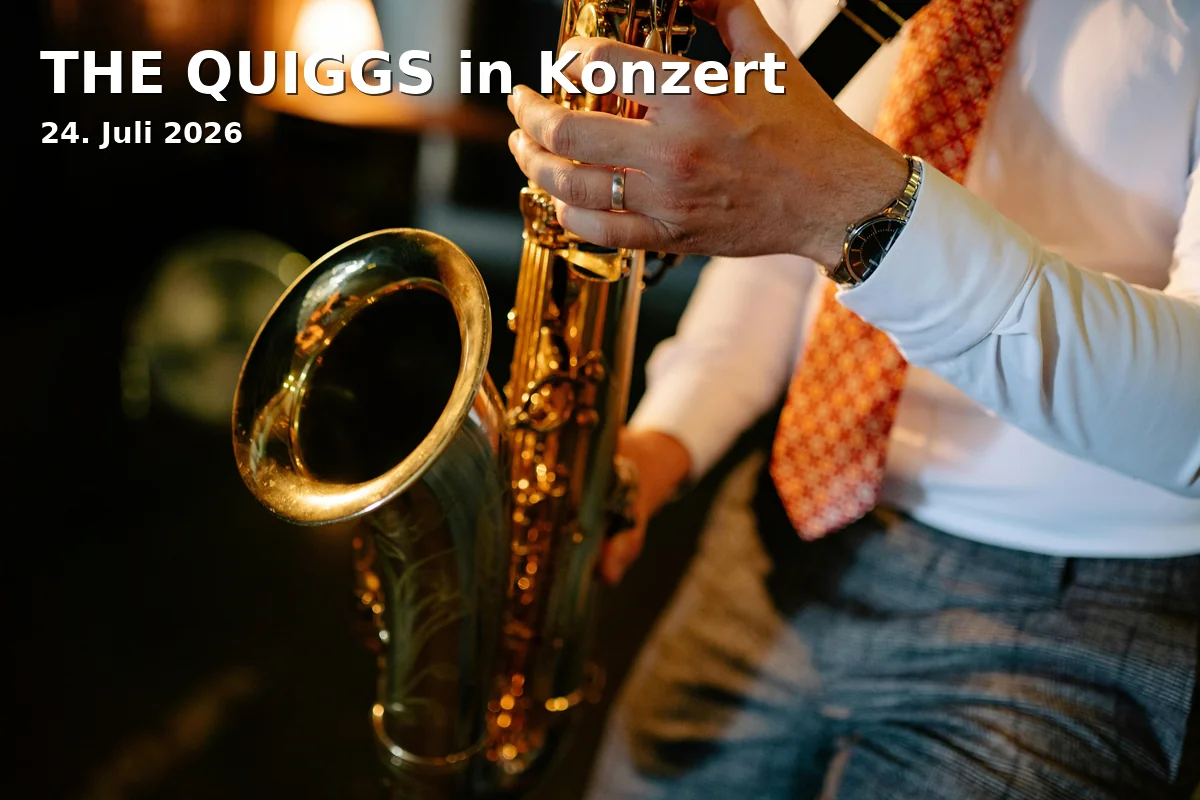
THE QUIGGS in Concert
Visit the duo The Quiggs on July 24, 2026, at Kulturhaus Suhl for a charming evening of folk music.
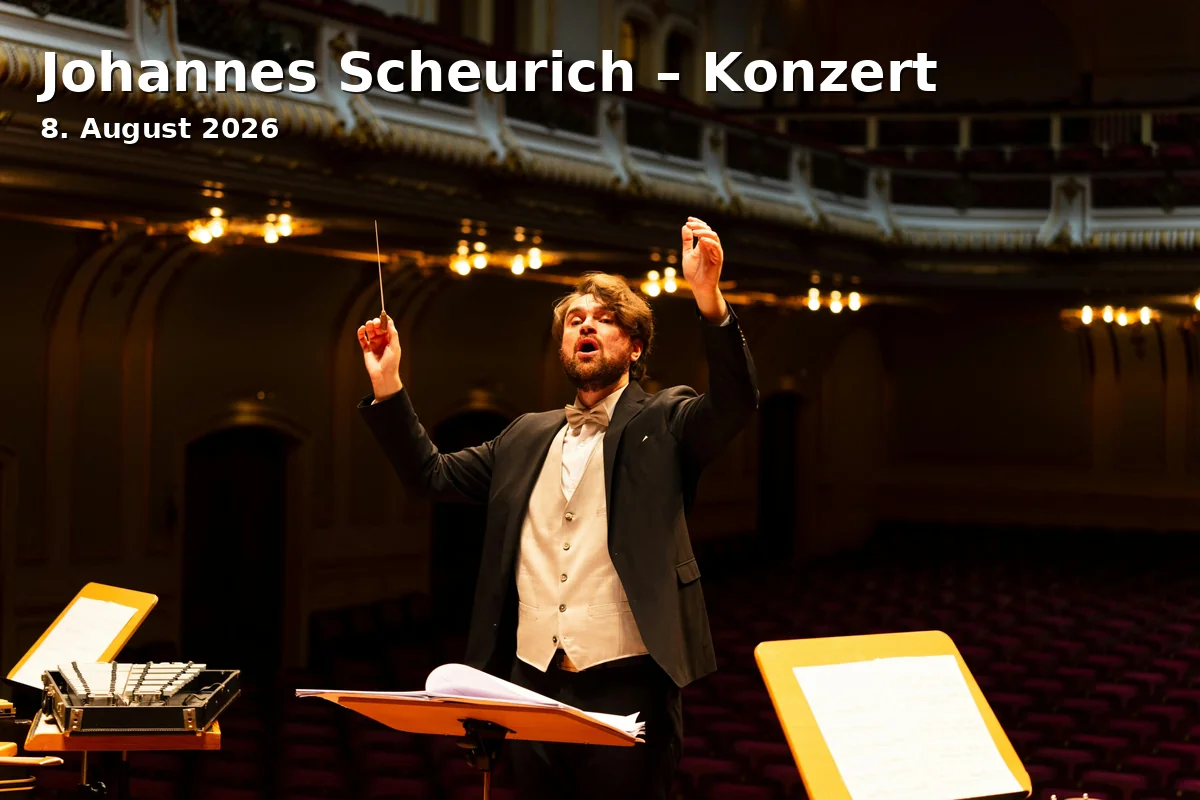
Johannes Scheurich – Concert
Look forward to an unforgettable concert evening with Johannes Scheurich on August 8, 2026, at the Kulturbaustelle Suhl.
Frequently Asked Questions
Reviews
No reviews found