
Suhl
Weidbergstraße 34, 98527 Suhl, Deutschland
Stasi Documents Archive Suhl | Opening Hours & Directions
The Stasi Documents Archive Suhl is today an important regional location of the Federal Archives on the Suhler Friedberg. Here, the documents of the former District Administration for State Security Suhl and its eight district offices are preserved, processed, and made available for use. Those seeking access to files, historical backgrounds, exhibitions, or reliable citizen advice will find not only archival material here but also a place for political education and regional contemporary history. The location combines research, processing, and public communication in a way that is relevant for individuals, schools, students, teachers, and the media alike. This makes the institution much more than just a classic archive: it is a gateway to GDR history in South Thuringia, a place of learning, and a concrete point of contact for anyone seeking orientation, facts, and context. ([bundesarchiv.de](https://www.bundesarchiv.de/das-bundesarchiv/standorte/suhl/))
Opening Hours, Citizen Advice, and Contact with the Archive
For many users, the search for the Stasi Documents Archive Suhl begins with very practical questions: When is it open, where is the right entrance, and whom should one contact for a concern? This is where the location is particularly clear. According to the official Federal Archives website, the archive is accessible from Monday to Thursday from 08:00 to 16:00 and on Fridays from 08:00 to 14:00. The same times apply to personal citizen advice. Thus, the location is not only an archive but also a direct point of contact for people who need support with questions regarding documents, research, or formal concerns. The citizen advice in the Suhl region can be reached by phone at 030 18665-4511. Nancy Nowik is named as the branch manager. This transparent contact structure is particularly important for inquiries such as opening hours, access to files, or Stasi documents Suhl, as it provides immediate clarity. ([bundesarchiv.de](https://www.bundesarchiv.de/das-bundesarchiv/standorte/suhl/))
Moreover, the location not only offers advice but also public access to exhibitions. The official site explicitly states that personal advice and the permanent exhibition can be visited during opening hours. Additionally, appointments can be made by arrangement. This is practical for visitors planning a trip who want to know in advance whether a spontaneous visit or a scheduled appointment is advisable. Especially at a place with archival and educational functions, this mix of fixed times and individual coordination is ideal. It signals: This is about serious use, not mass operation. Therefore, anyone searching for Stasi Archive Suhl, opening hours, citizen advice, or exhibitions will receive a combination of professional accessibility and historical communication at the location, making the visit planned and meaningful. ([bundesarchiv.de](https://www.bundesarchiv.de/das-bundesarchiv/standorte/suhl/))
The contact method is also straightforward. In addition to telephone citizen advice, the archive can be reached by email at suhl.stasiunterlagenarchiv@bundesarchiv.de. For visitors who have questions on-site, this is particularly helpful, as many concerns can be clarified directly at the interface between archive use and historical education. The official presentation also shows that the team understands the location not just as a storage place but as a service and advisory location with clear responsibilities. This is an important SEO aspect, as seekers often look not only for content but especially for concrete courses of action. The Stasi Documents Archive Suhl meets this expectation very directly: with clear opening hours, personal advice, a phone number, and an email address, as well as the note that use is possible by arrangement. For local search intentions, this is a strong signal of trust and orientation. ([bundesarchiv.de](https://www.bundesarchiv.de/das-bundesarchiv/standorte/suhl/))
Directions, Parking, and Barrier-Free Access in Suhl
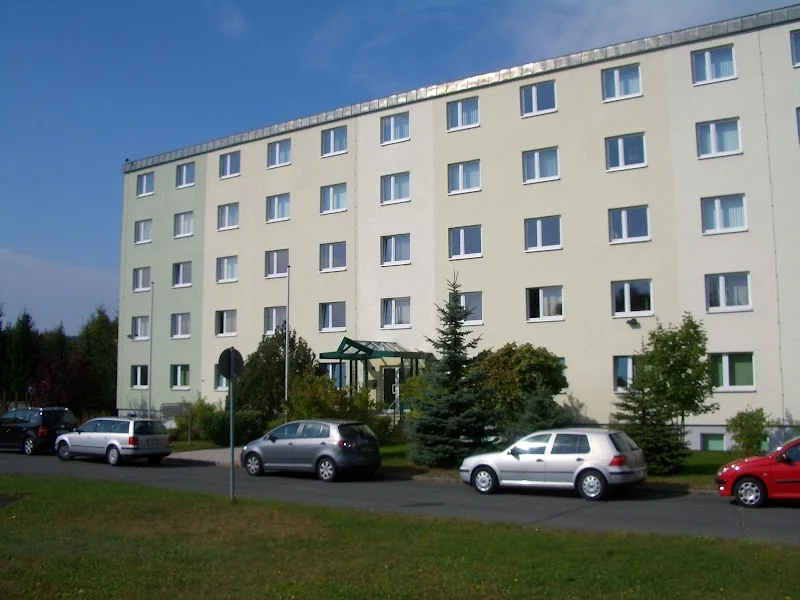
Those approaching the Stasi Documents Archive Suhl by car will find a detailed route description on the official site. Take the A73 highway and exit at the Suhl-Friedberg junction, follow the L3247 towards Suhl, turn onto Schützenstraße, and continue via Hubertusstraße and Pfütschbergstraße into the area of Neuer Friedberg. From there, Weidbergstraße leads directly to the archive, which is located about 500 meters in the fourth block on the right side. Alternatively, the approach via Schleusinger Straße is also described. This precise route guidance is valuable for people who are not just looking for an address but a truly understandable set of directions. Especially at regional archive locations, this is important because the approach often raises more questions than the visit itself. Those searching for directions, Stasi Archive Suhl, or parking will find reliable orientation here. ([bundesarchiv.de](https://www.bundesarchiv.de/das-bundesarchiv/standorte/suhl/))
The location is also well explained for those arriving by public transport. The Federal Archives site mentions bus lines A/G, H, or G towards Neuer Friedberg. One should get off at the Neuer Friedberg stop in the direction of travel and then follow Weidbergstraße for about 500 meters to the archive. For seekers who are arriving without a car or wish to combine their visit with public transport, this is a great help. Additionally, visitor parking is available at the right front side and at the back of the building. There are also designated disabled parking spaces behind the building. Those searching for parking Stasi documents Suhl or barrier-free access will find very concrete answers that significantly ease the visit on-site. ([bundesarchiv.de](https://www.bundesarchiv.de/das-bundesarchiv/standorte/suhl/))
Barrier-free access is not a trivial matter for a public archive but an important quality feature. The official site explicitly mentions it along with the visitor parking. This shows that the location takes practical accessibility seriously. For people with limited mobility, for older visitors, or for groups with organizational needs, this is a strong plus. Combined with clear route guidance, parking options, and regular opening hours, a very well-planned visit framework is created. This corresponds to the frequent search queries regarding parking, parking spaces, directions, and opening hours. The archive is thus not only relevant in content but also logistically easy to find. Those who know the South Thuringia region also know that Suhl, as a location on the Friedberg, is easily accessible by car and that the approach can be implemented easily with targeted planning. ([bundesarchiv.de](https://www.bundesarchiv.de/das-bundesarchiv/standorte/suhl/))
Access to Files, Research, and Use of Stasi Documents
The Stasi Documents Archive Suhl is particularly important because here not only are documents displayed, but actual work is also done. The site houses and processes the documents of the former District Administration for State Security Suhl as well as the associated service units. The collection comprises approximately 3,780 linear meters of documents, including about 1,540 linear meters of archived files and about 2,240 linear meters of documents from the service units and district offices. Additionally, there are 216 boxes with torn documents. About 80 percent of the written material is now usable for research. This makes it clear that the place is not only historically significant but remains a real workplace for personal and subject-related inquiries. Those searching for Stasi documents Suhl or access to files will find a location where processing and use are closely linked. ([bundesarchiv.de](https://www.bundesarchiv.de/das-bundesarchiv/standorte/suhl/))
Particularly interesting for researchers is the structure of the finding aids. The location works with an extensive card index, which contains 131 files with about 1.35 million index cards. According to the official presentation, most of the files are already recorded in the Electronic Personal Register database, which facilitates and speeds up the search. Additionally, the processing of personal requests begins with research in the card index area. Thus, the archive does not simply store files but systematically makes them accessible. This is a central point for anyone searching for archive Suhl, research, finding aids, or personal files. The location is thus a very typical example of a modern memory archive that not only conserves historical documents but also makes them usable. ([bundesarchiv.de](https://www.bundesarchiv.de/das-bundesarchiv/standorte/suhl/))
The use itself is also clearly described. The archive conducts all personal and subject-related research. The documents are preserved, secured, and made available for use. The processing of the MfS documents is the main focus of the archival work. In addition, many documents are accessible through new finding aids, and the official texts indicate that research, access to files, and application can be prepared both in person and through other means. It is also important for users that a valid identification document may be required for file work. The archive thus offers exactly the kind of structured usability that is expected in inquiries regarding access to files, applications, research, and Stasi files Suhl. It is about precise information, data protection, and archival order at the same time. ([bundesarchiv.de](https://www.bundesarchiv.de/das-bundesarchiv/standorte/suhl/))
Exhibitions, Archive Tours, and Educational Offers On-Site
Those visiting the Stasi Documents Archive Suhl come not only for files but also for communication, exhibitions, and orientation. The official site explains that there are constantly changing exhibitions on the structure and working methods of the Ministry for State Security as well as on the history of the GDR. Furthermore, the history of the Stasi in the former district of Suhl is specifically presented. This is particularly attractive for visitors because the location thus offers a regional perspective and does not just tell general GDR history. Upon request, visitors are guided through the exhibitions, and pre-registration is requested. Admission is free. This makes the place interesting for individual visitors as well as for small groups, school classes, or historically interested guests. Search queries such as exhibition Suhl, archive tour, or Stasi history South Thuringia directly hit the core of the offering. ([bundesarchiv.de](https://www.bundesarchiv.de/das-bundesarchiv/standorte/suhl/))
The archive tours are also strongly focused on communication. The Federal Archives site describes that a tour provides insights into the card index, the file research after an application, the file management of the State Security Service, and destroyed material. Additionally, sample files and documents of affected individuals are shown, and visiting the exhibition area is part of the tour. This is exciting for people looking for photos or images from the Stasi Documents Archive Suhl because the place thus becomes not only textually but also visually and spatially tangible. Free admission to the tours enhances the public educational mission of the location. Therefore, anyone searching for archive tours, on-site tours, or insights into Stasi documents Suhl will find a very clearly described program here. ([bundesarchiv.de](https://www.bundesarchiv.de/das-bundesarchiv/standorte/suhl/))
For schools, teachers, students, and interested adults, the location also offers a wide range of educational offerings. These include advice and support for seminar papers, literature on the State Security Service, work with file examples and educational materials, archive tours, permanent and changing exhibitions, as well as opportunities for mandatory internships or voluntary career-oriented internships and FSJ formats. In addition, there are regular lecture events, individual presentations by arrangement, and public educational offerings in cooperation with regional partners. This fits very well with search queries such as education, workshop, teaching materials, or history GDR Suhl. The location is thus not just a storage place but an active learning and meeting space where the regional history of state security becomes comprehensible and publicly accessible. ([bundesarchiv.de](https://www.bundesarchiv.de/das-bundesarchiv/standorte/suhl/))
History of the Suhl Location and the Preserved Holdings
The history of the location is closely linked to the events of the upheaval in 1989 and the subsequent processing. After the occupation of the district administration in December 1989, archived files, documents still being processed, central material storage, loose and torn written material, as well as audiovisual media and three-dimensional objects were secured. From 1990 until the end of 1991 or early 1992, the Stasi documents secured by civil rights activists were initially housed in the former detention center of the MfS in the center of Suhl. There, a small setup team reconstructed the original file order and the important finding aids so that the newly created special authority could begin its work. This historical development explains why the location is today significant both archivally and in terms of memory culture. ([tharchivprod.thueringen.de](https://tharchivprod.thueringen.de/en/archiv/view/id/154))
Since 1992, the Suhl branch has been located in a former accommodation building of the Officers' School of the DDR Border Troops Rosa Luxemburg. The archive area is spread over two floors, and the documents are housed in 72 magazine rooms with standing shelves. This architectural history is more than just a detail for the location, as it makes visible how an earlier militarily shaped place has today become an archival and educational space. In public perception, this strengthens the credibility of the location: The history of the transmission is literally thought through in the architecture. Those searching for Stasi Archive Suhl history or Friedberg Suhl will find themselves in a place where the past is not only told but remains visible in the spatial structure. ([bundesarchiv.de](https://www.bundesarchiv.de/das-bundesarchiv/standorte/suhl/))
Effective June 17, 2021, the Stasi Documents Archive was integrated into the Federal Archives. This secured the documents as federal archival material permanently. For current use, it is also important that the structure of the holdings is determined by the provenance principle. The written legacy of a specific operational or administrative service unit forms one of many sub-holdings, and the subject-related processing is progressing. The holdings include not only files but also maps, plans, posters, photos, audio recordings, a few moving images, and collection items. This makes the location valuable for historians, the media, and interested parties alike, as it documents a wide range of material traces of the GDR state security. ([tharchivprod.thueringen.de](https://tharchivprod.thueringen.de/en/archiv/view/id/154))
Photos, Images, and the First Impression of the Location
The search query for photos or images of the Stasi Documents Archive Suhl is absolutely obvious, as many people want to gain an impression of the place before planning a visit. The official site of the Federal Archives features several images, including research at a personal file, retrieving a file in the magazine, and a box with torn documents. These images clearly show what the location is actually about: sources, order, reconstruction, and the visible traces of history. Therefore, anyone searching for Stasi documents archive Suhl photos or images of Stasi documents archive Suhl will find on the official site not just decorative motifs but real working images from the archive's daily life. This strengthens the credibility of the location and piques curiosity about the visit on-site. ([bundesarchiv.de](https://www.bundesarchiv.de/das-bundesarchiv/standorte/suhl/))
The exhibition pages of the Federal Archives also convey visual impressions, as they document the changing themes, presentations, and regional references of the location. Additionally, the official communication of the archive is very clear and service-oriented: opening hours, directions, parking, advice, and exhibitions are easily findable. This is particularly important for search queries such as reviews, photos, or images, as many users want to first understand how a place feels and whether it is worth a visit. The honest answer regarding the Stasi Documents Archive Suhl is: It is not an event place in the classic sense but a serious, well-accessible, and education-oriented archive location with a high historical density. This creates its positive first impression. Those interested in GDR history, regional processing, and authentic documents receive a clear and credible entry point here. ([bundesarchiv.de](https://www.bundesarchiv.de/das-bundesarchiv/standorte/suhl/))
Sources:
Mehr anzeigenWeniger anzeigen
Stasi Documents Archive Suhl | Opening Hours & Directions
The Stasi Documents Archive Suhl is today an important regional location of the Federal Archives on the Suhler Friedberg. Here, the documents of the former District Administration for State Security Suhl and its eight district offices are preserved, processed, and made available for use. Those seeking access to files, historical backgrounds, exhibitions, or reliable citizen advice will find not only archival material here but also a place for political education and regional contemporary history. The location combines research, processing, and public communication in a way that is relevant for individuals, schools, students, teachers, and the media alike. This makes the institution much more than just a classic archive: it is a gateway to GDR history in South Thuringia, a place of learning, and a concrete point of contact for anyone seeking orientation, facts, and context. ([bundesarchiv.de](https://www.bundesarchiv.de/das-bundesarchiv/standorte/suhl/))
Opening Hours, Citizen Advice, and Contact with the Archive
For many users, the search for the Stasi Documents Archive Suhl begins with very practical questions: When is it open, where is the right entrance, and whom should one contact for a concern? This is where the location is particularly clear. According to the official Federal Archives website, the archive is accessible from Monday to Thursday from 08:00 to 16:00 and on Fridays from 08:00 to 14:00. The same times apply to personal citizen advice. Thus, the location is not only an archive but also a direct point of contact for people who need support with questions regarding documents, research, or formal concerns. The citizen advice in the Suhl region can be reached by phone at 030 18665-4511. Nancy Nowik is named as the branch manager. This transparent contact structure is particularly important for inquiries such as opening hours, access to files, or Stasi documents Suhl, as it provides immediate clarity. ([bundesarchiv.de](https://www.bundesarchiv.de/das-bundesarchiv/standorte/suhl/))
Moreover, the location not only offers advice but also public access to exhibitions. The official site explicitly states that personal advice and the permanent exhibition can be visited during opening hours. Additionally, appointments can be made by arrangement. This is practical for visitors planning a trip who want to know in advance whether a spontaneous visit or a scheduled appointment is advisable. Especially at a place with archival and educational functions, this mix of fixed times and individual coordination is ideal. It signals: This is about serious use, not mass operation. Therefore, anyone searching for Stasi Archive Suhl, opening hours, citizen advice, or exhibitions will receive a combination of professional accessibility and historical communication at the location, making the visit planned and meaningful. ([bundesarchiv.de](https://www.bundesarchiv.de/das-bundesarchiv/standorte/suhl/))
The contact method is also straightforward. In addition to telephone citizen advice, the archive can be reached by email at suhl.stasiunterlagenarchiv@bundesarchiv.de. For visitors who have questions on-site, this is particularly helpful, as many concerns can be clarified directly at the interface between archive use and historical education. The official presentation also shows that the team understands the location not just as a storage place but as a service and advisory location with clear responsibilities. This is an important SEO aspect, as seekers often look not only for content but especially for concrete courses of action. The Stasi Documents Archive Suhl meets this expectation very directly: with clear opening hours, personal advice, a phone number, and an email address, as well as the note that use is possible by arrangement. For local search intentions, this is a strong signal of trust and orientation. ([bundesarchiv.de](https://www.bundesarchiv.de/das-bundesarchiv/standorte/suhl/))
Directions, Parking, and Barrier-Free Access in Suhl
Those approaching the Stasi Documents Archive Suhl by car will find a detailed route description on the official site. Take the A73 highway and exit at the Suhl-Friedberg junction, follow the L3247 towards Suhl, turn onto Schützenstraße, and continue via Hubertusstraße and Pfütschbergstraße into the area of Neuer Friedberg. From there, Weidbergstraße leads directly to the archive, which is located about 500 meters in the fourth block on the right side. Alternatively, the approach via Schleusinger Straße is also described. This precise route guidance is valuable for people who are not just looking for an address but a truly understandable set of directions. Especially at regional archive locations, this is important because the approach often raises more questions than the visit itself. Those searching for directions, Stasi Archive Suhl, or parking will find reliable orientation here. ([bundesarchiv.de](https://www.bundesarchiv.de/das-bundesarchiv/standorte/suhl/))
The location is also well explained for those arriving by public transport. The Federal Archives site mentions bus lines A/G, H, or G towards Neuer Friedberg. One should get off at the Neuer Friedberg stop in the direction of travel and then follow Weidbergstraße for about 500 meters to the archive. For seekers who are arriving without a car or wish to combine their visit with public transport, this is a great help. Additionally, visitor parking is available at the right front side and at the back of the building. There are also designated disabled parking spaces behind the building. Those searching for parking Stasi documents Suhl or barrier-free access will find very concrete answers that significantly ease the visit on-site. ([bundesarchiv.de](https://www.bundesarchiv.de/das-bundesarchiv/standorte/suhl/))
Barrier-free access is not a trivial matter for a public archive but an important quality feature. The official site explicitly mentions it along with the visitor parking. This shows that the location takes practical accessibility seriously. For people with limited mobility, for older visitors, or for groups with organizational needs, this is a strong plus. Combined with clear route guidance, parking options, and regular opening hours, a very well-planned visit framework is created. This corresponds to the frequent search queries regarding parking, parking spaces, directions, and opening hours. The archive is thus not only relevant in content but also logistically easy to find. Those who know the South Thuringia region also know that Suhl, as a location on the Friedberg, is easily accessible by car and that the approach can be implemented easily with targeted planning. ([bundesarchiv.de](https://www.bundesarchiv.de/das-bundesarchiv/standorte/suhl/))
Access to Files, Research, and Use of Stasi Documents
The Stasi Documents Archive Suhl is particularly important because here not only are documents displayed, but actual work is also done. The site houses and processes the documents of the former District Administration for State Security Suhl as well as the associated service units. The collection comprises approximately 3,780 linear meters of documents, including about 1,540 linear meters of archived files and about 2,240 linear meters of documents from the service units and district offices. Additionally, there are 216 boxes with torn documents. About 80 percent of the written material is now usable for research. This makes it clear that the place is not only historically significant but remains a real workplace for personal and subject-related inquiries. Those searching for Stasi documents Suhl or access to files will find a location where processing and use are closely linked. ([bundesarchiv.de](https://www.bundesarchiv.de/das-bundesarchiv/standorte/suhl/))
Particularly interesting for researchers is the structure of the finding aids. The location works with an extensive card index, which contains 131 files with about 1.35 million index cards. According to the official presentation, most of the files are already recorded in the Electronic Personal Register database, which facilitates and speeds up the search. Additionally, the processing of personal requests begins with research in the card index area. Thus, the archive does not simply store files but systematically makes them accessible. This is a central point for anyone searching for archive Suhl, research, finding aids, or personal files. The location is thus a very typical example of a modern memory archive that not only conserves historical documents but also makes them usable. ([bundesarchiv.de](https://www.bundesarchiv.de/das-bundesarchiv/standorte/suhl/))
The use itself is also clearly described. The archive conducts all personal and subject-related research. The documents are preserved, secured, and made available for use. The processing of the MfS documents is the main focus of the archival work. In addition, many documents are accessible through new finding aids, and the official texts indicate that research, access to files, and application can be prepared both in person and through other means. It is also important for users that a valid identification document may be required for file work. The archive thus offers exactly the kind of structured usability that is expected in inquiries regarding access to files, applications, research, and Stasi files Suhl. It is about precise information, data protection, and archival order at the same time. ([bundesarchiv.de](https://www.bundesarchiv.de/das-bundesarchiv/standorte/suhl/))
Exhibitions, Archive Tours, and Educational Offers On-Site
Those visiting the Stasi Documents Archive Suhl come not only for files but also for communication, exhibitions, and orientation. The official site explains that there are constantly changing exhibitions on the structure and working methods of the Ministry for State Security as well as on the history of the GDR. Furthermore, the history of the Stasi in the former district of Suhl is specifically presented. This is particularly attractive for visitors because the location thus offers a regional perspective and does not just tell general GDR history. Upon request, visitors are guided through the exhibitions, and pre-registration is requested. Admission is free. This makes the place interesting for individual visitors as well as for small groups, school classes, or historically interested guests. Search queries such as exhibition Suhl, archive tour, or Stasi history South Thuringia directly hit the core of the offering. ([bundesarchiv.de](https://www.bundesarchiv.de/das-bundesarchiv/standorte/suhl/))
The archive tours are also strongly focused on communication. The Federal Archives site describes that a tour provides insights into the card index, the file research after an application, the file management of the State Security Service, and destroyed material. Additionally, sample files and documents of affected individuals are shown, and visiting the exhibition area is part of the tour. This is exciting for people looking for photos or images from the Stasi Documents Archive Suhl because the place thus becomes not only textually but also visually and spatially tangible. Free admission to the tours enhances the public educational mission of the location. Therefore, anyone searching for archive tours, on-site tours, or insights into Stasi documents Suhl will find a very clearly described program here. ([bundesarchiv.de](https://www.bundesarchiv.de/das-bundesarchiv/standorte/suhl/))
For schools, teachers, students, and interested adults, the location also offers a wide range of educational offerings. These include advice and support for seminar papers, literature on the State Security Service, work with file examples and educational materials, archive tours, permanent and changing exhibitions, as well as opportunities for mandatory internships or voluntary career-oriented internships and FSJ formats. In addition, there are regular lecture events, individual presentations by arrangement, and public educational offerings in cooperation with regional partners. This fits very well with search queries such as education, workshop, teaching materials, or history GDR Suhl. The location is thus not just a storage place but an active learning and meeting space where the regional history of state security becomes comprehensible and publicly accessible. ([bundesarchiv.de](https://www.bundesarchiv.de/das-bundesarchiv/standorte/suhl/))
History of the Suhl Location and the Preserved Holdings
The history of the location is closely linked to the events of the upheaval in 1989 and the subsequent processing. After the occupation of the district administration in December 1989, archived files, documents still being processed, central material storage, loose and torn written material, as well as audiovisual media and three-dimensional objects were secured. From 1990 until the end of 1991 or early 1992, the Stasi documents secured by civil rights activists were initially housed in the former detention center of the MfS in the center of Suhl. There, a small setup team reconstructed the original file order and the important finding aids so that the newly created special authority could begin its work. This historical development explains why the location is today significant both archivally and in terms of memory culture. ([tharchivprod.thueringen.de](https://tharchivprod.thueringen.de/en/archiv/view/id/154))
Since 1992, the Suhl branch has been located in a former accommodation building of the Officers' School of the DDR Border Troops Rosa Luxemburg. The archive area is spread over two floors, and the documents are housed in 72 magazine rooms with standing shelves. This architectural history is more than just a detail for the location, as it makes visible how an earlier militarily shaped place has today become an archival and educational space. In public perception, this strengthens the credibility of the location: The history of the transmission is literally thought through in the architecture. Those searching for Stasi Archive Suhl history or Friedberg Suhl will find themselves in a place where the past is not only told but remains visible in the spatial structure. ([bundesarchiv.de](https://www.bundesarchiv.de/das-bundesarchiv/standorte/suhl/))
Effective June 17, 2021, the Stasi Documents Archive was integrated into the Federal Archives. This secured the documents as federal archival material permanently. For current use, it is also important that the structure of the holdings is determined by the provenance principle. The written legacy of a specific operational or administrative service unit forms one of many sub-holdings, and the subject-related processing is progressing. The holdings include not only files but also maps, plans, posters, photos, audio recordings, a few moving images, and collection items. This makes the location valuable for historians, the media, and interested parties alike, as it documents a wide range of material traces of the GDR state security. ([tharchivprod.thueringen.de](https://tharchivprod.thueringen.de/en/archiv/view/id/154))
Photos, Images, and the First Impression of the Location
The search query for photos or images of the Stasi Documents Archive Suhl is absolutely obvious, as many people want to gain an impression of the place before planning a visit. The official site of the Federal Archives features several images, including research at a personal file, retrieving a file in the magazine, and a box with torn documents. These images clearly show what the location is actually about: sources, order, reconstruction, and the visible traces of history. Therefore, anyone searching for Stasi documents archive Suhl photos or images of Stasi documents archive Suhl will find on the official site not just decorative motifs but real working images from the archive's daily life. This strengthens the credibility of the location and piques curiosity about the visit on-site. ([bundesarchiv.de](https://www.bundesarchiv.de/das-bundesarchiv/standorte/suhl/))
The exhibition pages of the Federal Archives also convey visual impressions, as they document the changing themes, presentations, and regional references of the location. Additionally, the official communication of the archive is very clear and service-oriented: opening hours, directions, parking, advice, and exhibitions are easily findable. This is particularly important for search queries such as reviews, photos, or images, as many users want to first understand how a place feels and whether it is worth a visit. The honest answer regarding the Stasi Documents Archive Suhl is: It is not an event place in the classic sense but a serious, well-accessible, and education-oriented archive location with a high historical density. This creates its positive first impression. Those interested in GDR history, regional processing, and authentic documents receive a clear and credible entry point here. ([bundesarchiv.de](https://www.bundesarchiv.de/das-bundesarchiv/standorte/suhl/))
Sources:
Stasi Documents Archive Suhl | Opening Hours & Directions
The Stasi Documents Archive Suhl is today an important regional location of the Federal Archives on the Suhler Friedberg. Here, the documents of the former District Administration for State Security Suhl and its eight district offices are preserved, processed, and made available for use. Those seeking access to files, historical backgrounds, exhibitions, or reliable citizen advice will find not only archival material here but also a place for political education and regional contemporary history. The location combines research, processing, and public communication in a way that is relevant for individuals, schools, students, teachers, and the media alike. This makes the institution much more than just a classic archive: it is a gateway to GDR history in South Thuringia, a place of learning, and a concrete point of contact for anyone seeking orientation, facts, and context. ([bundesarchiv.de](https://www.bundesarchiv.de/das-bundesarchiv/standorte/suhl/))
Opening Hours, Citizen Advice, and Contact with the Archive
For many users, the search for the Stasi Documents Archive Suhl begins with very practical questions: When is it open, where is the right entrance, and whom should one contact for a concern? This is where the location is particularly clear. According to the official Federal Archives website, the archive is accessible from Monday to Thursday from 08:00 to 16:00 and on Fridays from 08:00 to 14:00. The same times apply to personal citizen advice. Thus, the location is not only an archive but also a direct point of contact for people who need support with questions regarding documents, research, or formal concerns. The citizen advice in the Suhl region can be reached by phone at 030 18665-4511. Nancy Nowik is named as the branch manager. This transparent contact structure is particularly important for inquiries such as opening hours, access to files, or Stasi documents Suhl, as it provides immediate clarity. ([bundesarchiv.de](https://www.bundesarchiv.de/das-bundesarchiv/standorte/suhl/))
Moreover, the location not only offers advice but also public access to exhibitions. The official site explicitly states that personal advice and the permanent exhibition can be visited during opening hours. Additionally, appointments can be made by arrangement. This is practical for visitors planning a trip who want to know in advance whether a spontaneous visit or a scheduled appointment is advisable. Especially at a place with archival and educational functions, this mix of fixed times and individual coordination is ideal. It signals: This is about serious use, not mass operation. Therefore, anyone searching for Stasi Archive Suhl, opening hours, citizen advice, or exhibitions will receive a combination of professional accessibility and historical communication at the location, making the visit planned and meaningful. ([bundesarchiv.de](https://www.bundesarchiv.de/das-bundesarchiv/standorte/suhl/))
The contact method is also straightforward. In addition to telephone citizen advice, the archive can be reached by email at suhl.stasiunterlagenarchiv@bundesarchiv.de. For visitors who have questions on-site, this is particularly helpful, as many concerns can be clarified directly at the interface between archive use and historical education. The official presentation also shows that the team understands the location not just as a storage place but as a service and advisory location with clear responsibilities. This is an important SEO aspect, as seekers often look not only for content but especially for concrete courses of action. The Stasi Documents Archive Suhl meets this expectation very directly: with clear opening hours, personal advice, a phone number, and an email address, as well as the note that use is possible by arrangement. For local search intentions, this is a strong signal of trust and orientation. ([bundesarchiv.de](https://www.bundesarchiv.de/das-bundesarchiv/standorte/suhl/))
Directions, Parking, and Barrier-Free Access in Suhl
Those approaching the Stasi Documents Archive Suhl by car will find a detailed route description on the official site. Take the A73 highway and exit at the Suhl-Friedberg junction, follow the L3247 towards Suhl, turn onto Schützenstraße, and continue via Hubertusstraße and Pfütschbergstraße into the area of Neuer Friedberg. From there, Weidbergstraße leads directly to the archive, which is located about 500 meters in the fourth block on the right side. Alternatively, the approach via Schleusinger Straße is also described. This precise route guidance is valuable for people who are not just looking for an address but a truly understandable set of directions. Especially at regional archive locations, this is important because the approach often raises more questions than the visit itself. Those searching for directions, Stasi Archive Suhl, or parking will find reliable orientation here. ([bundesarchiv.de](https://www.bundesarchiv.de/das-bundesarchiv/standorte/suhl/))
The location is also well explained for those arriving by public transport. The Federal Archives site mentions bus lines A/G, H, or G towards Neuer Friedberg. One should get off at the Neuer Friedberg stop in the direction of travel and then follow Weidbergstraße for about 500 meters to the archive. For seekers who are arriving without a car or wish to combine their visit with public transport, this is a great help. Additionally, visitor parking is available at the right front side and at the back of the building. There are also designated disabled parking spaces behind the building. Those searching for parking Stasi documents Suhl or barrier-free access will find very concrete answers that significantly ease the visit on-site. ([bundesarchiv.de](https://www.bundesarchiv.de/das-bundesarchiv/standorte/suhl/))
Barrier-free access is not a trivial matter for a public archive but an important quality feature. The official site explicitly mentions it along with the visitor parking. This shows that the location takes practical accessibility seriously. For people with limited mobility, for older visitors, or for groups with organizational needs, this is a strong plus. Combined with clear route guidance, parking options, and regular opening hours, a very well-planned visit framework is created. This corresponds to the frequent search queries regarding parking, parking spaces, directions, and opening hours. The archive is thus not only relevant in content but also logistically easy to find. Those who know the South Thuringia region also know that Suhl, as a location on the Friedberg, is easily accessible by car and that the approach can be implemented easily with targeted planning. ([bundesarchiv.de](https://www.bundesarchiv.de/das-bundesarchiv/standorte/suhl/))
Access to Files, Research, and Use of Stasi Documents
The Stasi Documents Archive Suhl is particularly important because here not only are documents displayed, but actual work is also done. The site houses and processes the documents of the former District Administration for State Security Suhl as well as the associated service units. The collection comprises approximately 3,780 linear meters of documents, including about 1,540 linear meters of archived files and about 2,240 linear meters of documents from the service units and district offices. Additionally, there are 216 boxes with torn documents. About 80 percent of the written material is now usable for research. This makes it clear that the place is not only historically significant but remains a real workplace for personal and subject-related inquiries. Those searching for Stasi documents Suhl or access to files will find a location where processing and use are closely linked. ([bundesarchiv.de](https://www.bundesarchiv.de/das-bundesarchiv/standorte/suhl/))
Particularly interesting for researchers is the structure of the finding aids. The location works with an extensive card index, which contains 131 files with about 1.35 million index cards. According to the official presentation, most of the files are already recorded in the Electronic Personal Register database, which facilitates and speeds up the search. Additionally, the processing of personal requests begins with research in the card index area. Thus, the archive does not simply store files but systematically makes them accessible. This is a central point for anyone searching for archive Suhl, research, finding aids, or personal files. The location is thus a very typical example of a modern memory archive that not only conserves historical documents but also makes them usable. ([bundesarchiv.de](https://www.bundesarchiv.de/das-bundesarchiv/standorte/suhl/))
The use itself is also clearly described. The archive conducts all personal and subject-related research. The documents are preserved, secured, and made available for use. The processing of the MfS documents is the main focus of the archival work. In addition, many documents are accessible through new finding aids, and the official texts indicate that research, access to files, and application can be prepared both in person and through other means. It is also important for users that a valid identification document may be required for file work. The archive thus offers exactly the kind of structured usability that is expected in inquiries regarding access to files, applications, research, and Stasi files Suhl. It is about precise information, data protection, and archival order at the same time. ([bundesarchiv.de](https://www.bundesarchiv.de/das-bundesarchiv/standorte/suhl/))
Exhibitions, Archive Tours, and Educational Offers On-Site
Those visiting the Stasi Documents Archive Suhl come not only for files but also for communication, exhibitions, and orientation. The official site explains that there are constantly changing exhibitions on the structure and working methods of the Ministry for State Security as well as on the history of the GDR. Furthermore, the history of the Stasi in the former district of Suhl is specifically presented. This is particularly attractive for visitors because the location thus offers a regional perspective and does not just tell general GDR history. Upon request, visitors are guided through the exhibitions, and pre-registration is requested. Admission is free. This makes the place interesting for individual visitors as well as for small groups, school classes, or historically interested guests. Search queries such as exhibition Suhl, archive tour, or Stasi history South Thuringia directly hit the core of the offering. ([bundesarchiv.de](https://www.bundesarchiv.de/das-bundesarchiv/standorte/suhl/))
The archive tours are also strongly focused on communication. The Federal Archives site describes that a tour provides insights into the card index, the file research after an application, the file management of the State Security Service, and destroyed material. Additionally, sample files and documents of affected individuals are shown, and visiting the exhibition area is part of the tour. This is exciting for people looking for photos or images from the Stasi Documents Archive Suhl because the place thus becomes not only textually but also visually and spatially tangible. Free admission to the tours enhances the public educational mission of the location. Therefore, anyone searching for archive tours, on-site tours, or insights into Stasi documents Suhl will find a very clearly described program here. ([bundesarchiv.de](https://www.bundesarchiv.de/das-bundesarchiv/standorte/suhl/))
For schools, teachers, students, and interested adults, the location also offers a wide range of educational offerings. These include advice and support for seminar papers, literature on the State Security Service, work with file examples and educational materials, archive tours, permanent and changing exhibitions, as well as opportunities for mandatory internships or voluntary career-oriented internships and FSJ formats. In addition, there are regular lecture events, individual presentations by arrangement, and public educational offerings in cooperation with regional partners. This fits very well with search queries such as education, workshop, teaching materials, or history GDR Suhl. The location is thus not just a storage place but an active learning and meeting space where the regional history of state security becomes comprehensible and publicly accessible. ([bundesarchiv.de](https://www.bundesarchiv.de/das-bundesarchiv/standorte/suhl/))
History of the Suhl Location and the Preserved Holdings
The history of the location is closely linked to the events of the upheaval in 1989 and the subsequent processing. After the occupation of the district administration in December 1989, archived files, documents still being processed, central material storage, loose and torn written material, as well as audiovisual media and three-dimensional objects were secured. From 1990 until the end of 1991 or early 1992, the Stasi documents secured by civil rights activists were initially housed in the former detention center of the MfS in the center of Suhl. There, a small setup team reconstructed the original file order and the important finding aids so that the newly created special authority could begin its work. This historical development explains why the location is today significant both archivally and in terms of memory culture. ([tharchivprod.thueringen.de](https://tharchivprod.thueringen.de/en/archiv/view/id/154))
Since 1992, the Suhl branch has been located in a former accommodation building of the Officers' School of the DDR Border Troops Rosa Luxemburg. The archive area is spread over two floors, and the documents are housed in 72 magazine rooms with standing shelves. This architectural history is more than just a detail for the location, as it makes visible how an earlier militarily shaped place has today become an archival and educational space. In public perception, this strengthens the credibility of the location: The history of the transmission is literally thought through in the architecture. Those searching for Stasi Archive Suhl history or Friedberg Suhl will find themselves in a place where the past is not only told but remains visible in the spatial structure. ([bundesarchiv.de](https://www.bundesarchiv.de/das-bundesarchiv/standorte/suhl/))
Effective June 17, 2021, the Stasi Documents Archive was integrated into the Federal Archives. This secured the documents as federal archival material permanently. For current use, it is also important that the structure of the holdings is determined by the provenance principle. The written legacy of a specific operational or administrative service unit forms one of many sub-holdings, and the subject-related processing is progressing. The holdings include not only files but also maps, plans, posters, photos, audio recordings, a few moving images, and collection items. This makes the location valuable for historians, the media, and interested parties alike, as it documents a wide range of material traces of the GDR state security. ([tharchivprod.thueringen.de](https://tharchivprod.thueringen.de/en/archiv/view/id/154))
Photos, Images, and the First Impression of the Location
The search query for photos or images of the Stasi Documents Archive Suhl is absolutely obvious, as many people want to gain an impression of the place before planning a visit. The official site of the Federal Archives features several images, including research at a personal file, retrieving a file in the magazine, and a box with torn documents. These images clearly show what the location is actually about: sources, order, reconstruction, and the visible traces of history. Therefore, anyone searching for Stasi documents archive Suhl photos or images of Stasi documents archive Suhl will find on the official site not just decorative motifs but real working images from the archive's daily life. This strengthens the credibility of the location and piques curiosity about the visit on-site. ([bundesarchiv.de](https://www.bundesarchiv.de/das-bundesarchiv/standorte/suhl/))
The exhibition pages of the Federal Archives also convey visual impressions, as they document the changing themes, presentations, and regional references of the location. Additionally, the official communication of the archive is very clear and service-oriented: opening hours, directions, parking, advice, and exhibitions are easily findable. This is particularly important for search queries such as reviews, photos, or images, as many users want to first understand how a place feels and whether it is worth a visit. The honest answer regarding the Stasi Documents Archive Suhl is: It is not an event place in the classic sense but a serious, well-accessible, and education-oriented archive location with a high historical density. This creates its positive first impression. Those interested in GDR history, regional processing, and authentic documents receive a clear and credible entry point here. ([bundesarchiv.de](https://www.bundesarchiv.de/das-bundesarchiv/standorte/suhl/))
Sources:
Upcoming Events
No events found
Frequently Asked Questions
Reviews
No reviews found