
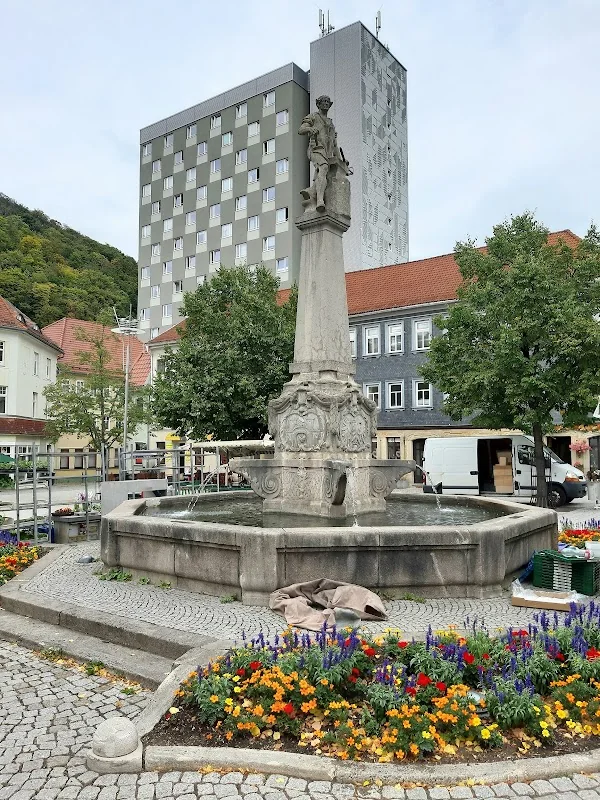
Suhl
Suhl, Deutschland
Suhl | Attractions & Zoo in Thuringia
Suhl is a city that is not only visited but experienced with surprisingly many facets. Those looking for Suhl will not find a one-dimensional destination, but a district-free city in southern Thuringia, closely connected to the Thuringian Forest, the Rennsteig, the history of weapons and mining, as well as an unusually dense range of leisure activities. Suhl is located in the valley of Steina, Lauter, and Hasel on the southwest slope of the Thuringian Forest, right near one of the most famous long-distance hiking trails in Germany. At the same time, the city presents itself as compact, with short distances, historic buildings, modern leisure infrastructure, and plenty of nature all around. This mix makes Suhl equally interesting for day visitors, families, hikers, and culture enthusiasts. Since 2013, the city has been promoting itself with the title of state-recognized resort and emphasizes its character as the most nature-rich city in Thuringia. Between the marketplace, Domberg, zoo, cinema, museum, and event center, a picture emerges that brings together tradition and present in a small space. Suhl is thus a destination for people who want to combine nature and city, history and entertainment, tranquility and activity. ([suhl-tourismus.de](https://www.suhl-tourismus.de/suhl-und-seine-geschichte/))
Suhl in Thuringia: Location, History, and Identity
The identity of Suhl is hardly understandable without its location. The city lies on the southwest slope of the Thuringian Forest, its topographical situation is characterized by valleys, wooded slopes, and prominent elevations. The marketplace is located at about 430 meters above sea level, while Domberg, as the local mountain of Suhl, rises to 675 meters, Döllberg to 760 meters, and Ringberg to 745 meters. The urban area stretches above Goldlauter-Heidersbach to elevations of almost 1000 meters, which makes Suhl not only particularly scenic but also explains its role as a starting point for hikes, explorations, and winter sports. Historically, the city is closely linked to iron processing, mining, and the weapons trade. Tourist sources describe that the tradition of iron processing dates back to prehistoric times and that the city was first mentioned in a document in 1318; it received city rights in 1527. Thus, Suhl is a city with deep historical roots, whose craftsmanship and economic development have been shaped over centuries by ore, water, and blacksmithing. This history is still visible in the urban landscape today and is kept alive in many places and offerings rather than being packaged in a museum-like manner. ([suhl-tourismus.de](https://www.suhl-tourismus.de/suhl-und-seine-geschichte/))
This identity is particularly evident in the term 'Weapons City Suhl.' The official representation describes how early iron processing in the Middle Ages gave rise to the weapons trade, and around 1500, the production of handheld firearms also reached Suhl. Later, the city developed into an important center of weapon production, even referred to as the 'German Damascus.' This heritage is not merely a memory but remains present through landmarks, museums, and storytelling places. The Suhl gunsmith on the marketplace is considered a witness to this centuries-old tradition, and the gunsmith monument in the center reminds of the significance of this craft for the city's self-understanding. The historic malt house, which now houses the weapons museum, fits into this picture: there, the history of Suhl's handheld firearm production is presented over three floors, including mining, processing, and artisanal specialization. Additionally, the role as a mining town is significant, as mining for iron ore and smelting shaped the development of Suhl for a long time, just like weapon production. Therefore, Suhl is not only a beautiful place in the Thuringian Forest but also a city with a clear, unmistakable character. ([suhl-tourismus.de](https://www.suhl-tourismus.de/waffenstadt-suhl/))
Attractions in Suhl: Marketplace, Museums, and Historical Sites
Those looking for attractions in Suhl will quickly find themselves in the historic center. The marketplace is the place where history, identity, and everyday life intersect most clearly. There stands the gunsmith monument and, in close proximity, the courthouse at the market, which is described as an architectural gem and served as a place of justice for many decades. Also in the center, one can find the town hall and the historic town hall in the district of Heinrichs, which is connected to Franconian architecture and regional history. However, Suhl offers not just a single monument but a whole series of cultural-historical sites that can be well connected as a city tour. These include the weapons museum, the gallery in CCS, the Herbert Roth café or the Herbert Roth exhibition, the shooting sports center, the observatory with planetarium, and the Bismarck Tower. Thus, the city center serves as a cultural memory, exhibition space, and starting point for further discoveries. Particularly appealing is that the most important stations have short distances to each other and can be accessed in a manageable urban space. Suhl is therefore very suitable for visitors who like to explore on foot and want to get to know a city not in passing but at a leisurely pace. ([suhl-tourismus.de](https://www.suhl-tourismus.de/freizeit-und-kultur/))
The landscape-shaped attractions also hold high value in Suhl. The 21-meter-high Bismarck Tower on Domberg is a landmark and at the same time a popular destination for hikers and nature lovers because it offers a wide panoramic view of the forests, hills, and valleys of the Thuringian Forest. The Ottilien Chapel on Domberg complements this image as a quiet place with a panoramic view over the city and landscape; it was built in 1843 by Suhl citizens and is now a popular destination for walks and hikes. The series is further complemented by the courthouse at the market, the gunsmith monument, as well as the historic town hall and the Heinrichser street market, which draw attention to Suhl's architectural history and urban development. Those interested in technical and cultural history will find a particularly dense summary of Suhl's tradition in the weapons museum. Over three floors and with more than 460 exhibits, the nearly 600-year production of handheld firearms is made comprehensible, as well as the connection between mining, craftsmanship, and industrial development. Suhl thus connects classic attractions with a historical narrative that remains visible in houses, squares, and monuments. ([suhl-tourismus.de](https://www.suhl-tourismus.de/bismarckturm/))
Zoo, Cinema, and Family Offers in Suhl
A major advantage of Suhl is the variety of leisure activities for families and visitors who seek not only history but also modern entertainment. A central destination is the Suhl Zoo, located in the picturesque Suhl Switzerland. Since 1969, about 500 animals, mainly native and European domestic and wild animals, live there on twelve hectares. Among them are wildcats, lynxes, and red deer. Additionally, there is a snake house, a walk-through lorikeet enclosure, a meerkat area, a petting zoo with goats and mini pigs, as well as play areas distributed throughout the grounds. The zoo is therefore not a short stop but a real excursion destination with a lot of quality time. This is particularly attractive for families, as nature experiences, observation, and movement can be very well combined. The zoo is also one of the fixed tourist destinations of the city and is explicitly highlighted on Suhl's official leisure page. Together with Fitzpark as an indoor playground, the Ottilienbad, and the museums, it forms an offer that works even in changeable weather and strengthens Suhl as a family destination. ([suhl-tourismus.de](https://www.suhl-tourismus.de/tierpark-suhl/))
For cinema and event fans, the Cineplex Suhl is another important building block. The cinema has seven halls, modern technology, and barrier-free access and is described by Suhl Tourism as a modern place for film fans of all ages. On the cinema's own page, it is referred to as the largest movie theater in southern Thuringia; current films, special events, and barrier-free screening times can be found there. Suhl thus shows that the city not only relies on traditional heritage but also on contemporary leisure culture. The mix of film, sports, water experiences, science, and nature makes the stay varied. Those planning a day trip can, for example, visit the zoo in the morning, take a walk in the city center in the afternoon, and end the evening at the cinema or in the Congress Center. The Ottilienbad and the observatory or planetarium also expand the possibilities. This combination of weather-independent offers and outdoor destinations ensures that Suhl works for different target groups: families, couples, groups, club outings, and school classes each find suitable points of connection. In total, a leisure profile emerges that is remarkably broad for a city of this size. ([suhl-tourismus.de](https://www.suhl-tourismus.de/cineplex-suhl/))
Arrival, Parking, and Short Distances in Suhl
The journey to Suhl is comparatively uncomplicated because the city is clearly developed for tourism and transport. Officially, car, train, and bus are mentioned as suitable means. On the arrival page, Suhl Tourism directly refers to the South Thuringia Railway, DB connections, bus connections in Suhl and the region, as well as the Rennsteig line and ski shuttle buses. This is practical for visitors because they do not have to search laboriously through scattered information but find up-to-date offers in one place. This is particularly helpful for guests planning their stay without a car. The location in the Thuringian Forest is an advantage because Suhl lies in the greenery but still has good accessibility. The official formulation of short distances fits here: the city describes itself as a small big city with short distances, and this is indeed noticeable at many tourist destinations. The train station, city center, cultural sites, and leisure activities are closely located or can be reached with little effort. This makes Suhl particularly attractive for short trips where one does not want to lose much time. ([suhl-tourismus.de](https://www.suhl-tourismus.de/anreise-nach-suhl/))
When it comes to parking, Suhl offers several central options. The official address page mentions parking garages in the city center, including the parking garage in the Congress Center Suhl, the shopping center Am Steinweg, the Lauterbogencenter, the parking garage Am Rathaus, the parking garage Sporthalle Wolfsgrube, and the parking garage Cineplex. Additionally, the page lists barrier-free parking spaces in the center, such as at Herrenteich, in W.-Seelenbinder-Straße, in Gutenbergstraße, in Drusselstraße, at the cemetery, in Döllstraße, at the New Town Hall, as well as in the parking garages. Barrier-free toilets are also available at several locations, including in CCS, at the Kreuzkirche, at Lauterbogencenter, at Platz der Deutschen Einheit, and at the train station. For visitors, this means: those arriving by car will find a relatively clear and structured parking landscape in the center. This is particularly useful when one wants to combine sightseeing, museum visits, cinema, and city center strolls in one day. The tourist brochure also mentions further central parking options and shows that Suhl thinks very practically about visitor guidance. Especially in a city with many compact destinations, parking is a real comfort factor. ([suhl-tourismus.de](https://www.suhl-tourismus.de/wichtige-adressen/))
Hiking, Winter Sports, and Weather in Suhl
The topic of weather is almost automatically associated with nature activity in Suhl because the city is located at a high altitude and in a very varied landscape. Suhl Tourism describes the city as the most nature-rich city in Thuringia and refers to more than 450 kilometers of cycling and hiking trails as well as 150 kilometers of ski trails. The hiking page additionally emphasizes that the region is considered relatively snow-safe due to its altitude. For winter, around 120 kilometers of groomed trails and ski hiking paths are available, complemented by ski lifts, a trail garden, and challenging downhill slopes. Those looking for weather in Suhl often seek not only the temperature but especially the question of whether a stay is more suitable for hiking, family time, or winter sports. This is where Suhl offers an advantage: the city can be used in every season. In summer, hiking trails, high paths, and viewpoints attract, while in winter, trails and winter world offers are available. The climate of the city is thus not told as an abstract number but as a practical part of the travel experience. Due to its location in the Thuringian Forest, Suhl is a destination that changes with the seasons and thereby opens up new perspectives time and again. ([suhl-tourismus.de](https://www.suhl-tourismus.de/?utm_source=openai))
Particularly interesting is the density of thematic trails. The official hiking page mentions, among others, the Rennsteig, the Herbert Roth hiking trail, the planetary hiking trail, the mining hiking trail Domberg, the nature park trail Domberg, the song hiking trail, and several routes for Nordic walking, mountain biking, and cross-country skiing. This connects Suhl movement with content. Those who hike not only get nature but often also historical, musical, or mining historical narratives along the way. This is complemented by the districts and surrounding elevations, where particularly many activity offers can be found. Vesser lies in the UNESCO-protected Upper Vessertal Biosphere Reserve, Goldlauter-Heidersbach is closely linked to hiking, mini-golf, and bathing offers, Schmiedefeld scores with winter world and family offers, and Gehlberg opens up further alpine perspectives with the Schneekopf. Thus, Suhl is not simply a city with a forest in the background but a real starting point for tours in all directions. Especially visitors seeking tranquility, movement, and good air will find a very harmonious overall picture here. ([suhl-tourismus.de](https://www.suhl-tourismus.de/wandern-in-suhl/))
Residents, Districts, and Practical Tips for Your Stay
The official population figure is an important search topic for many users because it helps to better classify Suhl. According to data from the Thuringian State Office for Statistics, the city of Suhl had exactly 35,316 residents on June 30, 2024. This shows that Suhl, while not a large city in the classical sense, has a significant regional function as a district-free city. The city sees itself as the center of South Thuringia and as an administrative, cultural, and shopping city. At the same time, it remains small enough to not burden visitors with distances. This mix of urban function and compact structure is very pleasant for the stay because one can experience city, nature, and leisure in a small space. The districts are also important for orientation. Suhl Tourism points to the districts of Schmiedefeld and Gehlberg as areas added since 2019 and names other touristically interesting places such as Goldlauter-Heidersbach and Vesser. These districts make it clear that Suhl is not just made up of the center but is surrounded by landscape-attractive areas that each offer their own reasons for a visit. ([statistik.thueringen.de](https://statistik.thueringen.de/datenbank/portrait.asp?Aevas2=Aevas2&TabelleID=GE001626&auswahl=gem&nr=54000))
Those planning their stay also benefit from the tourism infrastructure. The Tourist Information is present in Suhl and in several districts, including Schmiedefeld, Gehlberg, Goldlauter-Heidersbach, and Vesser. This is practical if one wants to not only target a sight but truly dive into the region. Additionally, the Congress Center Suhl serves as an event venue with several rooms of different sizes and equipment, making the city interesting for conferences, seminars, and events. Thus, Suhl is not limited to weekend tourism but also has a clear profile in the business and event sector. Together with the zoo, cinema, museums, hiking trails, and winter offers, a place emerges that works for different travel occasions. In the end, Suhl is exactly what the official pages of the city repeatedly suggest: a small big city with short distances, a lot of nature, a lot of history, and a surprisingly wide selection of experiences. Those who consciously discover the city quickly realize that it not only functions as a search term but as a very independent travel destination with character. ([suhl-tourismus.de](https://www.suhl-tourismus.de/kontakt/?utm_source=openai))
Sources:
- Suhl Tourism – Homepage and Overview of Resort, Nature, and Leisure ([suhl-tourismus.de](https://www.suhl-tourismus.de/))
- Suhl Tourism – Suhl and its History ([suhl-tourismus.de](https://www.suhl-tourismus.de/suhl-und-seine-geschichte/))
- Suhl Tourism – Weapons City Suhl ([suhl-tourismus.de](https://www.suhl-tourismus.de/waffenstadt-suhl/))
- Suhl Tourism – Weapons Museum Suhl ([suhl-tourismus.de](https://www.suhl-tourismus.de/waffenmuseum-suhl/))
- Suhl Tourism – Leisure and Culture ([suhl-tourismus.de](https://www.suhl-tourismus.de/freizeit-und-kultur/))
- Suhl Tourism – Suhl Zoo ([suhl-tourismus.de](https://www.suhl-tourismus.de/tierpark-suhl/))
- Suhl Tourism – Cineplex Suhl ([suhl-tourismus.de](https://www.suhl-tourismus.de/cineplex-suhl/))
- Suhl Tourism – Arrival in Suhl and Important Addresses in Suhl ([suhl-tourismus.de](https://www.suhl-tourismus.de/anreise-nach-suhl/))
- Thuringian State Office for Statistics – Municipality Suhl, City ([statistik.thueringen.de](https://statistik.thueringen.de/datenbank/portrait.asp?Aevas2=Aevas2&TabelleID=GE001626&auswahl=gem&nr=54000))
- Suhl Tourism – Hiking in Suhl and Winter Sports in Suhl ([suhl-tourismus.de](https://www.suhl-tourismus.de/wandern-in-suhl/))
Mehr anzeigenWeniger anzeigen
Suhl | Attractions & Zoo in Thuringia
Suhl is a city that is not only visited but experienced with surprisingly many facets. Those looking for Suhl will not find a one-dimensional destination, but a district-free city in southern Thuringia, closely connected to the Thuringian Forest, the Rennsteig, the history of weapons and mining, as well as an unusually dense range of leisure activities. Suhl is located in the valley of Steina, Lauter, and Hasel on the southwest slope of the Thuringian Forest, right near one of the most famous long-distance hiking trails in Germany. At the same time, the city presents itself as compact, with short distances, historic buildings, modern leisure infrastructure, and plenty of nature all around. This mix makes Suhl equally interesting for day visitors, families, hikers, and culture enthusiasts. Since 2013, the city has been promoting itself with the title of state-recognized resort and emphasizes its character as the most nature-rich city in Thuringia. Between the marketplace, Domberg, zoo, cinema, museum, and event center, a picture emerges that brings together tradition and present in a small space. Suhl is thus a destination for people who want to combine nature and city, history and entertainment, tranquility and activity. ([suhl-tourismus.de](https://www.suhl-tourismus.de/suhl-und-seine-geschichte/))
Suhl in Thuringia: Location, History, and Identity
The identity of Suhl is hardly understandable without its location. The city lies on the southwest slope of the Thuringian Forest, its topographical situation is characterized by valleys, wooded slopes, and prominent elevations. The marketplace is located at about 430 meters above sea level, while Domberg, as the local mountain of Suhl, rises to 675 meters, Döllberg to 760 meters, and Ringberg to 745 meters. The urban area stretches above Goldlauter-Heidersbach to elevations of almost 1000 meters, which makes Suhl not only particularly scenic but also explains its role as a starting point for hikes, explorations, and winter sports. Historically, the city is closely linked to iron processing, mining, and the weapons trade. Tourist sources describe that the tradition of iron processing dates back to prehistoric times and that the city was first mentioned in a document in 1318; it received city rights in 1527. Thus, Suhl is a city with deep historical roots, whose craftsmanship and economic development have been shaped over centuries by ore, water, and blacksmithing. This history is still visible in the urban landscape today and is kept alive in many places and offerings rather than being packaged in a museum-like manner. ([suhl-tourismus.de](https://www.suhl-tourismus.de/suhl-und-seine-geschichte/))
This identity is particularly evident in the term 'Weapons City Suhl.' The official representation describes how early iron processing in the Middle Ages gave rise to the weapons trade, and around 1500, the production of handheld firearms also reached Suhl. Later, the city developed into an important center of weapon production, even referred to as the 'German Damascus.' This heritage is not merely a memory but remains present through landmarks, museums, and storytelling places. The Suhl gunsmith on the marketplace is considered a witness to this centuries-old tradition, and the gunsmith monument in the center reminds of the significance of this craft for the city's self-understanding. The historic malt house, which now houses the weapons museum, fits into this picture: there, the history of Suhl's handheld firearm production is presented over three floors, including mining, processing, and artisanal specialization. Additionally, the role as a mining town is significant, as mining for iron ore and smelting shaped the development of Suhl for a long time, just like weapon production. Therefore, Suhl is not only a beautiful place in the Thuringian Forest but also a city with a clear, unmistakable character. ([suhl-tourismus.de](https://www.suhl-tourismus.de/waffenstadt-suhl/))
Attractions in Suhl: Marketplace, Museums, and Historical Sites
Those looking for attractions in Suhl will quickly find themselves in the historic center. The marketplace is the place where history, identity, and everyday life intersect most clearly. There stands the gunsmith monument and, in close proximity, the courthouse at the market, which is described as an architectural gem and served as a place of justice for many decades. Also in the center, one can find the town hall and the historic town hall in the district of Heinrichs, which is connected to Franconian architecture and regional history. However, Suhl offers not just a single monument but a whole series of cultural-historical sites that can be well connected as a city tour. These include the weapons museum, the gallery in CCS, the Herbert Roth café or the Herbert Roth exhibition, the shooting sports center, the observatory with planetarium, and the Bismarck Tower. Thus, the city center serves as a cultural memory, exhibition space, and starting point for further discoveries. Particularly appealing is that the most important stations have short distances to each other and can be accessed in a manageable urban space. Suhl is therefore very suitable for visitors who like to explore on foot and want to get to know a city not in passing but at a leisurely pace. ([suhl-tourismus.de](https://www.suhl-tourismus.de/freizeit-und-kultur/))
The landscape-shaped attractions also hold high value in Suhl. The 21-meter-high Bismarck Tower on Domberg is a landmark and at the same time a popular destination for hikers and nature lovers because it offers a wide panoramic view of the forests, hills, and valleys of the Thuringian Forest. The Ottilien Chapel on Domberg complements this image as a quiet place with a panoramic view over the city and landscape; it was built in 1843 by Suhl citizens and is now a popular destination for walks and hikes. The series is further complemented by the courthouse at the market, the gunsmith monument, as well as the historic town hall and the Heinrichser street market, which draw attention to Suhl's architectural history and urban development. Those interested in technical and cultural history will find a particularly dense summary of Suhl's tradition in the weapons museum. Over three floors and with more than 460 exhibits, the nearly 600-year production of handheld firearms is made comprehensible, as well as the connection between mining, craftsmanship, and industrial development. Suhl thus connects classic attractions with a historical narrative that remains visible in houses, squares, and monuments. ([suhl-tourismus.de](https://www.suhl-tourismus.de/bismarckturm/))
Zoo, Cinema, and Family Offers in Suhl
A major advantage of Suhl is the variety of leisure activities for families and visitors who seek not only history but also modern entertainment. A central destination is the Suhl Zoo, located in the picturesque Suhl Switzerland. Since 1969, about 500 animals, mainly native and European domestic and wild animals, live there on twelve hectares. Among them are wildcats, lynxes, and red deer. Additionally, there is a snake house, a walk-through lorikeet enclosure, a meerkat area, a petting zoo with goats and mini pigs, as well as play areas distributed throughout the grounds. The zoo is therefore not a short stop but a real excursion destination with a lot of quality time. This is particularly attractive for families, as nature experiences, observation, and movement can be very well combined. The zoo is also one of the fixed tourist destinations of the city and is explicitly highlighted on Suhl's official leisure page. Together with Fitzpark as an indoor playground, the Ottilienbad, and the museums, it forms an offer that works even in changeable weather and strengthens Suhl as a family destination. ([suhl-tourismus.de](https://www.suhl-tourismus.de/tierpark-suhl/))
For cinema and event fans, the Cineplex Suhl is another important building block. The cinema has seven halls, modern technology, and barrier-free access and is described by Suhl Tourism as a modern place for film fans of all ages. On the cinema's own page, it is referred to as the largest movie theater in southern Thuringia; current films, special events, and barrier-free screening times can be found there. Suhl thus shows that the city not only relies on traditional heritage but also on contemporary leisure culture. The mix of film, sports, water experiences, science, and nature makes the stay varied. Those planning a day trip can, for example, visit the zoo in the morning, take a walk in the city center in the afternoon, and end the evening at the cinema or in the Congress Center. The Ottilienbad and the observatory or planetarium also expand the possibilities. This combination of weather-independent offers and outdoor destinations ensures that Suhl works for different target groups: families, couples, groups, club outings, and school classes each find suitable points of connection. In total, a leisure profile emerges that is remarkably broad for a city of this size. ([suhl-tourismus.de](https://www.suhl-tourismus.de/cineplex-suhl/))
Arrival, Parking, and Short Distances in Suhl
The journey to Suhl is comparatively uncomplicated because the city is clearly developed for tourism and transport. Officially, car, train, and bus are mentioned as suitable means. On the arrival page, Suhl Tourism directly refers to the South Thuringia Railway, DB connections, bus connections in Suhl and the region, as well as the Rennsteig line and ski shuttle buses. This is practical for visitors because they do not have to search laboriously through scattered information but find up-to-date offers in one place. This is particularly helpful for guests planning their stay without a car. The location in the Thuringian Forest is an advantage because Suhl lies in the greenery but still has good accessibility. The official formulation of short distances fits here: the city describes itself as a small big city with short distances, and this is indeed noticeable at many tourist destinations. The train station, city center, cultural sites, and leisure activities are closely located or can be reached with little effort. This makes Suhl particularly attractive for short trips where one does not want to lose much time. ([suhl-tourismus.de](https://www.suhl-tourismus.de/anreise-nach-suhl/))
When it comes to parking, Suhl offers several central options. The official address page mentions parking garages in the city center, including the parking garage in the Congress Center Suhl, the shopping center Am Steinweg, the Lauterbogencenter, the parking garage Am Rathaus, the parking garage Sporthalle Wolfsgrube, and the parking garage Cineplex. Additionally, the page lists barrier-free parking spaces in the center, such as at Herrenteich, in W.-Seelenbinder-Straße, in Gutenbergstraße, in Drusselstraße, at the cemetery, in Döllstraße, at the New Town Hall, as well as in the parking garages. Barrier-free toilets are also available at several locations, including in CCS, at the Kreuzkirche, at Lauterbogencenter, at Platz der Deutschen Einheit, and at the train station. For visitors, this means: those arriving by car will find a relatively clear and structured parking landscape in the center. This is particularly useful when one wants to combine sightseeing, museum visits, cinema, and city center strolls in one day. The tourist brochure also mentions further central parking options and shows that Suhl thinks very practically about visitor guidance. Especially in a city with many compact destinations, parking is a real comfort factor. ([suhl-tourismus.de](https://www.suhl-tourismus.de/wichtige-adressen/))
Hiking, Winter Sports, and Weather in Suhl
The topic of weather is almost automatically associated with nature activity in Suhl because the city is located at a high altitude and in a very varied landscape. Suhl Tourism describes the city as the most nature-rich city in Thuringia and refers to more than 450 kilometers of cycling and hiking trails as well as 150 kilometers of ski trails. The hiking page additionally emphasizes that the region is considered relatively snow-safe due to its altitude. For winter, around 120 kilometers of groomed trails and ski hiking paths are available, complemented by ski lifts, a trail garden, and challenging downhill slopes. Those looking for weather in Suhl often seek not only the temperature but especially the question of whether a stay is more suitable for hiking, family time, or winter sports. This is where Suhl offers an advantage: the city can be used in every season. In summer, hiking trails, high paths, and viewpoints attract, while in winter, trails and winter world offers are available. The climate of the city is thus not told as an abstract number but as a practical part of the travel experience. Due to its location in the Thuringian Forest, Suhl is a destination that changes with the seasons and thereby opens up new perspectives time and again. ([suhl-tourismus.de](https://www.suhl-tourismus.de/?utm_source=openai))
Particularly interesting is the density of thematic trails. The official hiking page mentions, among others, the Rennsteig, the Herbert Roth hiking trail, the planetary hiking trail, the mining hiking trail Domberg, the nature park trail Domberg, the song hiking trail, and several routes for Nordic walking, mountain biking, and cross-country skiing. This connects Suhl movement with content. Those who hike not only get nature but often also historical, musical, or mining historical narratives along the way. This is complemented by the districts and surrounding elevations, where particularly many activity offers can be found. Vesser lies in the UNESCO-protected Upper Vessertal Biosphere Reserve, Goldlauter-Heidersbach is closely linked to hiking, mini-golf, and bathing offers, Schmiedefeld scores with winter world and family offers, and Gehlberg opens up further alpine perspectives with the Schneekopf. Thus, Suhl is not simply a city with a forest in the background but a real starting point for tours in all directions. Especially visitors seeking tranquility, movement, and good air will find a very harmonious overall picture here. ([suhl-tourismus.de](https://www.suhl-tourismus.de/wandern-in-suhl/))
Residents, Districts, and Practical Tips for Your Stay
The official population figure is an important search topic for many users because it helps to better classify Suhl. According to data from the Thuringian State Office for Statistics, the city of Suhl had exactly 35,316 residents on June 30, 2024. This shows that Suhl, while not a large city in the classical sense, has a significant regional function as a district-free city. The city sees itself as the center of South Thuringia and as an administrative, cultural, and shopping city. At the same time, it remains small enough to not burden visitors with distances. This mix of urban function and compact structure is very pleasant for the stay because one can experience city, nature, and leisure in a small space. The districts are also important for orientation. Suhl Tourism points to the districts of Schmiedefeld and Gehlberg as areas added since 2019 and names other touristically interesting places such as Goldlauter-Heidersbach and Vesser. These districts make it clear that Suhl is not just made up of the center but is surrounded by landscape-attractive areas that each offer their own reasons for a visit. ([statistik.thueringen.de](https://statistik.thueringen.de/datenbank/portrait.asp?Aevas2=Aevas2&TabelleID=GE001626&auswahl=gem&nr=54000))
Those planning their stay also benefit from the tourism infrastructure. The Tourist Information is present in Suhl and in several districts, including Schmiedefeld, Gehlberg, Goldlauter-Heidersbach, and Vesser. This is practical if one wants to not only target a sight but truly dive into the region. Additionally, the Congress Center Suhl serves as an event venue with several rooms of different sizes and equipment, making the city interesting for conferences, seminars, and events. Thus, Suhl is not limited to weekend tourism but also has a clear profile in the business and event sector. Together with the zoo, cinema, museums, hiking trails, and winter offers, a place emerges that works for different travel occasions. In the end, Suhl is exactly what the official pages of the city repeatedly suggest: a small big city with short distances, a lot of nature, a lot of history, and a surprisingly wide selection of experiences. Those who consciously discover the city quickly realize that it not only functions as a search term but as a very independent travel destination with character. ([suhl-tourismus.de](https://www.suhl-tourismus.de/kontakt/?utm_source=openai))
Sources:
- Suhl Tourism – Homepage and Overview of Resort, Nature, and Leisure ([suhl-tourismus.de](https://www.suhl-tourismus.de/))
- Suhl Tourism – Suhl and its History ([suhl-tourismus.de](https://www.suhl-tourismus.de/suhl-und-seine-geschichte/))
- Suhl Tourism – Weapons City Suhl ([suhl-tourismus.de](https://www.suhl-tourismus.de/waffenstadt-suhl/))
- Suhl Tourism – Weapons Museum Suhl ([suhl-tourismus.de](https://www.suhl-tourismus.de/waffenmuseum-suhl/))
- Suhl Tourism – Leisure and Culture ([suhl-tourismus.de](https://www.suhl-tourismus.de/freizeit-und-kultur/))
- Suhl Tourism – Suhl Zoo ([suhl-tourismus.de](https://www.suhl-tourismus.de/tierpark-suhl/))
- Suhl Tourism – Cineplex Suhl ([suhl-tourismus.de](https://www.suhl-tourismus.de/cineplex-suhl/))
- Suhl Tourism – Arrival in Suhl and Important Addresses in Suhl ([suhl-tourismus.de](https://www.suhl-tourismus.de/anreise-nach-suhl/))
- Thuringian State Office for Statistics – Municipality Suhl, City ([statistik.thueringen.de](https://statistik.thueringen.de/datenbank/portrait.asp?Aevas2=Aevas2&TabelleID=GE001626&auswahl=gem&nr=54000))
- Suhl Tourism – Hiking in Suhl and Winter Sports in Suhl ([suhl-tourismus.de](https://www.suhl-tourismus.de/wandern-in-suhl/))
Suhl | Attractions & Zoo in Thuringia
Suhl is a city that is not only visited but experienced with surprisingly many facets. Those looking for Suhl will not find a one-dimensional destination, but a district-free city in southern Thuringia, closely connected to the Thuringian Forest, the Rennsteig, the history of weapons and mining, as well as an unusually dense range of leisure activities. Suhl is located in the valley of Steina, Lauter, and Hasel on the southwest slope of the Thuringian Forest, right near one of the most famous long-distance hiking trails in Germany. At the same time, the city presents itself as compact, with short distances, historic buildings, modern leisure infrastructure, and plenty of nature all around. This mix makes Suhl equally interesting for day visitors, families, hikers, and culture enthusiasts. Since 2013, the city has been promoting itself with the title of state-recognized resort and emphasizes its character as the most nature-rich city in Thuringia. Between the marketplace, Domberg, zoo, cinema, museum, and event center, a picture emerges that brings together tradition and present in a small space. Suhl is thus a destination for people who want to combine nature and city, history and entertainment, tranquility and activity. ([suhl-tourismus.de](https://www.suhl-tourismus.de/suhl-und-seine-geschichte/))
Suhl in Thuringia: Location, History, and Identity
The identity of Suhl is hardly understandable without its location. The city lies on the southwest slope of the Thuringian Forest, its topographical situation is characterized by valleys, wooded slopes, and prominent elevations. The marketplace is located at about 430 meters above sea level, while Domberg, as the local mountain of Suhl, rises to 675 meters, Döllberg to 760 meters, and Ringberg to 745 meters. The urban area stretches above Goldlauter-Heidersbach to elevations of almost 1000 meters, which makes Suhl not only particularly scenic but also explains its role as a starting point for hikes, explorations, and winter sports. Historically, the city is closely linked to iron processing, mining, and the weapons trade. Tourist sources describe that the tradition of iron processing dates back to prehistoric times and that the city was first mentioned in a document in 1318; it received city rights in 1527. Thus, Suhl is a city with deep historical roots, whose craftsmanship and economic development have been shaped over centuries by ore, water, and blacksmithing. This history is still visible in the urban landscape today and is kept alive in many places and offerings rather than being packaged in a museum-like manner. ([suhl-tourismus.de](https://www.suhl-tourismus.de/suhl-und-seine-geschichte/))
This identity is particularly evident in the term 'Weapons City Suhl.' The official representation describes how early iron processing in the Middle Ages gave rise to the weapons trade, and around 1500, the production of handheld firearms also reached Suhl. Later, the city developed into an important center of weapon production, even referred to as the 'German Damascus.' This heritage is not merely a memory but remains present through landmarks, museums, and storytelling places. The Suhl gunsmith on the marketplace is considered a witness to this centuries-old tradition, and the gunsmith monument in the center reminds of the significance of this craft for the city's self-understanding. The historic malt house, which now houses the weapons museum, fits into this picture: there, the history of Suhl's handheld firearm production is presented over three floors, including mining, processing, and artisanal specialization. Additionally, the role as a mining town is significant, as mining for iron ore and smelting shaped the development of Suhl for a long time, just like weapon production. Therefore, Suhl is not only a beautiful place in the Thuringian Forest but also a city with a clear, unmistakable character. ([suhl-tourismus.de](https://www.suhl-tourismus.de/waffenstadt-suhl/))
Attractions in Suhl: Marketplace, Museums, and Historical Sites
Those looking for attractions in Suhl will quickly find themselves in the historic center. The marketplace is the place where history, identity, and everyday life intersect most clearly. There stands the gunsmith monument and, in close proximity, the courthouse at the market, which is described as an architectural gem and served as a place of justice for many decades. Also in the center, one can find the town hall and the historic town hall in the district of Heinrichs, which is connected to Franconian architecture and regional history. However, Suhl offers not just a single monument but a whole series of cultural-historical sites that can be well connected as a city tour. These include the weapons museum, the gallery in CCS, the Herbert Roth café or the Herbert Roth exhibition, the shooting sports center, the observatory with planetarium, and the Bismarck Tower. Thus, the city center serves as a cultural memory, exhibition space, and starting point for further discoveries. Particularly appealing is that the most important stations have short distances to each other and can be accessed in a manageable urban space. Suhl is therefore very suitable for visitors who like to explore on foot and want to get to know a city not in passing but at a leisurely pace. ([suhl-tourismus.de](https://www.suhl-tourismus.de/freizeit-und-kultur/))
The landscape-shaped attractions also hold high value in Suhl. The 21-meter-high Bismarck Tower on Domberg is a landmark and at the same time a popular destination for hikers and nature lovers because it offers a wide panoramic view of the forests, hills, and valleys of the Thuringian Forest. The Ottilien Chapel on Domberg complements this image as a quiet place with a panoramic view over the city and landscape; it was built in 1843 by Suhl citizens and is now a popular destination for walks and hikes. The series is further complemented by the courthouse at the market, the gunsmith monument, as well as the historic town hall and the Heinrichser street market, which draw attention to Suhl's architectural history and urban development. Those interested in technical and cultural history will find a particularly dense summary of Suhl's tradition in the weapons museum. Over three floors and with more than 460 exhibits, the nearly 600-year production of handheld firearms is made comprehensible, as well as the connection between mining, craftsmanship, and industrial development. Suhl thus connects classic attractions with a historical narrative that remains visible in houses, squares, and monuments. ([suhl-tourismus.de](https://www.suhl-tourismus.de/bismarckturm/))
Zoo, Cinema, and Family Offers in Suhl
A major advantage of Suhl is the variety of leisure activities for families and visitors who seek not only history but also modern entertainment. A central destination is the Suhl Zoo, located in the picturesque Suhl Switzerland. Since 1969, about 500 animals, mainly native and European domestic and wild animals, live there on twelve hectares. Among them are wildcats, lynxes, and red deer. Additionally, there is a snake house, a walk-through lorikeet enclosure, a meerkat area, a petting zoo with goats and mini pigs, as well as play areas distributed throughout the grounds. The zoo is therefore not a short stop but a real excursion destination with a lot of quality time. This is particularly attractive for families, as nature experiences, observation, and movement can be very well combined. The zoo is also one of the fixed tourist destinations of the city and is explicitly highlighted on Suhl's official leisure page. Together with Fitzpark as an indoor playground, the Ottilienbad, and the museums, it forms an offer that works even in changeable weather and strengthens Suhl as a family destination. ([suhl-tourismus.de](https://www.suhl-tourismus.de/tierpark-suhl/))
For cinema and event fans, the Cineplex Suhl is another important building block. The cinema has seven halls, modern technology, and barrier-free access and is described by Suhl Tourism as a modern place for film fans of all ages. On the cinema's own page, it is referred to as the largest movie theater in southern Thuringia; current films, special events, and barrier-free screening times can be found there. Suhl thus shows that the city not only relies on traditional heritage but also on contemporary leisure culture. The mix of film, sports, water experiences, science, and nature makes the stay varied. Those planning a day trip can, for example, visit the zoo in the morning, take a walk in the city center in the afternoon, and end the evening at the cinema or in the Congress Center. The Ottilienbad and the observatory or planetarium also expand the possibilities. This combination of weather-independent offers and outdoor destinations ensures that Suhl works for different target groups: families, couples, groups, club outings, and school classes each find suitable points of connection. In total, a leisure profile emerges that is remarkably broad for a city of this size. ([suhl-tourismus.de](https://www.suhl-tourismus.de/cineplex-suhl/))
Arrival, Parking, and Short Distances in Suhl
The journey to Suhl is comparatively uncomplicated because the city is clearly developed for tourism and transport. Officially, car, train, and bus are mentioned as suitable means. On the arrival page, Suhl Tourism directly refers to the South Thuringia Railway, DB connections, bus connections in Suhl and the region, as well as the Rennsteig line and ski shuttle buses. This is practical for visitors because they do not have to search laboriously through scattered information but find up-to-date offers in one place. This is particularly helpful for guests planning their stay without a car. The location in the Thuringian Forest is an advantage because Suhl lies in the greenery but still has good accessibility. The official formulation of short distances fits here: the city describes itself as a small big city with short distances, and this is indeed noticeable at many tourist destinations. The train station, city center, cultural sites, and leisure activities are closely located or can be reached with little effort. This makes Suhl particularly attractive for short trips where one does not want to lose much time. ([suhl-tourismus.de](https://www.suhl-tourismus.de/anreise-nach-suhl/))
When it comes to parking, Suhl offers several central options. The official address page mentions parking garages in the city center, including the parking garage in the Congress Center Suhl, the shopping center Am Steinweg, the Lauterbogencenter, the parking garage Am Rathaus, the parking garage Sporthalle Wolfsgrube, and the parking garage Cineplex. Additionally, the page lists barrier-free parking spaces in the center, such as at Herrenteich, in W.-Seelenbinder-Straße, in Gutenbergstraße, in Drusselstraße, at the cemetery, in Döllstraße, at the New Town Hall, as well as in the parking garages. Barrier-free toilets are also available at several locations, including in CCS, at the Kreuzkirche, at Lauterbogencenter, at Platz der Deutschen Einheit, and at the train station. For visitors, this means: those arriving by car will find a relatively clear and structured parking landscape in the center. This is particularly useful when one wants to combine sightseeing, museum visits, cinema, and city center strolls in one day. The tourist brochure also mentions further central parking options and shows that Suhl thinks very practically about visitor guidance. Especially in a city with many compact destinations, parking is a real comfort factor. ([suhl-tourismus.de](https://www.suhl-tourismus.de/wichtige-adressen/))
Hiking, Winter Sports, and Weather in Suhl
The topic of weather is almost automatically associated with nature activity in Suhl because the city is located at a high altitude and in a very varied landscape. Suhl Tourism describes the city as the most nature-rich city in Thuringia and refers to more than 450 kilometers of cycling and hiking trails as well as 150 kilometers of ski trails. The hiking page additionally emphasizes that the region is considered relatively snow-safe due to its altitude. For winter, around 120 kilometers of groomed trails and ski hiking paths are available, complemented by ski lifts, a trail garden, and challenging downhill slopes. Those looking for weather in Suhl often seek not only the temperature but especially the question of whether a stay is more suitable for hiking, family time, or winter sports. This is where Suhl offers an advantage: the city can be used in every season. In summer, hiking trails, high paths, and viewpoints attract, while in winter, trails and winter world offers are available. The climate of the city is thus not told as an abstract number but as a practical part of the travel experience. Due to its location in the Thuringian Forest, Suhl is a destination that changes with the seasons and thereby opens up new perspectives time and again. ([suhl-tourismus.de](https://www.suhl-tourismus.de/?utm_source=openai))
Particularly interesting is the density of thematic trails. The official hiking page mentions, among others, the Rennsteig, the Herbert Roth hiking trail, the planetary hiking trail, the mining hiking trail Domberg, the nature park trail Domberg, the song hiking trail, and several routes for Nordic walking, mountain biking, and cross-country skiing. This connects Suhl movement with content. Those who hike not only get nature but often also historical, musical, or mining historical narratives along the way. This is complemented by the districts and surrounding elevations, where particularly many activity offers can be found. Vesser lies in the UNESCO-protected Upper Vessertal Biosphere Reserve, Goldlauter-Heidersbach is closely linked to hiking, mini-golf, and bathing offers, Schmiedefeld scores with winter world and family offers, and Gehlberg opens up further alpine perspectives with the Schneekopf. Thus, Suhl is not simply a city with a forest in the background but a real starting point for tours in all directions. Especially visitors seeking tranquility, movement, and good air will find a very harmonious overall picture here. ([suhl-tourismus.de](https://www.suhl-tourismus.de/wandern-in-suhl/))
Residents, Districts, and Practical Tips for Your Stay
The official population figure is an important search topic for many users because it helps to better classify Suhl. According to data from the Thuringian State Office for Statistics, the city of Suhl had exactly 35,316 residents on June 30, 2024. This shows that Suhl, while not a large city in the classical sense, has a significant regional function as a district-free city. The city sees itself as the center of South Thuringia and as an administrative, cultural, and shopping city. At the same time, it remains small enough to not burden visitors with distances. This mix of urban function and compact structure is very pleasant for the stay because one can experience city, nature, and leisure in a small space. The districts are also important for orientation. Suhl Tourism points to the districts of Schmiedefeld and Gehlberg as areas added since 2019 and names other touristically interesting places such as Goldlauter-Heidersbach and Vesser. These districts make it clear that Suhl is not just made up of the center but is surrounded by landscape-attractive areas that each offer their own reasons for a visit. ([statistik.thueringen.de](https://statistik.thueringen.de/datenbank/portrait.asp?Aevas2=Aevas2&TabelleID=GE001626&auswahl=gem&nr=54000))
Those planning their stay also benefit from the tourism infrastructure. The Tourist Information is present in Suhl and in several districts, including Schmiedefeld, Gehlberg, Goldlauter-Heidersbach, and Vesser. This is practical if one wants to not only target a sight but truly dive into the region. Additionally, the Congress Center Suhl serves as an event venue with several rooms of different sizes and equipment, making the city interesting for conferences, seminars, and events. Thus, Suhl is not limited to weekend tourism but also has a clear profile in the business and event sector. Together with the zoo, cinema, museums, hiking trails, and winter offers, a place emerges that works for different travel occasions. In the end, Suhl is exactly what the official pages of the city repeatedly suggest: a small big city with short distances, a lot of nature, a lot of history, and a surprisingly wide selection of experiences. Those who consciously discover the city quickly realize that it not only functions as a search term but as a very independent travel destination with character. ([suhl-tourismus.de](https://www.suhl-tourismus.de/kontakt/?utm_source=openai))
Sources:
- Suhl Tourism – Homepage and Overview of Resort, Nature, and Leisure ([suhl-tourismus.de](https://www.suhl-tourismus.de/))
- Suhl Tourism – Suhl and its History ([suhl-tourismus.de](https://www.suhl-tourismus.de/suhl-und-seine-geschichte/))
- Suhl Tourism – Weapons City Suhl ([suhl-tourismus.de](https://www.suhl-tourismus.de/waffenstadt-suhl/))
- Suhl Tourism – Weapons Museum Suhl ([suhl-tourismus.de](https://www.suhl-tourismus.de/waffenmuseum-suhl/))
- Suhl Tourism – Leisure and Culture ([suhl-tourismus.de](https://www.suhl-tourismus.de/freizeit-und-kultur/))
- Suhl Tourism – Suhl Zoo ([suhl-tourismus.de](https://www.suhl-tourismus.de/tierpark-suhl/))
- Suhl Tourism – Cineplex Suhl ([suhl-tourismus.de](https://www.suhl-tourismus.de/cineplex-suhl/))
- Suhl Tourism – Arrival in Suhl and Important Addresses in Suhl ([suhl-tourismus.de](https://www.suhl-tourismus.de/anreise-nach-suhl/))
- Thuringian State Office for Statistics – Municipality Suhl, City ([statistik.thueringen.de](https://statistik.thueringen.de/datenbank/portrait.asp?Aevas2=Aevas2&TabelleID=GE001626&auswahl=gem&nr=54000))
- Suhl Tourism – Hiking in Suhl and Winter Sports in Suhl ([suhl-tourismus.de](https://www.suhl-tourismus.de/wandern-in-suhl/))
Upcoming Events
Suhl Open-Air: Johannes Scheurich – Concert
Johannes Scheurich live in Suhl: Experience an unforgettable open-air concert on August 8, 2026.
Football Game: Suhl Gunslingers vs. Görlitz Grizzlies
Experience the thrilling competition between the Suhl Gunslingers and the Görlitz Grizzlies at the Auestadion Suhl. A must for sports fans!
Uwe Steimle: "Nu!"
Don't miss Uwe Steimle's humorous cabaret program "Nu!" on September 19, 2026, in Suhl.
Frequently Asked Questions
Reviews
No reviews found